
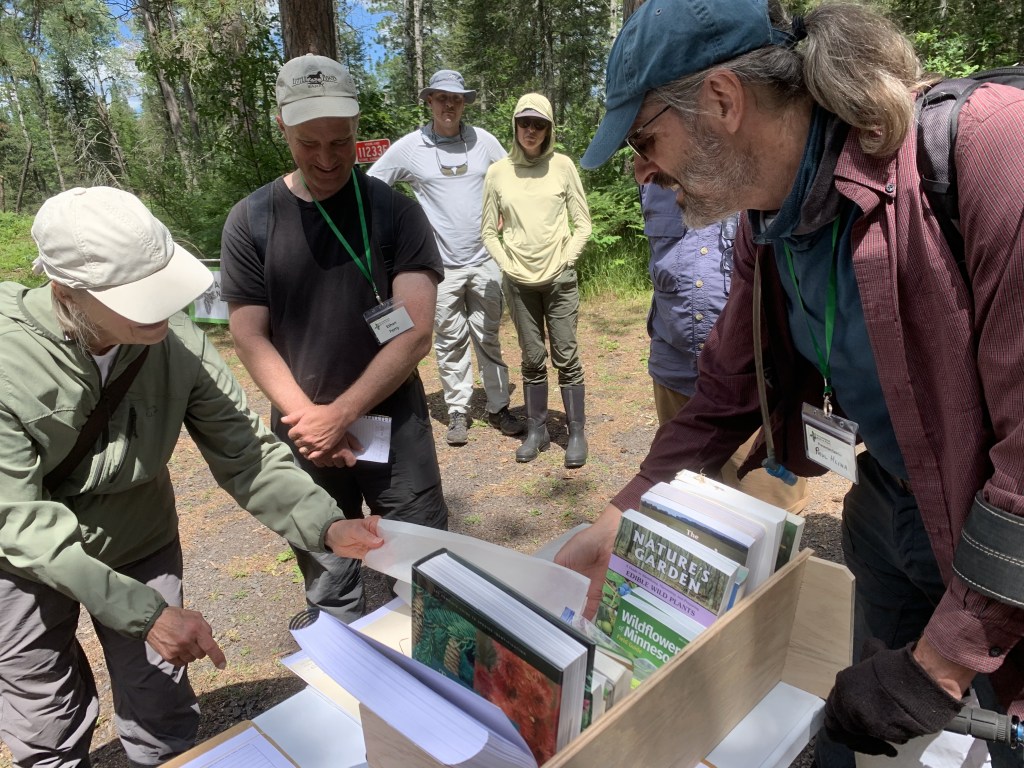
On Saturday July 29 we gathered at the Stone Chimney canoe launch in the Brule River State Forest south of Lake Nebagamon, Wisconsin. Retired botanist Paul Hlina led an immersive expedition into the enchanted cedar swamp along the river. With 35 years of experience exploring the area, he provided a wealth of information about the history and natural history of the Brule River forest, from the creation of the valley by melting glaciers to the traditional burning of the pine barrens by the Ojibwe for blueberry production to industrial logging, with some old growth forest spared by wealthy lodge-owners with riverside estates.
He described the serendipity of receiving a box of maps from a 1968 study of the Brule watershed that revisited forest plots from an even earlier study in 1942. Knowing the locations of these plots provided a perfect opportunity to revisit them a third time in 2015. That work resulted in 2 scientific papers published in the journal Great Lakes Botanist that detailed changes in the forest. They collected over 2,000 specimens of over 800 plant species. We saw several dozen of these species on our short walk.
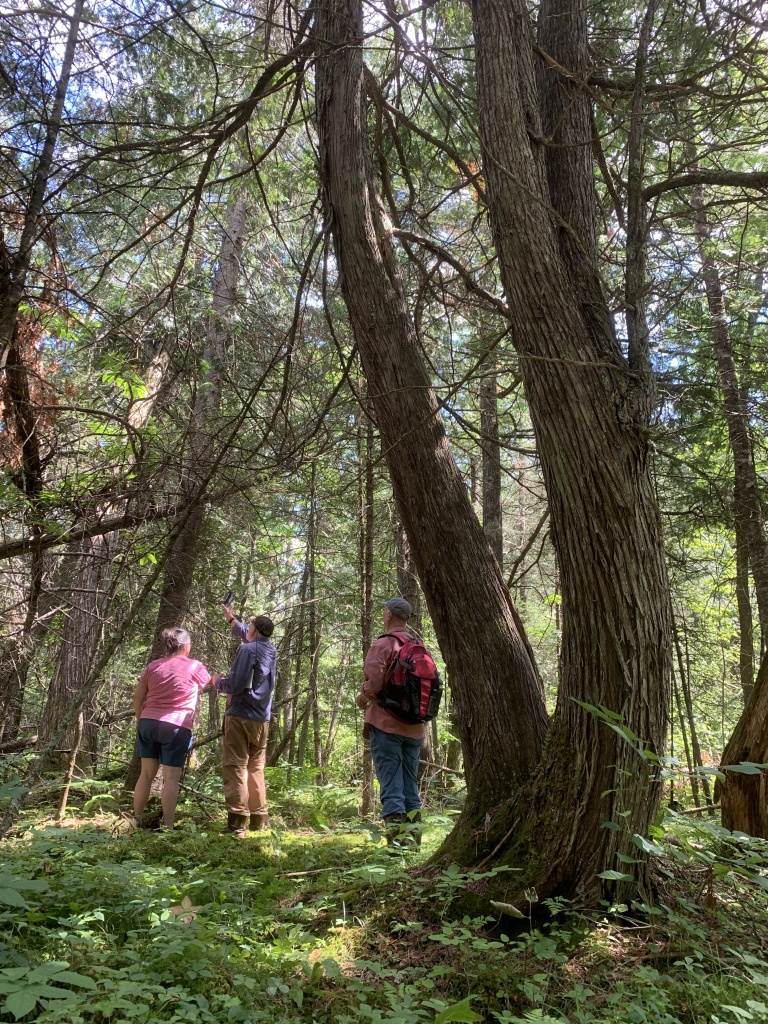
We began by descending over 100 vertical feet from the sandy hilltop to the soggy, moss-carpeted swamp at the bottom of the valley. Rainwater does the same, seeping down through the sand and emerging from the ground, providing a steady supply of mineral-rich water that creates perfect conditions for cedar trees.
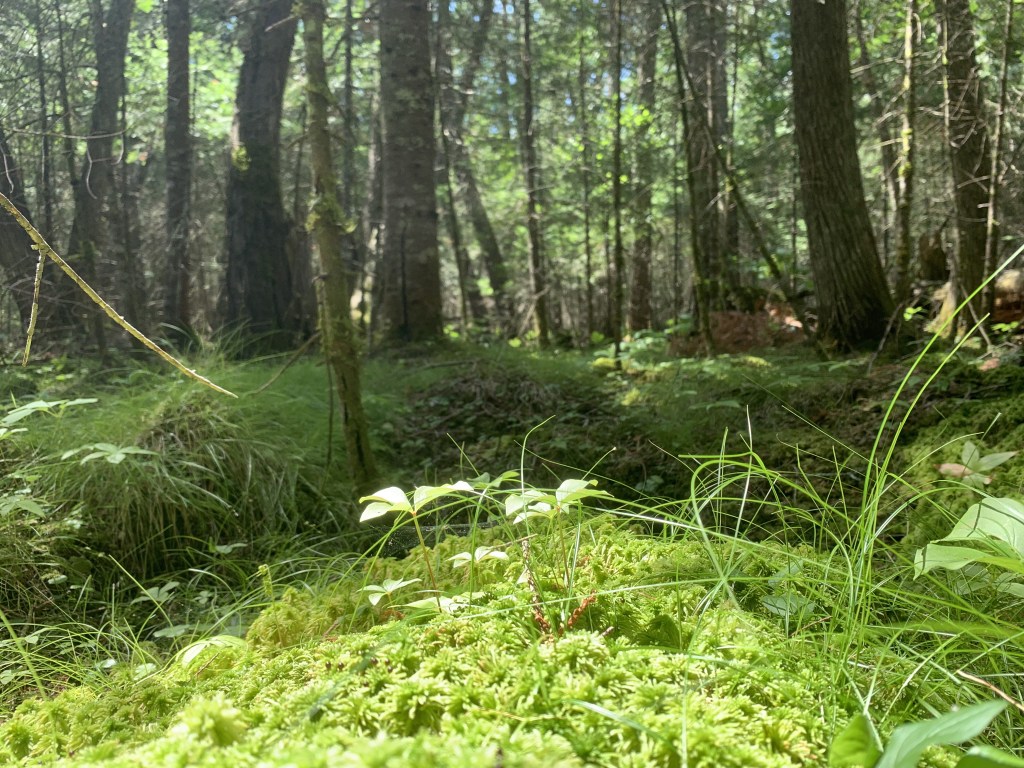
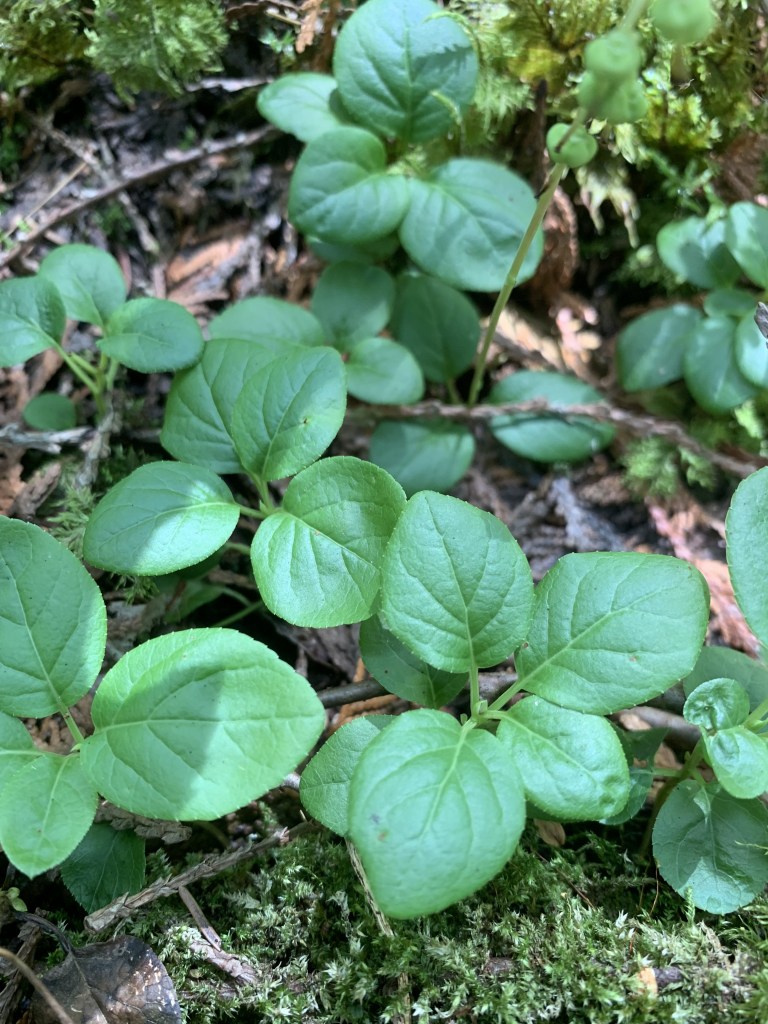
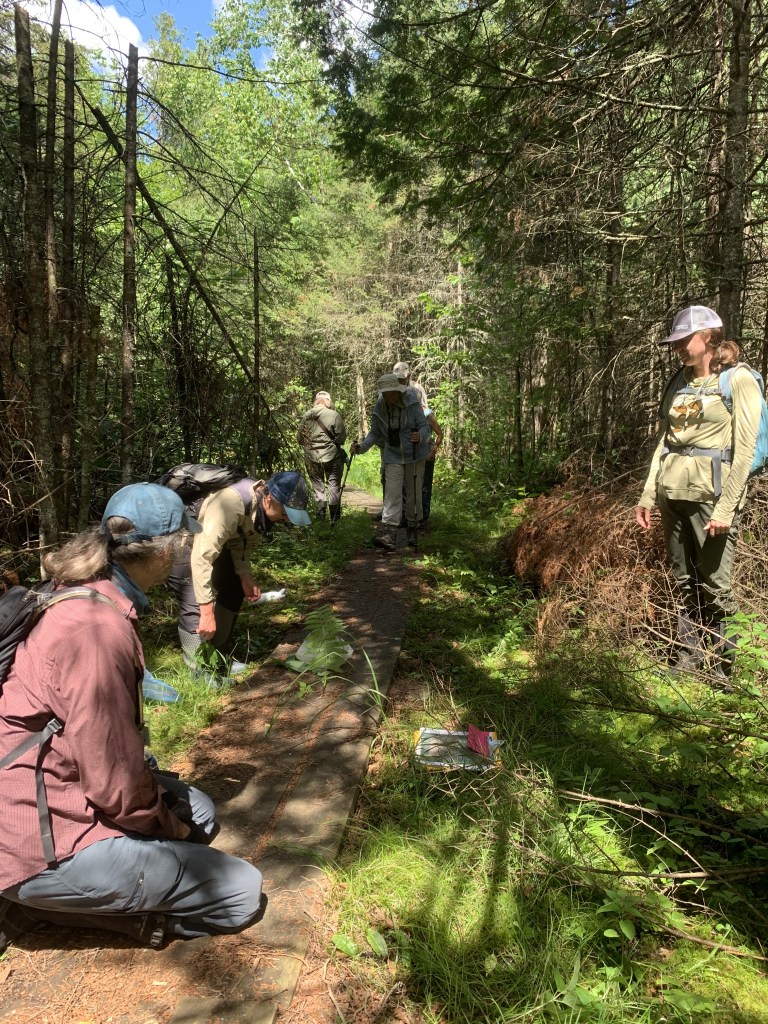
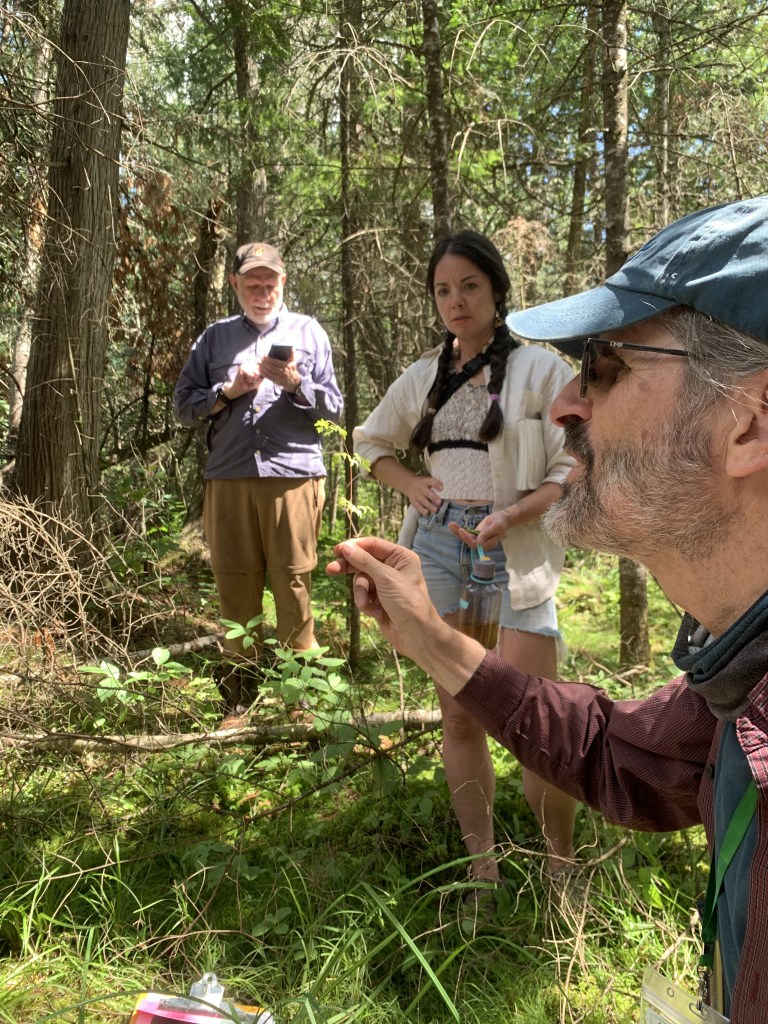
Following a boardwalk through the swamp, we stopped at a spot Paul Hlina had visited a month earlier and recorded 25 plant species. We split into three groups to see if we could find them all. Stepping around the small pools of groundwater under the canopy of cedar and fir, we collected samples of every plant we saw. Going through all the samples back at the boardwalk, he identified them for us and pointed out their characteristics. As usual on ANPE walks, participants shared their plant knowledge with each other. By covering a bit more ground than before, we actually increased the species count to about 40 in a surprisingly small area.
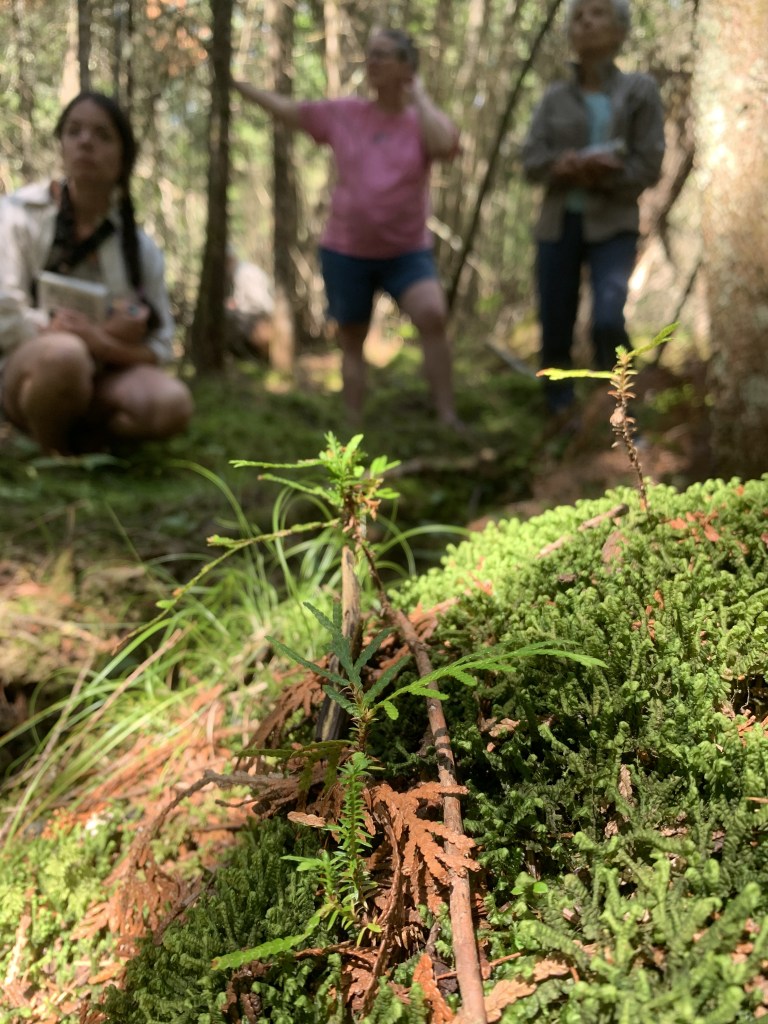
We also stopped at a cedar tree roughly 18 inches in diameter that Paul Hlina estimated to be about 400 years old. And he pointed out a tiny seedling, noting how few there were. Cedar is a favorite browse for deer. With a population estimated to be 5 times as dense as in the 1850s, they permit almost none to grow above the snow line.

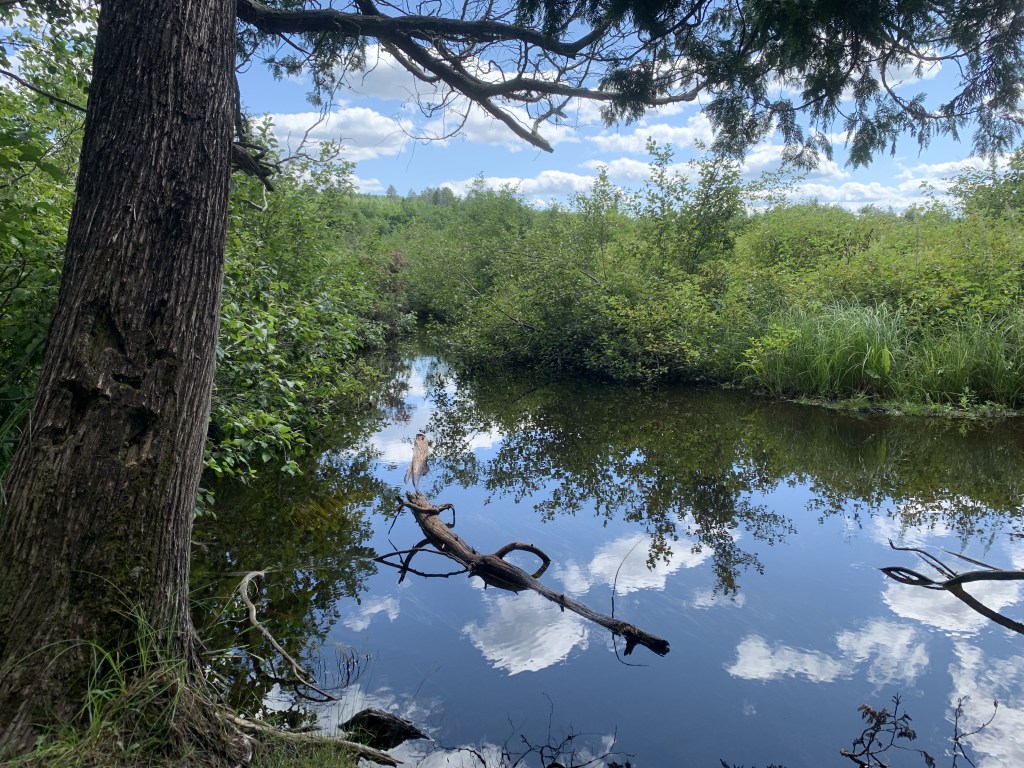
At the end of the boardwalk we reached the spring-fed shoreline of the Brule River, only a few feet wide this far upstream. Several new plants grew there that we hadn’t see back in the shade of the swamp. When we returned to the cars, Paul Hlina quizzed us with the plant samples we had collected earlier. After our hands-on experience, we remembered most of them, sometimes even the scientific names.
 Arrowhead Native Plant Explorers