Author: Ethan Perry

On the sunny, warm afternoon of September 9 we gathered at the airport entrance on Park Point—also called Minnesota Point, or Zhaagawaamikong Neyaashi in Ojibwe. Rebecca Holmstrom, an ecologist with the Minnesota Biological Survey of the Minnesota DNR, led us on a tour of the sandy environments so strikingly unlike any other natural area in the state. She began with a warning about the ubiquitous poison ivy and a brief history of the continuous importance of this spit of sand for people through time—right up to the crowds escaping the heat on Labor Day weekend.
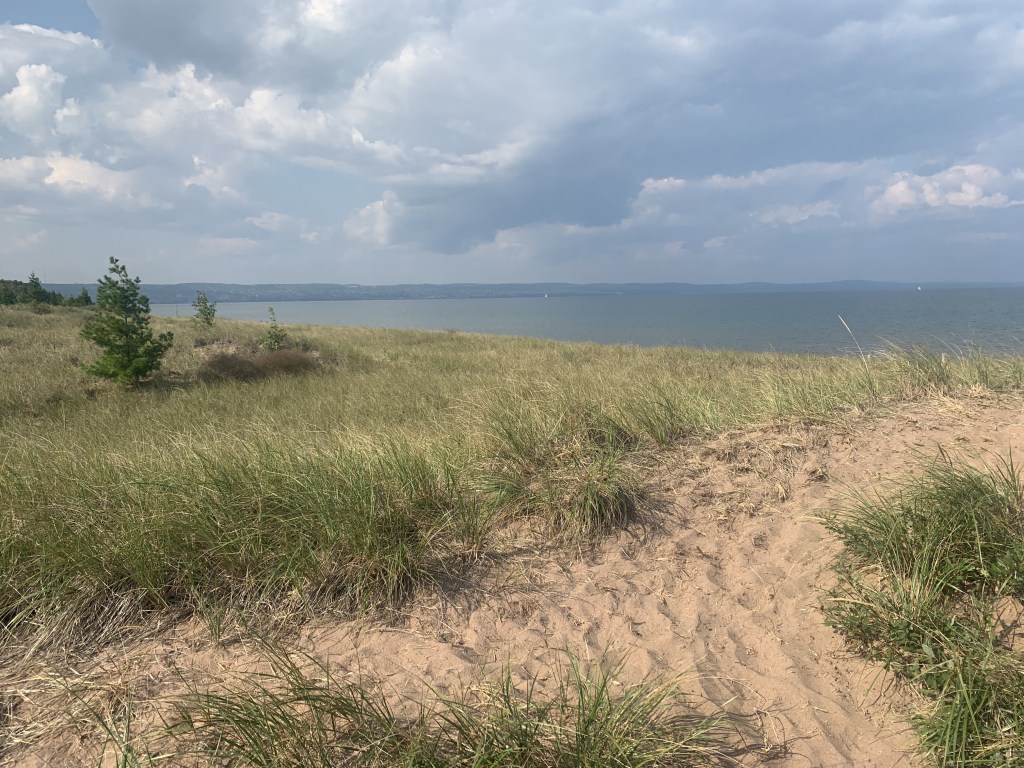
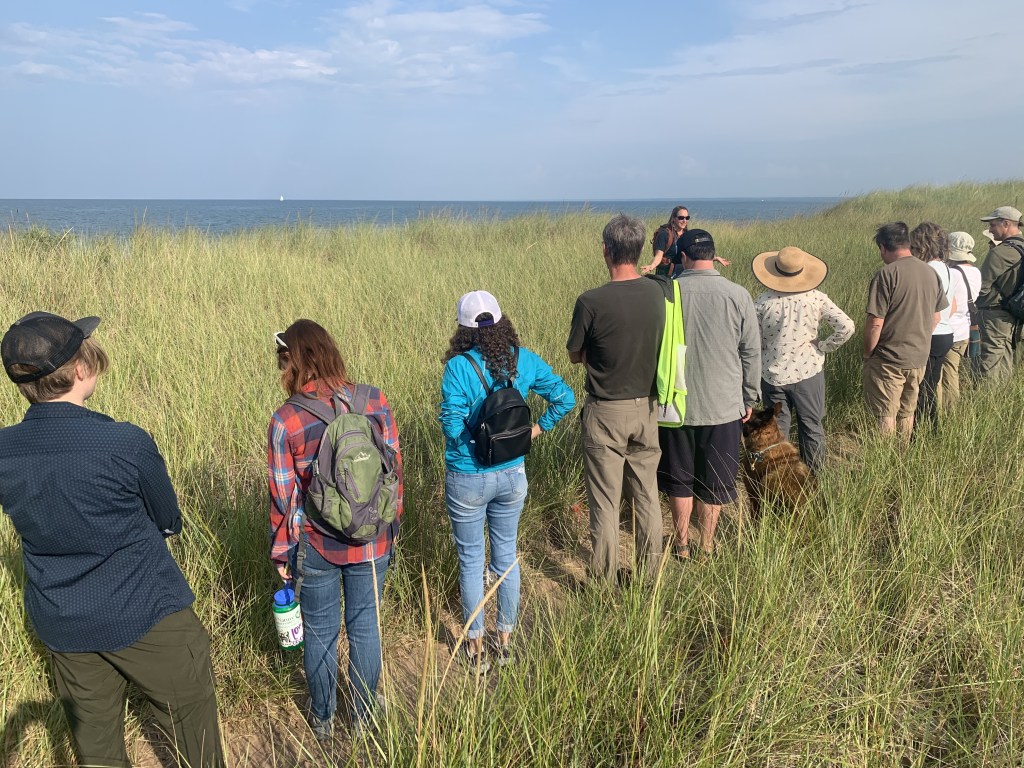
We crested the primary dune and descended to the beach face, where a pleasant breeze came off the sailboat-studded lake. Rebecca described how a coastal current carries sand westward along the lakeshore and deposits it on the beach. The jetties at the Superior Entry now capture much of it, starving the rest of the beach of its most basic building blocks, which contributes to erosion during storms. Waves, wind, and ice scour all make the beach face a highly unstable environment, where only a few plants can gain a temporary root-hold. It’s also home to the species with the wildest name we heard all day: the endangered Rhode Island hairy-necked tiger beetle (Cincidela hirticollis spp. rhodensis).
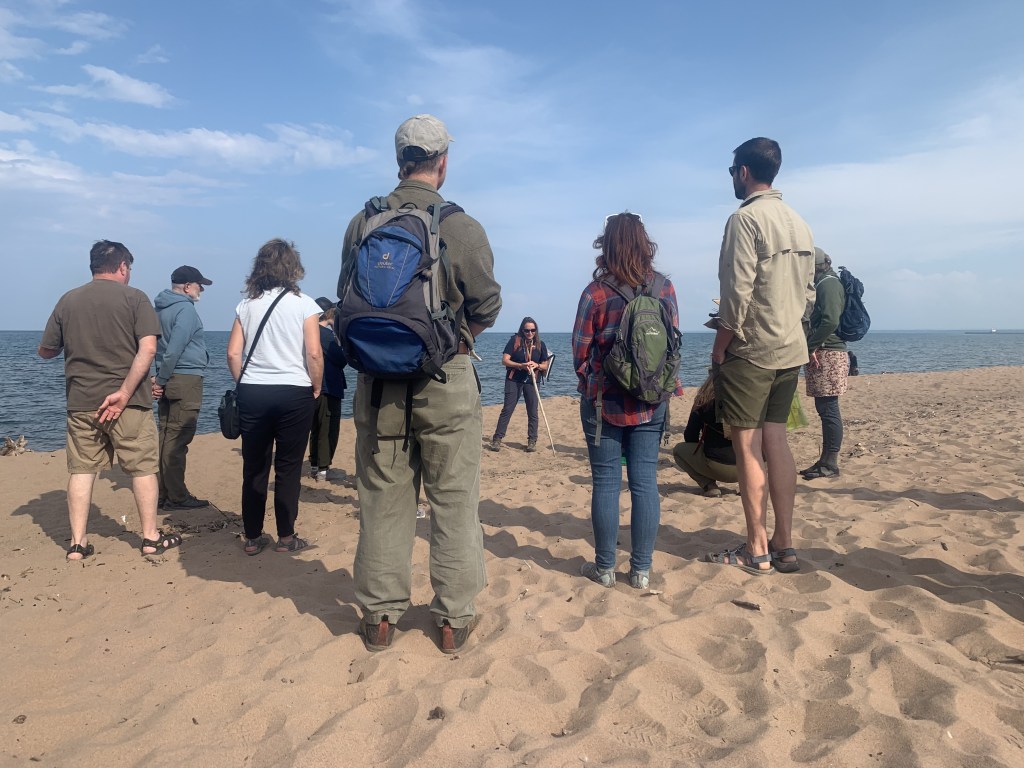
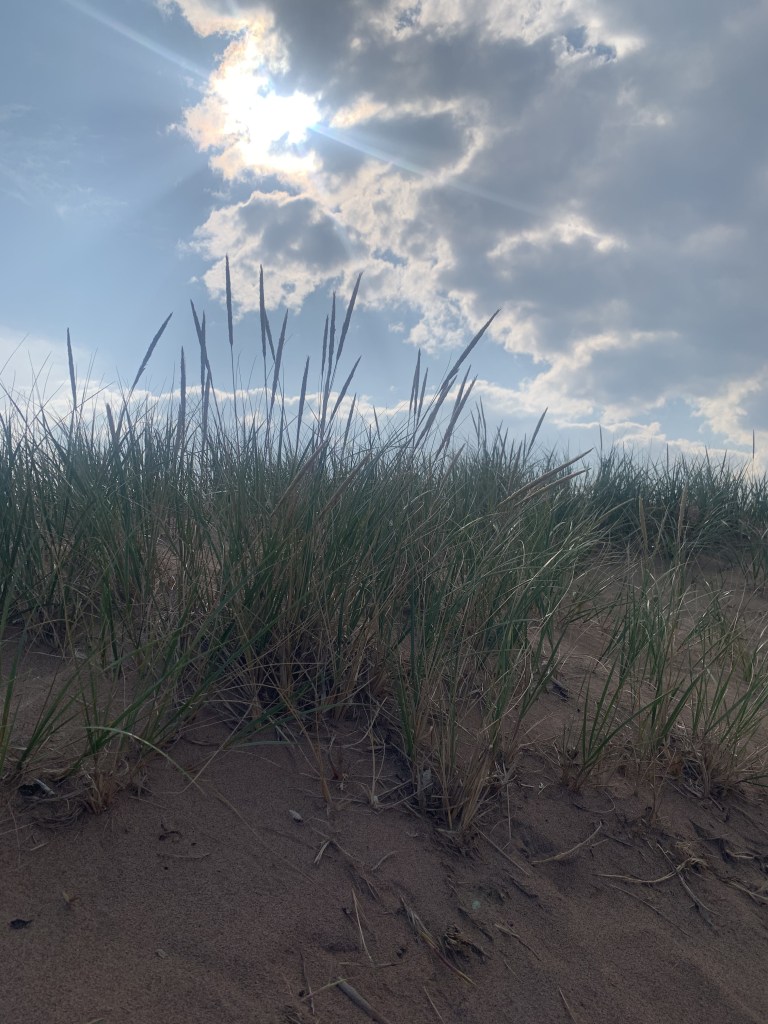
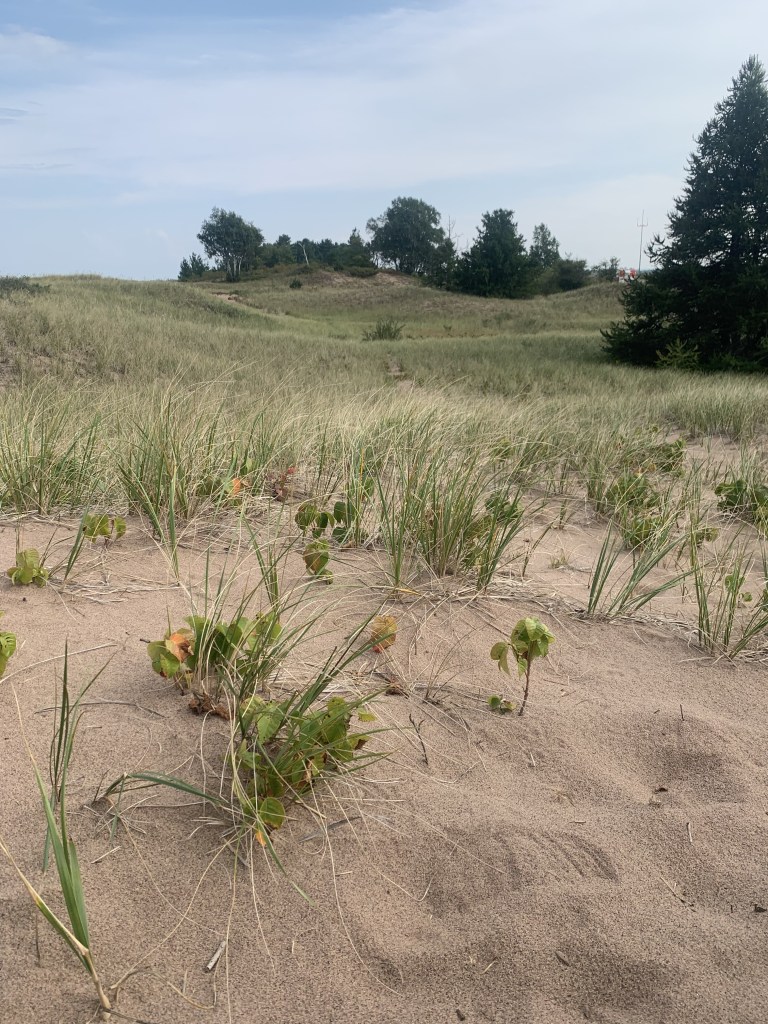
Climbing back into the dunes, we viewed another unstable environment, but one held down precariously by a carpet of beach grass (Ammophila breviligulata). Beach grass, found nowhere else in the state, is an incredible plant that not only survives in a place with almost no nutrients, little water, and sometimes blazing sun—it thrives. Its leaves catch blowing sand and build up the dunes. And as the sand builds up, the grass rises with it, leaving roots that may reach several meters deep. When furious winds blast holes in the carpet—called blow-outs—the grass sends in running roots to start the process over.
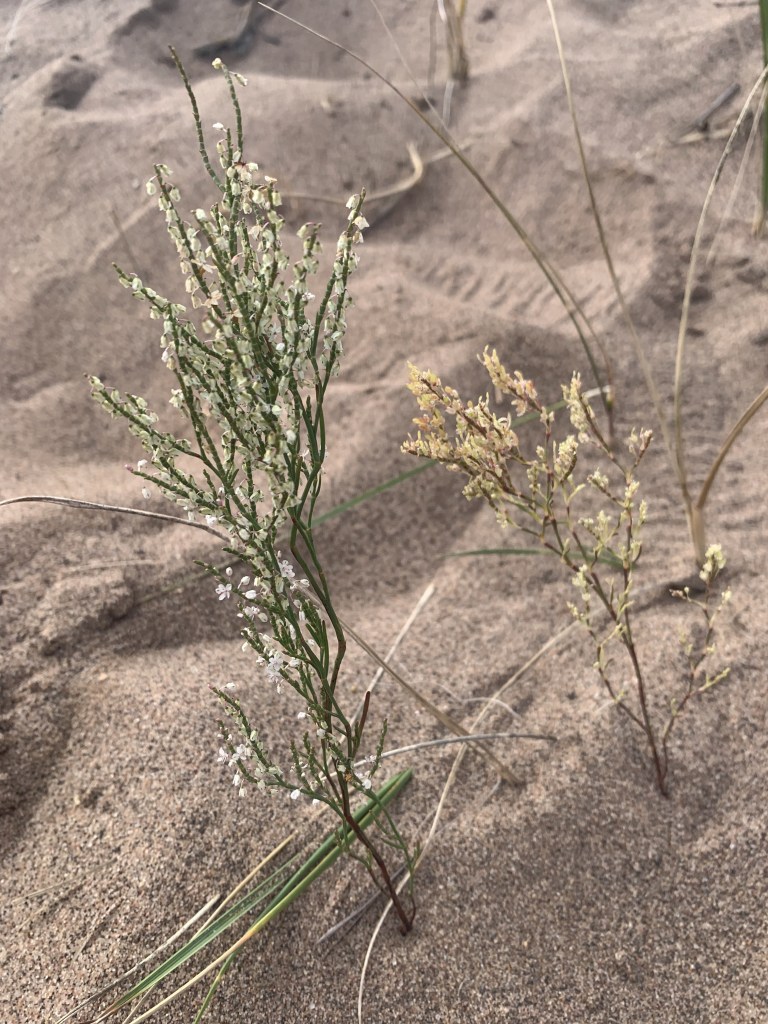
Growing in among the beach grass were a few other plants adapted to the harsh conditions, including the rare beach heather (Hudsonia tomentosa). Rare and specialized plants find a home in the dunes because the more common species that would outcompete them in a rich loam (for example) can’t hack it at the beach. But some non-native species can. We saw some clumps of baby’s breath (Gypsophila paniculata), likely escaped from someone’s garden long ago.
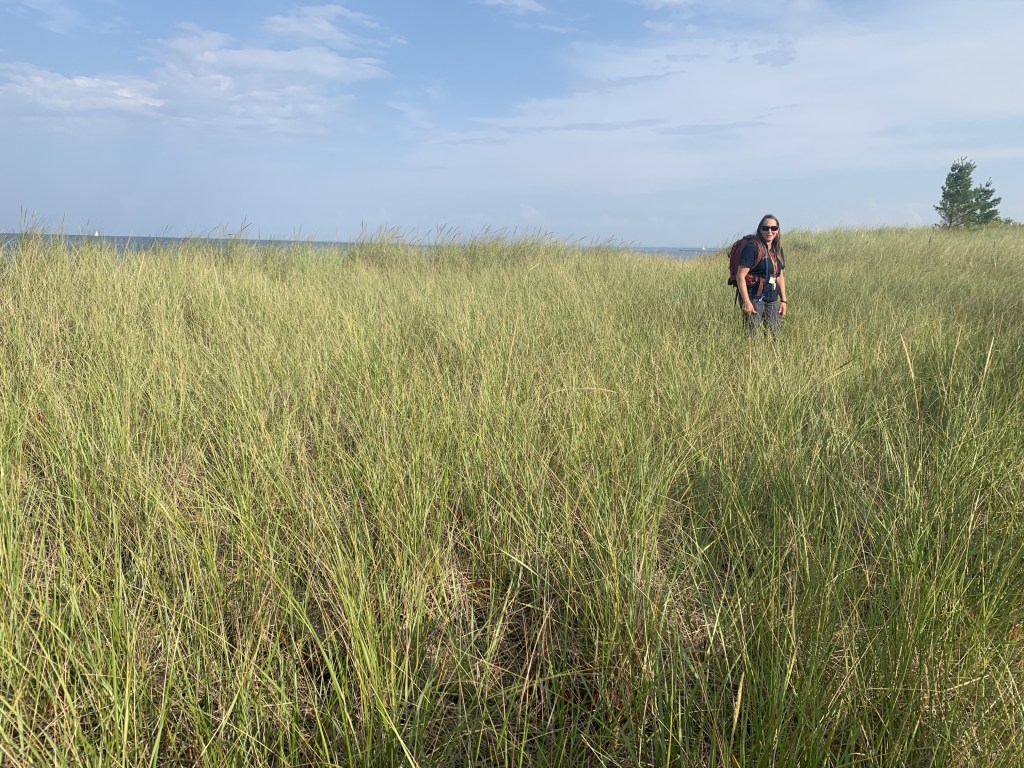
After leading us down a dune path, Rebecca asked what differences we noticed. Observant group that we are, people reported the beach grass was taller and denser—so dense that few other species could wiggle in. We had entered a patch that had spread from a nearby dune restoration decades ago. Past restorations have used commercial beachgrass material sourced from Michigan, which has been found to be taller, to spread faster, and to have a different flowering phenology than plants from Minnesota. Restoration projects now used local vegetative propagules.
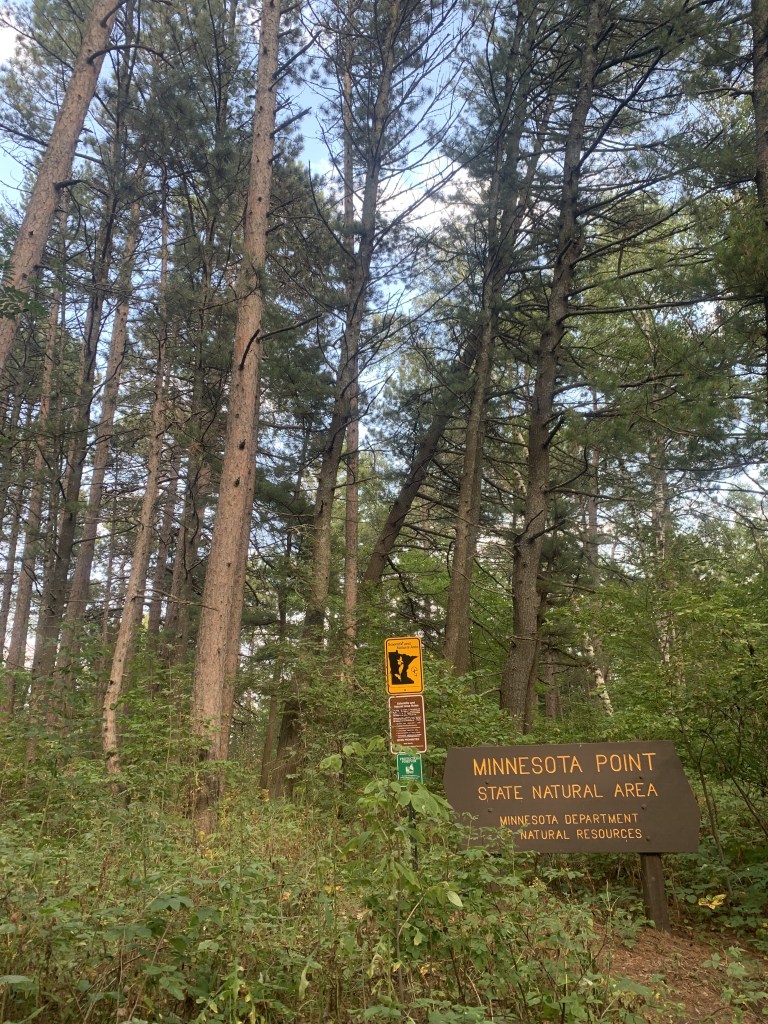
Walking past the airport runway, Rebecca introduced plant communities farther along the spectrum of stability. Where beach grass has stabilized the dune for long enough, common juniper (Juniperus communis) begins to dominate, and a greater diversity of plants takes hold. The most stabilized community is the old growth pine forest with trees mostly 120-200 years old. A recent study of tree rings and fire scars shows the Ojibwe burned the undergrowth every few years right up until the Treaty of 1854 ended indigenous management. Without fire selecting for pyrophilic species (including blueberry), plus 150 years of Euro-American settlement, the forest we see today must look quite different from how it did in the past.
When we stopped at the site of a former vacation cabin under the pines, Rebecca showed us yet another rare plant: slender hairgrass (Deschampsia flexuosa). No where else close to Duluth could you see as many rare plants as we did! And as the last stragglers of our group returned to the parking lot, a large flock of white pelicans passed overhead, a fitting capstone to a beautiful late summer afternoon.
Want to read more about the ecology of Park Point? Here are two other articles that may be of interest:
“Life on Park Point,” written by Sparky Stensaas for the Minnesota Conservation Volunteer in 2012
1999 Floristic Survey of Minnesota Point by Gary B Walton
 Arrowhead Native Plant Explorers