Author: Kelly Beaster
Whether you are a novice plant enthusiast or a seasoned botanist, we can all use a refresher after a months long period away from most of our regional flora.
On a Saturday afternoon at Hartley Nature Center, Arrowhead Native Plant Explorers were greeted with a beginner’s lesson on plant identification that was packed full of helpful hints and tools to make plant ID simpler. Led by Dr. Amanda Grusz, Director of the Olga Lakela Herbarium and Associate Professor of Biology at the University of Minnesota – Duluth, members were able to test their observation skills on spring ephemeral specimens supplied by the UMD teaching collection.
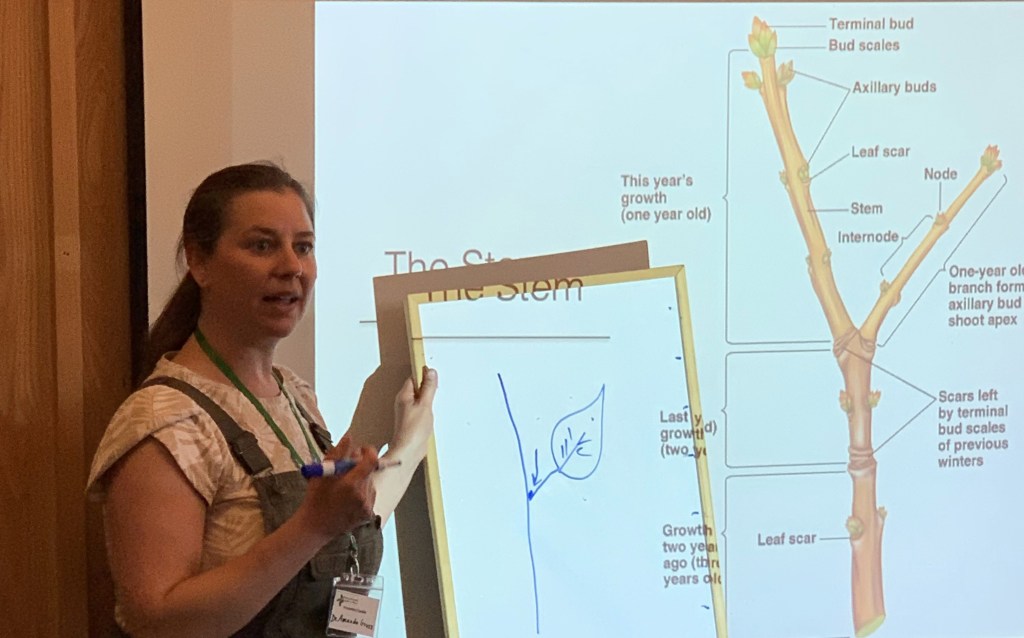
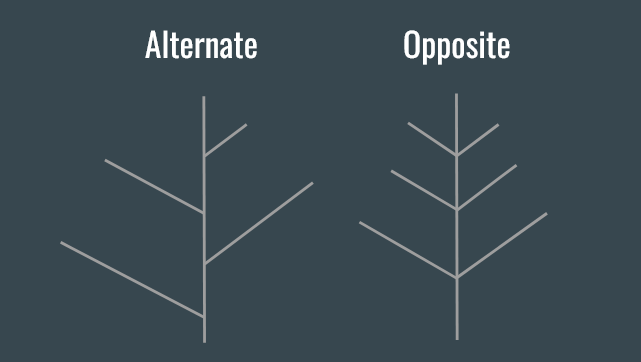
Amanda shared with us some of her plant identification superpowers. For instance, many of our trees and shrubs in our temperate climate have leaves that are alternately placed along stems and branches. Those that have opposite placement can immediately be sorted into the MAD-CAP grouping, or M – Maple, A – Ash, D – Dogwood, and CAP – Caprifoliaceae (species in the Viburnum group). Superpower #1!
Another tip Amanda shared with us was a trade secret to help narrow a list of hundreds of plants down to a much smaller selection of about two plant families in this region – the presence of multiple stamens in a flower. We were told this could would be a member of the Rosaceae (rose) family if it has five petals or the Ranunculaceae (buttercup) family if it has many, or more than five petals. Superpower #2!
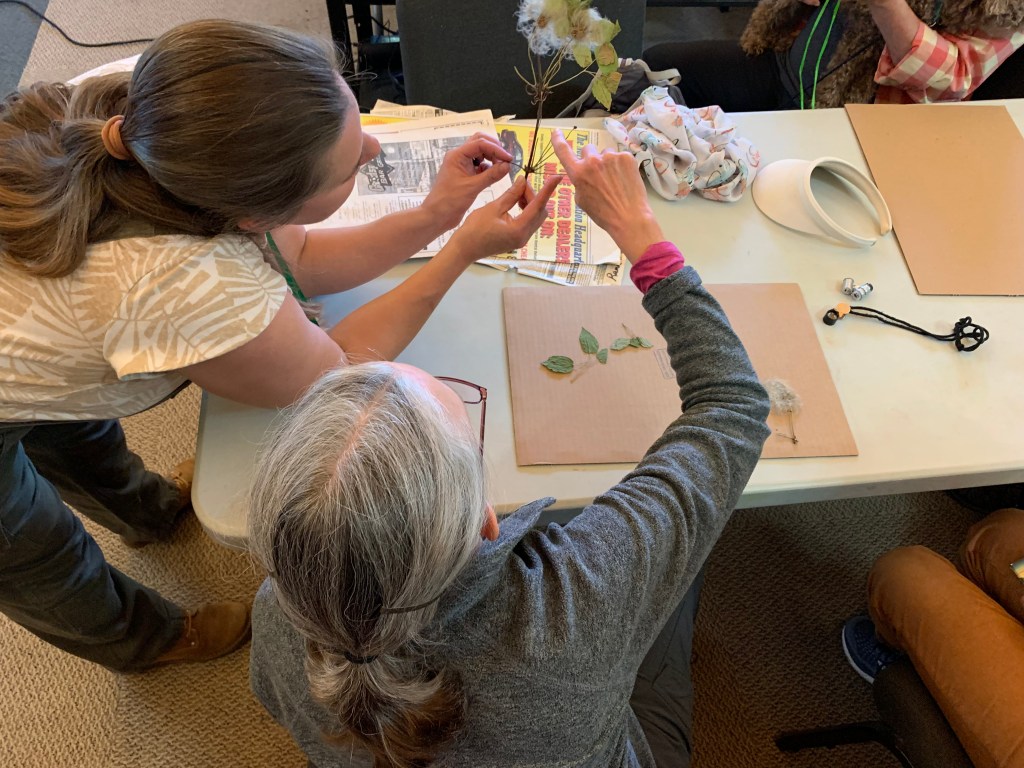
A small pile of additional pressed spring ephemerals were available for members to dive into and prepare them for our upcoming spring ephemerals hike. A short list of common spring ephemeral families are the Ranunculaceae (buttercup), Liliaceae (lily), and the subfamilies Fumarioideae and Papaveraceae (poppy).
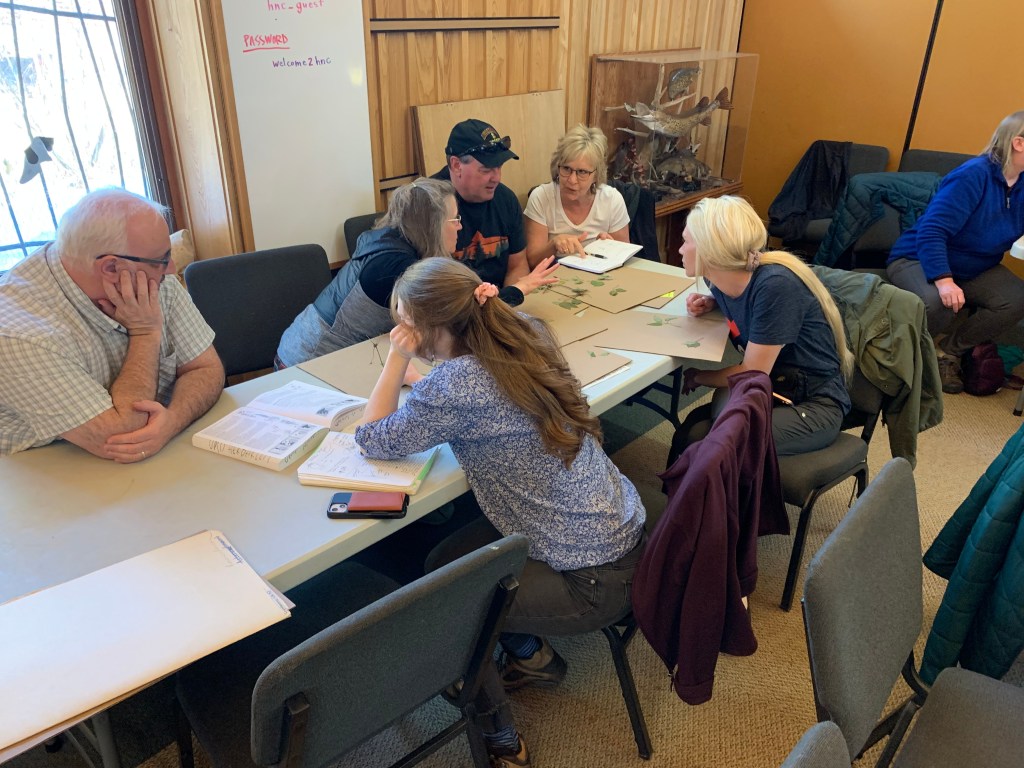
A brief review of trusted online resources for identification and species mapping were also covered, and these resources can be found on our ANPE website on the Online Resources page.
Dr. Amanda Grusz has agreed to share her presentation slides with us, and for the first time, watch a Recording of Plant ID 101!
 Arrowhead Native Plant Explorers