Written by: Kelly Beaster
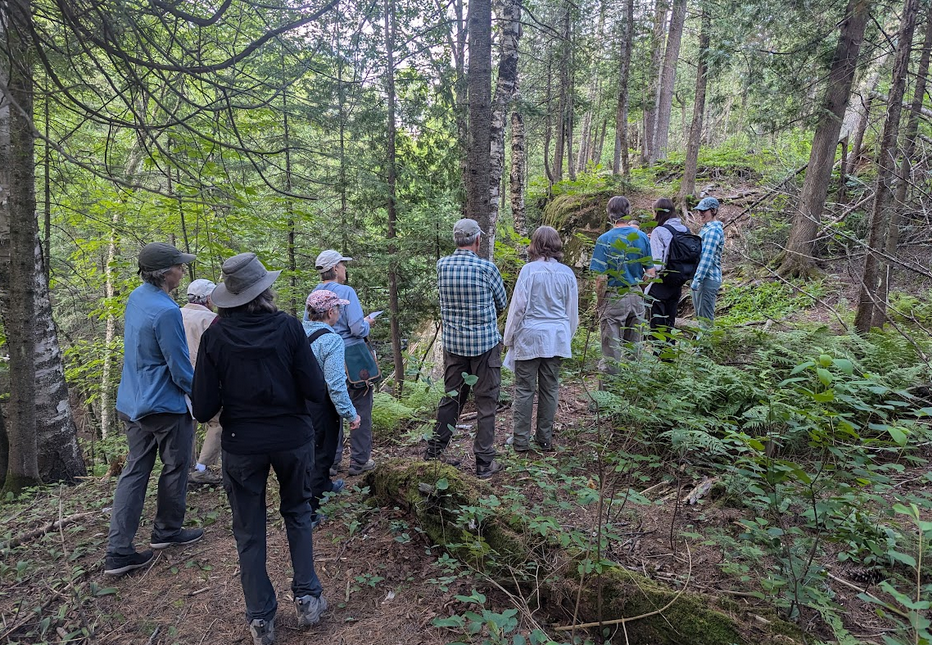
On a sunny weeknight, the Arrowhead Native Plant Explorers gathered at the southern end of Hartley to learn about ferns found on a small hiking loop along the west branch of Tischer Creek. The event partnered with Hartley Nature Center and was led by ANPE board officers. Members learned about some of the characteristics that make ferns so unique, including that these nonflowering, vascular plants are ancient beings that have remained nearly the same since the permian and triassic periods (Smith, 2023). Fossils show records of Osmunda specimens, like interrupted, royal, and cinnamon ferns from more than 200 million years ago that look virtually the same as our current day species.
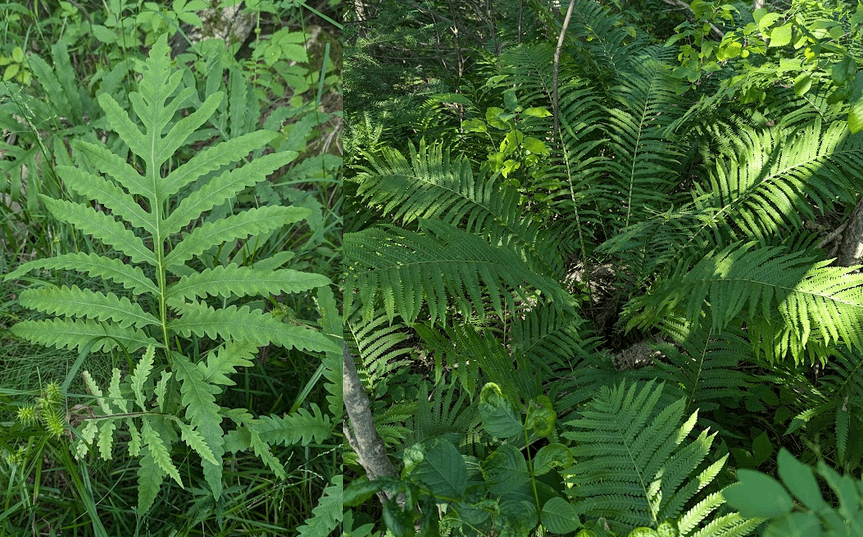
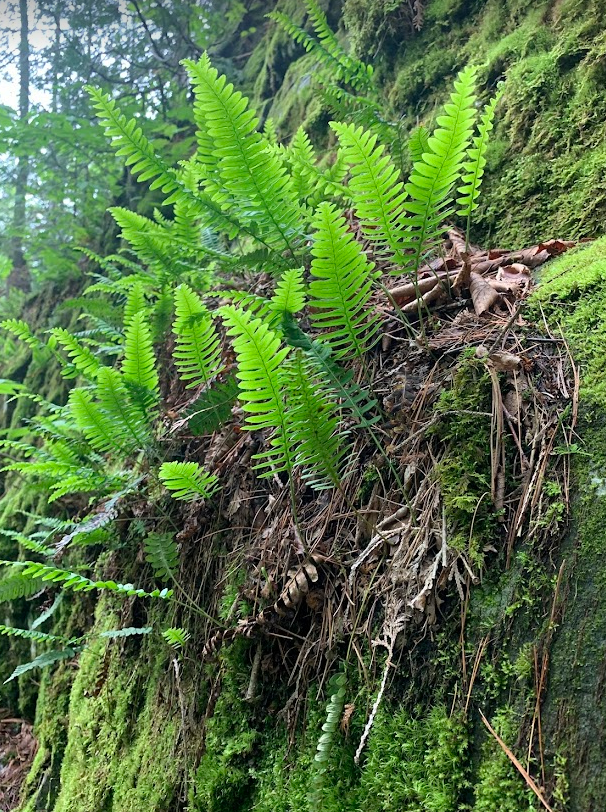
Explorers learned some of the specialized terminology used on ferns, like rachis, pinna, and sori. ANPE found 10 species on their short walk: interrupted fern (Osmunda claytoniana), sensitive fern (Onoclea sensibilis), ostrich fern (Matteuccia struthiopteris), lady fern (Athyrium filix-femina), wood fern (Dryopteris carthusiana), oak fern (Gymnocarpium dryopteris), beach fern (Phegopteris connectilis), rock fern (Polypodium virginianum), and bracken fern (Pteridium aquilinum). ANPE President, Kelly developed a handout to help beginners learn some of the tips to identify the common species of ferns likely to be found in any park in Duluth. You can access the handout here. Lady and wood fern were found to be challenging to tell apart, but a quick check of the stem can reveal either papery brown scales on a wood fern or narrow, black scales on a lady fern.
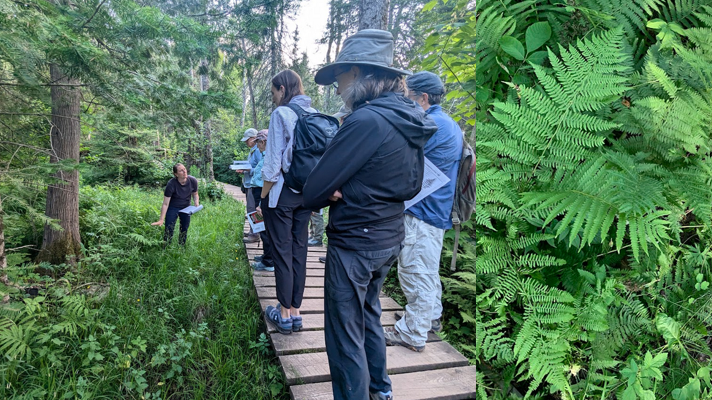
With the help of Welby Smith’s “Ferns and Lycophytes of Minnesota”, members learned that many species of ferns are incredibly long lived. Often one individual colony can be more than a century old! The next time you spot a fern, take a moment to marvel at the simplicity of the fern’s strategy that has allowed it to thrive on Earth for so long. No elaborate flowers to attract pollinating insects, just a spore and eager rhizomes to out compete other vegetation around them.
To learn more about ferns, ANPE recommends “Ferns and Lycophytes of Minnesota” by Welby Smith.
 Arrowhead Native Plant Explorers