Written by: Rubin Stenseng
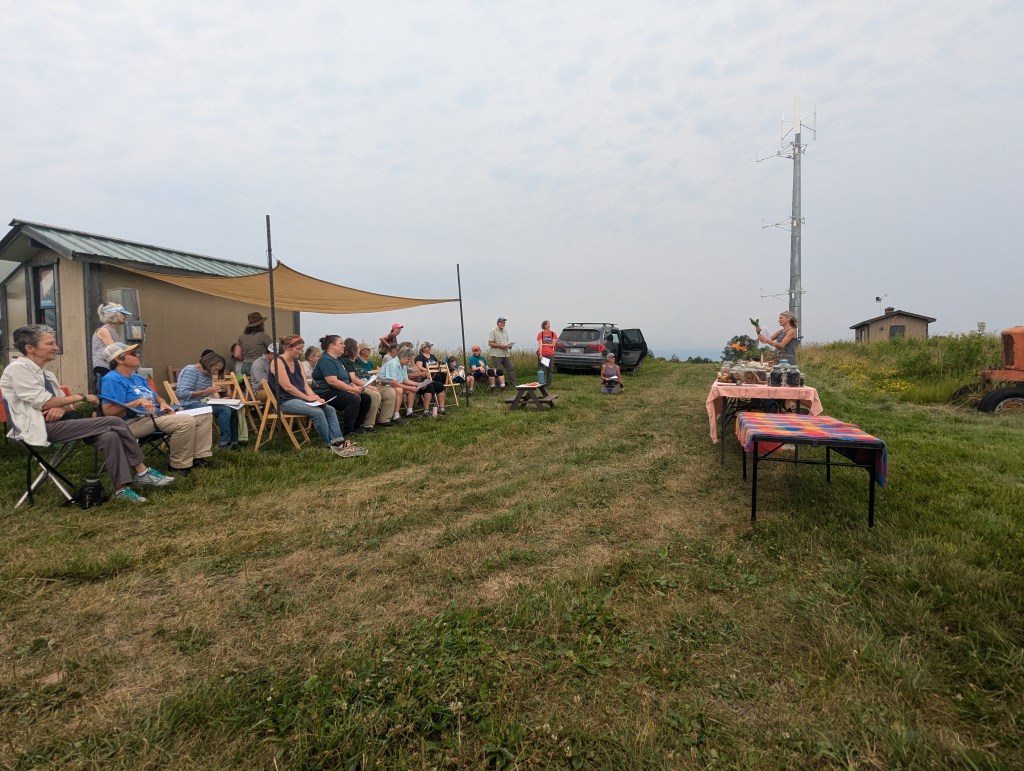
There are plants all around us, some native and some non-native, and a surprising number of them are edible and desirable as food items. Sarah Foltz Jordan, botanist and edible plant instructor, shared her passion and knowledge of local edible plants with an equally interested and attentive audience.
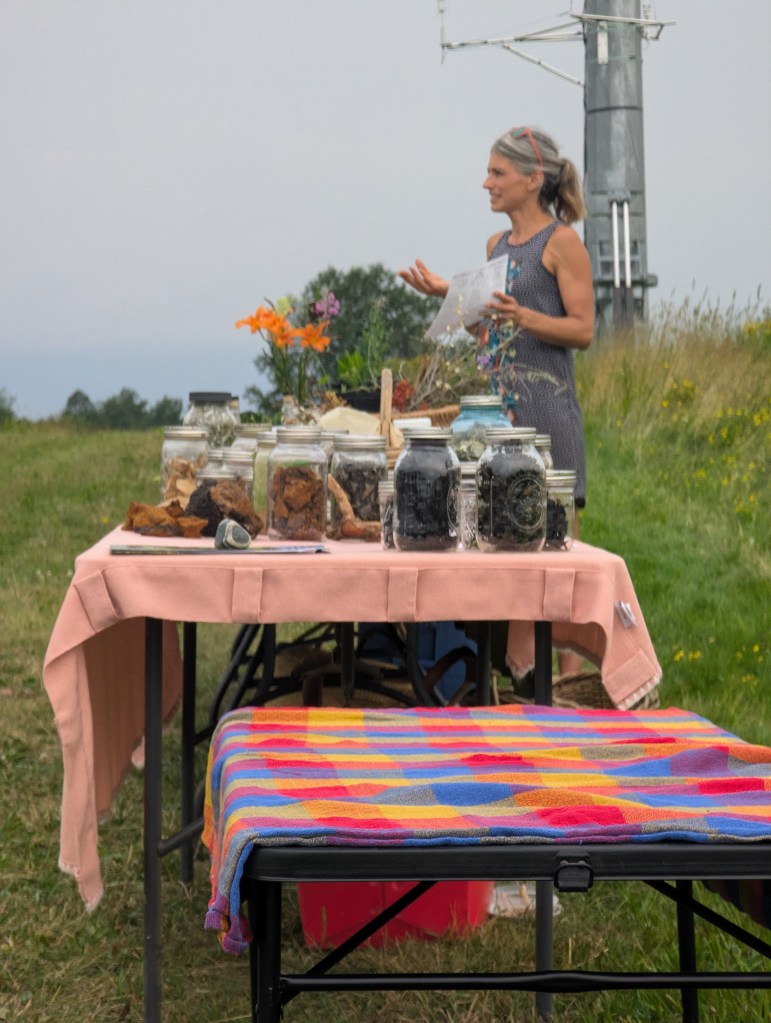
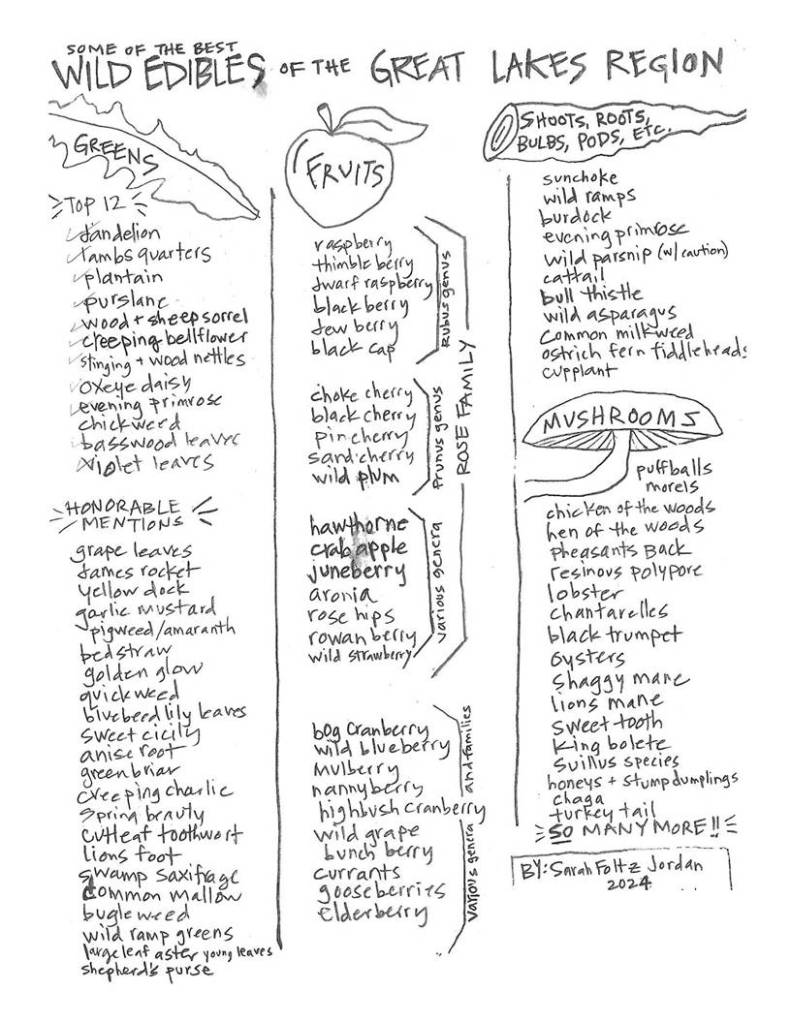
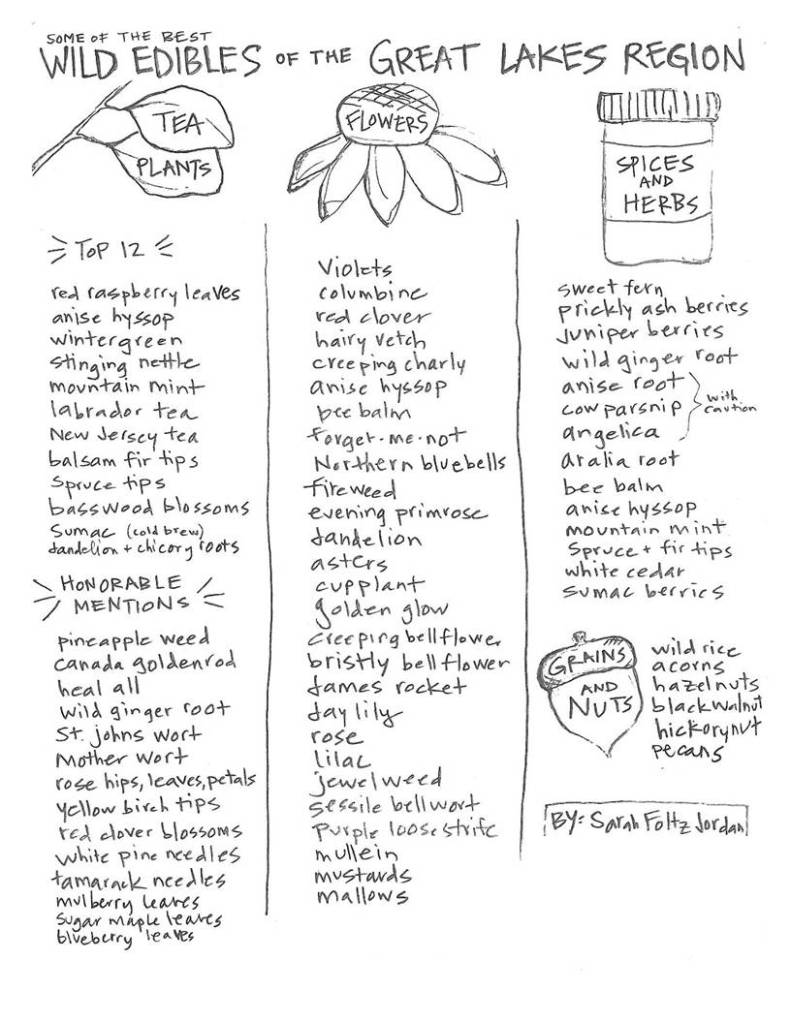
Wild Edibles of the Great Lake Region list.
The event was hosted by the University of Minnesota Duluth Land Lab (John Beaton, Land Lab Farm Manager) and co-sponsored by the Lake Superior Sustainable Farming Association (Julie Allen, coordinator) and the Arrowhead Native Plant Explorers.
Sarah had prepared an impressive display of plant products in various stages of freshness and preservation. It was clear that she was prepared to cover a wide range of edible greens, fruits, mushrooms, flowers, tea plants, grains and nuts, and spices and herbs.
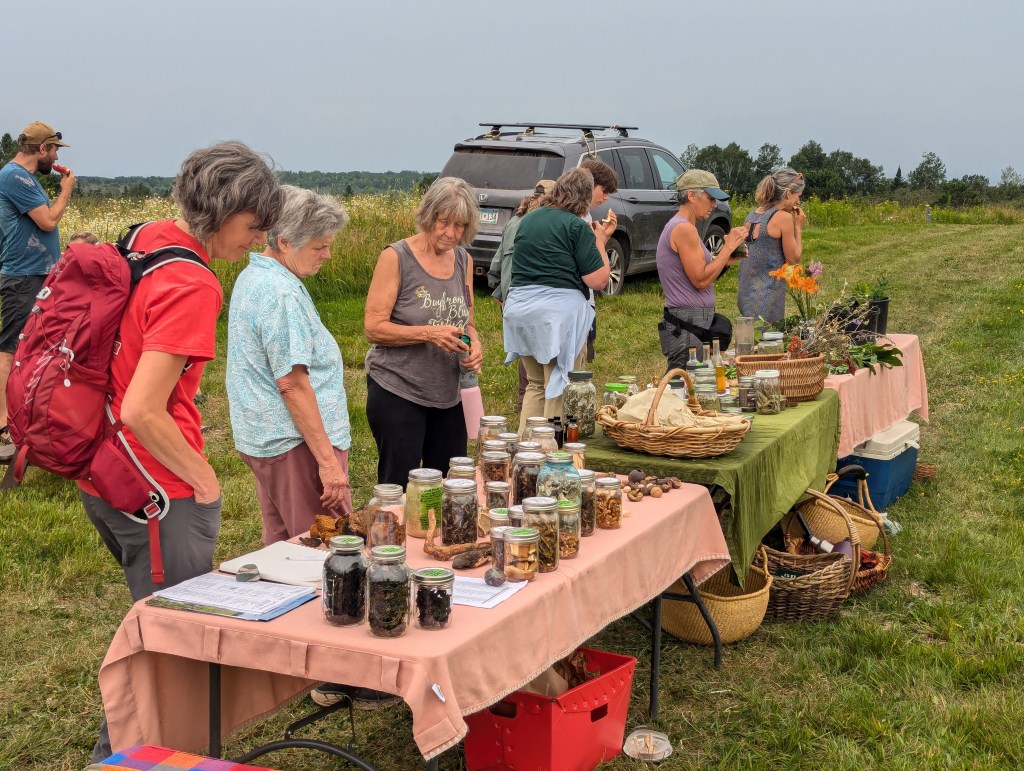
However, the event was shortened as a weather front moved into the Duluth area. In the short time available, Sarah shared information about her “Top 12 Greens” of the Great Lakes Region (see her list below). Attendees had the opportunity to sample some of the “greens” that Sarah collected before the event started.
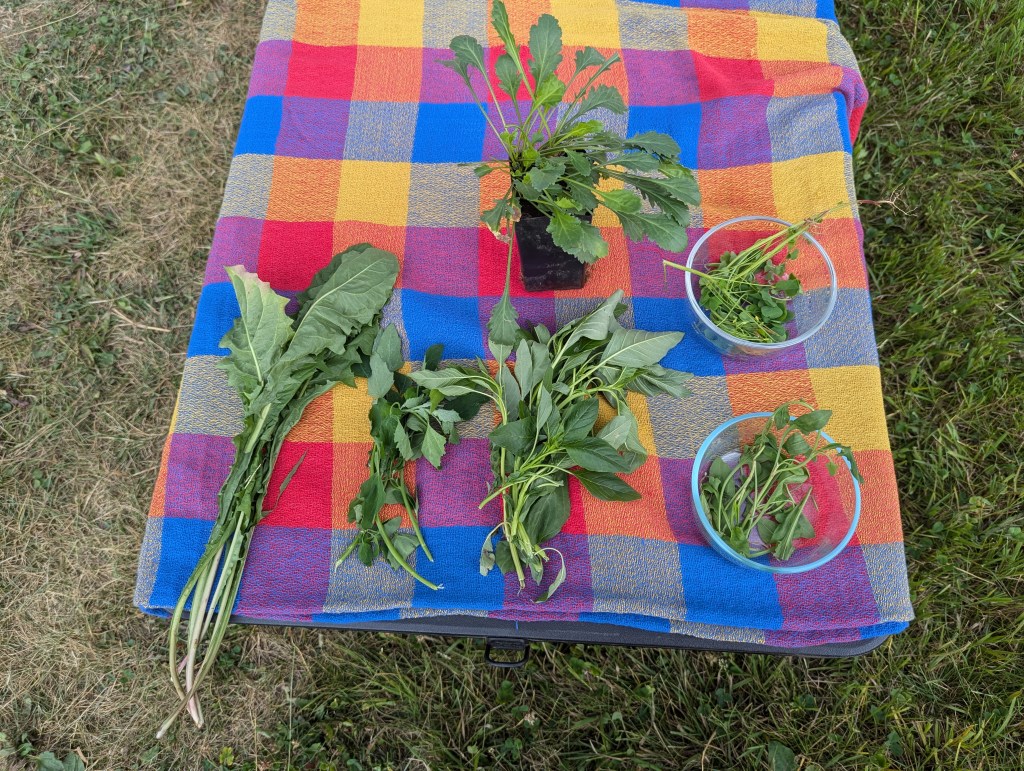
We learned things such as: Sarah collected 84 species of mushrooms in one season. The non-native Creeping Bellflower has very good leaves in the early spring and Sarah is trying to “eat it out” of their land. Wood Sorrel has a tangy taste. She has used apple cider vinegar infused with over 100 various plant species. Nettles have a full and rich flavor. Ox-eye Daisies have a unique taste and their young leaves are sweet. Basswood leaves in late April are sweet and pleasant. And the fun list of edible plants went on!
Sarah recommended the Samual Thayer books on wild edible plants as good resources. And note, the Arrowhead Native Plant Explorers lending library has 3 of the Thayer books available. Check them out at the next ANPE event!
As always, please be careful when foraging and consuming wild plants. Make sure that you have good, reliable information and that you can positively identify any plant that you plan on consuming.
 Arrowhead Native Plant Explorers