Written by: Ethan Perry
Photos by: Kelly Beaster
Maybe you have driven between Two Harbors and Ely and noticed where Highway 2 narrows just north of the jog on Lake County 15. At one point two large pines squeeze the pavement on either side. Apparently, the highway department made an exception to the usual safety standards. And for good reason. The highway passes right through a remnant patch of old growth white pine forest.


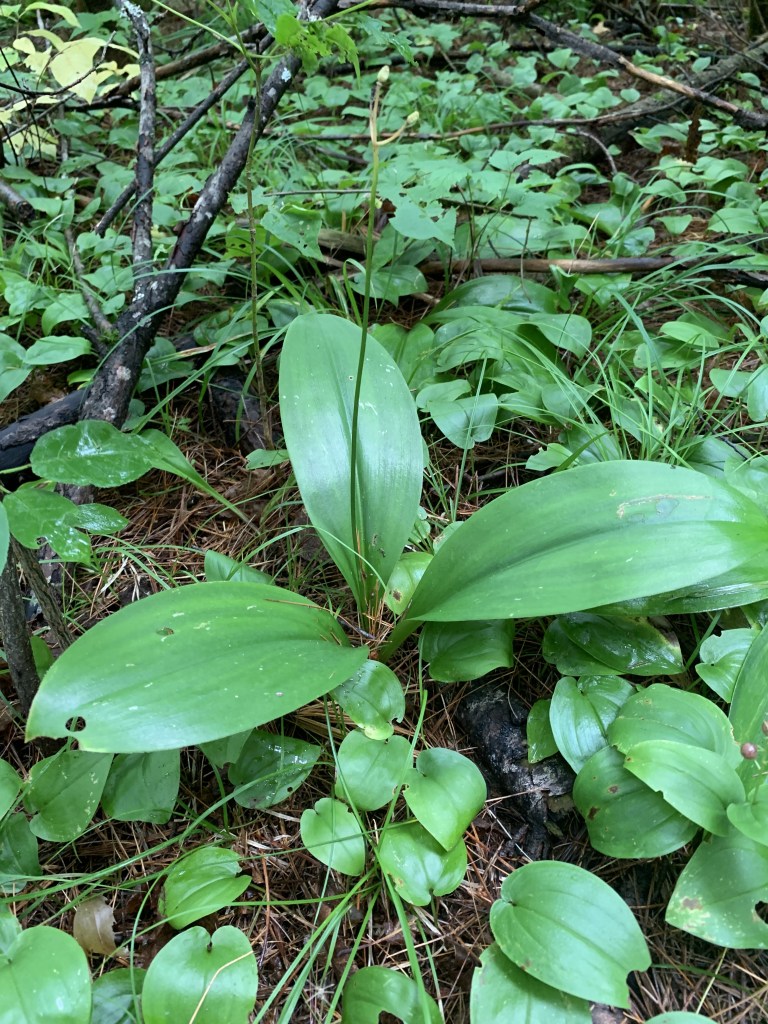
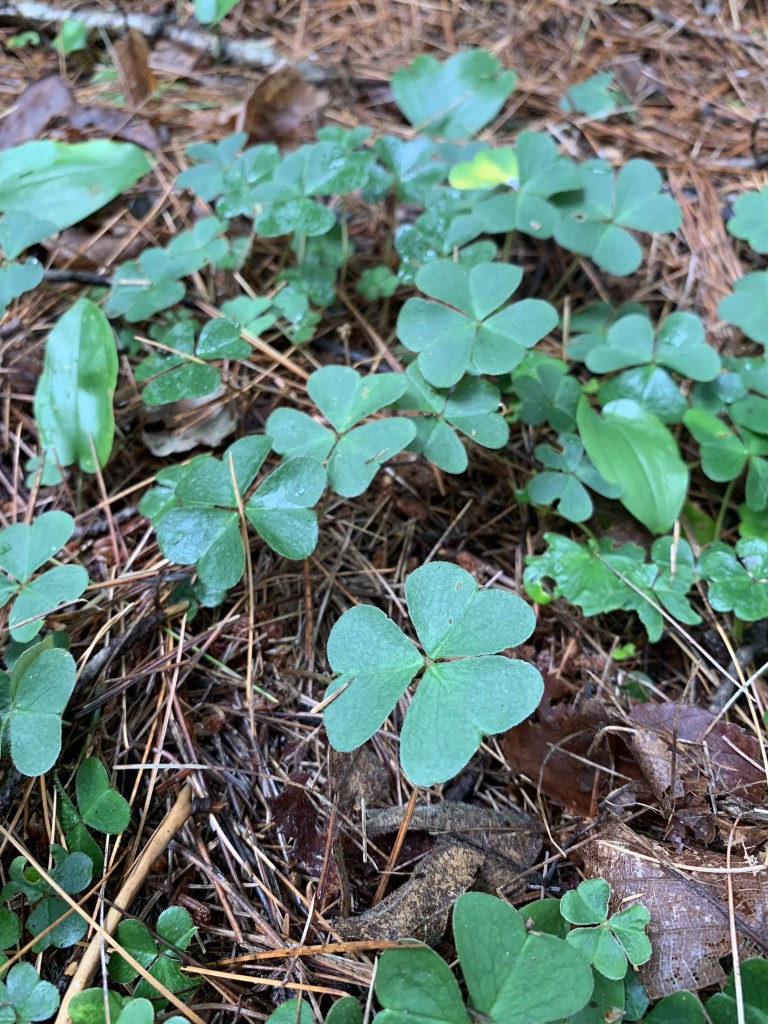
It was to that forest that Dr. John Pastor took us on Saturday August 17. We met at a U.S. Forest Service picnic area with a short interpretive trail and slapped a few mosquitoes. On the forest floor we saw typical wildflowers like bluebead lily (Clintonia borealis), bunchberry (Cornus canadensis), and starflower (Lysimachia borealis), as well as the more unusual common wood sorrel (Oxalis montana). But what demanded our attention more than anything else were the giant white pines. And to have Dr. Pastor, a retired professor of ecology at UMD and recent author and illustrator of White Pine: The Natural and Human History of a Foundational American Tree, as our guide was a special treat.
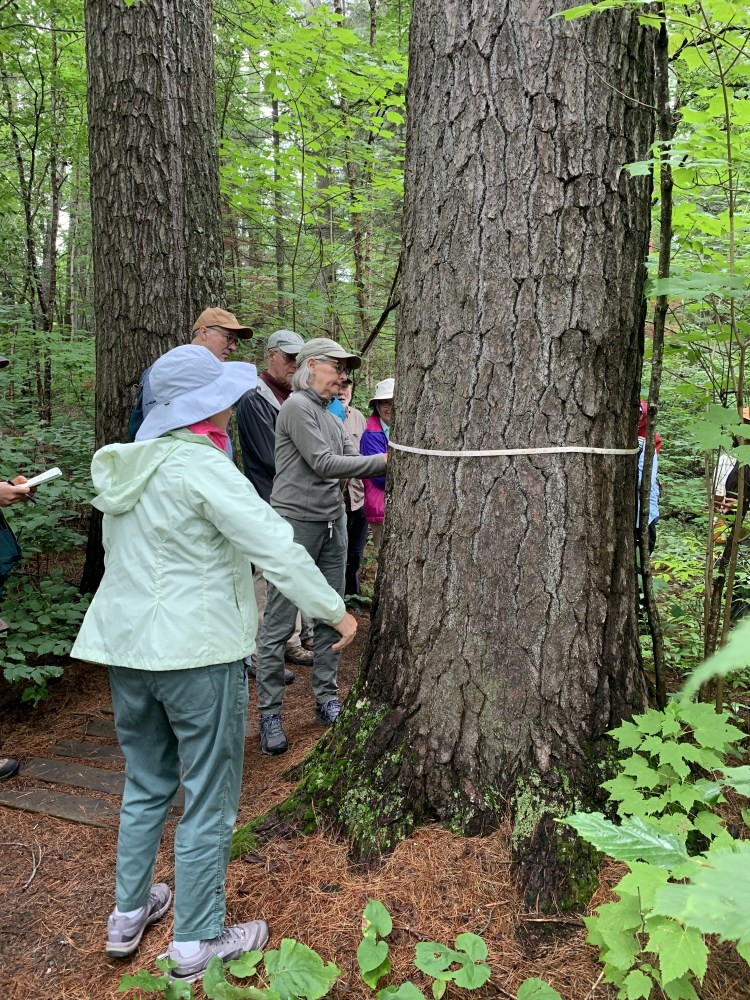
Some of the pines were up to 300 years old, and we measured the diameters of a few, with the largest coming in at 97 cm (38 inches). They towered above the other trees. Dr. Pastor spoke about the history of the pine lumbering era, and he speculated that some stands like this were left uncut because the timber crews ran out of time one winter, and not enough trees were left to justify keeping the camp going another year. They moved on to other forests.
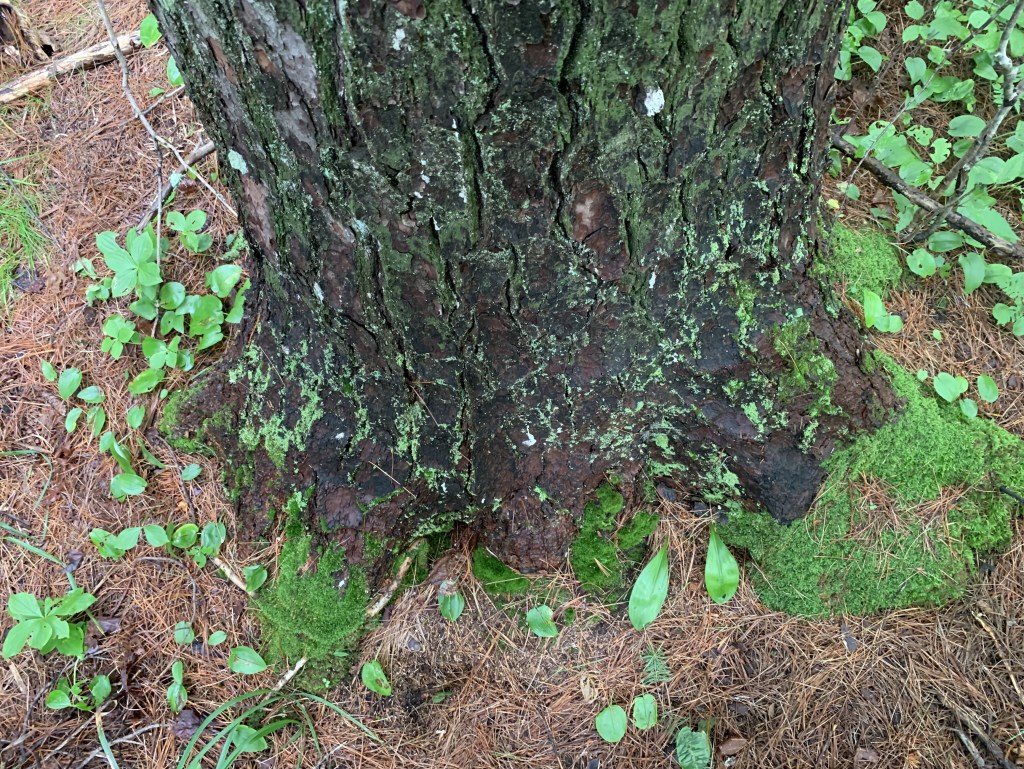
Dr. Pastor pointed out old fire scars at the bases of pine trunks, some likely a couple hundred years old, with the bark long healed over. These scars remind us that pines depend on fire the way frogs depend on water. He explained that much of what we know about fire ecology in Minnesota comes from the work of Bud Heinselman, who visited virtually every lake in the Boundary Waters wilderness in the 1970s and calculated the age of every patch of forest. He determined that every patch originated following a fire and sometimes multiple fires. They occurred every few decades at least, some being light ground fires killing only a few trees while others torched crowns over hundreds of thousands of acres and kick-started a new forest.
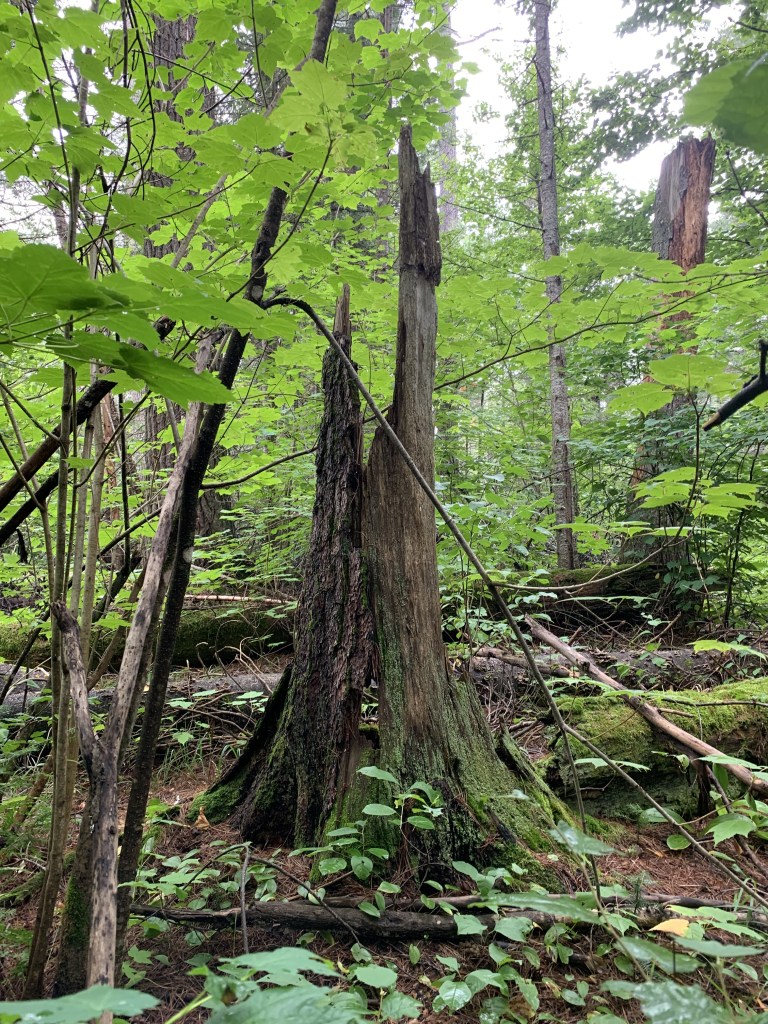
Places with frequent crown fires, such as dry ridges with shallow soil over bedrock, were usually dominated by jack pine, aspen, and paper birch. By contrast, where smaller ground fires came through occasionally, either ignited by lightning or set by the Ojibwe, balsam fir and other flammable “ladder fuels” were kept in check. Mature pines with thick bark often survived—until the next crown fire. By preventing the ladder fuels from carrying low flames up into the canopy, the ground fires enabled Minnesota’s iconic old growth pine forests to flourish.
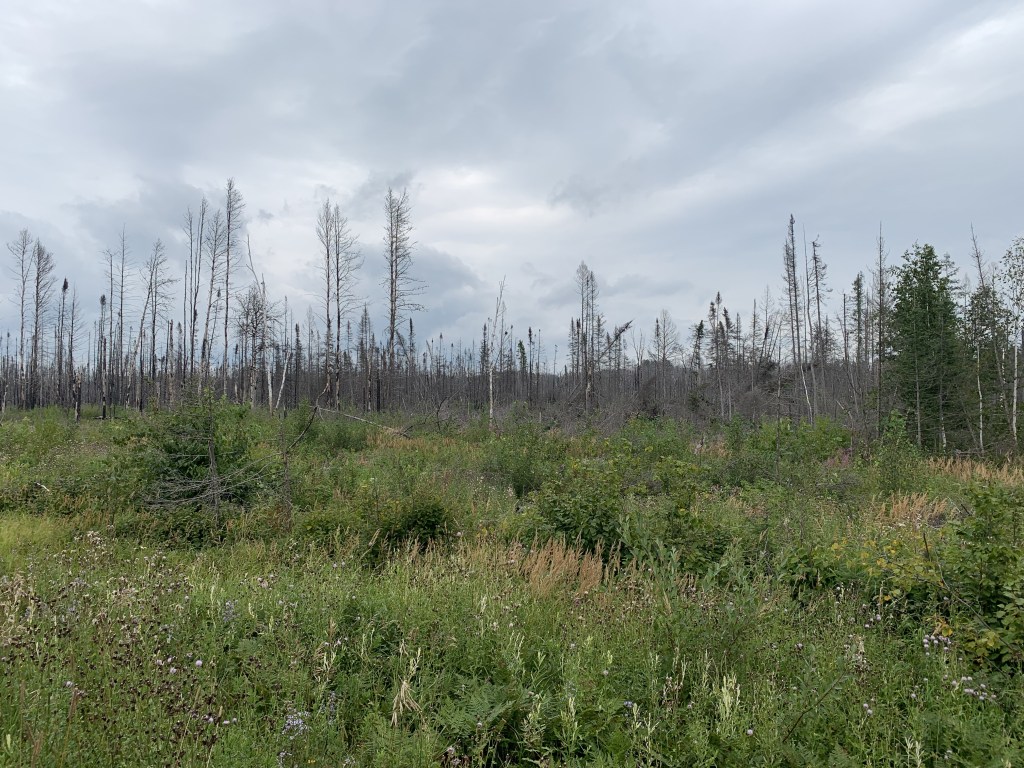
Three hundred years ago the oldest pines at the picnic area got their start in the ashes of a huge crown fire. The seeds came from one or more lucky nearby trees that survived the firestorm. To get a feel for what that was like, we drove north to where the Greenwood Fire burned across Highway 2 in 2021. Dr. Pastor pointed to a lone white pine in the distance that survived and has been spreading seeds ever since over ground prepared to receive them by the fire. The loss of homes in that fire was tragic, but based on what we learned from Heinselman’s work in this fire-dependent landscape, we know it will happen again, and again. Looking out from the roadside, we saw among the fireweed (Chamaenerion angustifolium), wild roses (Rosa acicularis), and pin cherry (also called fire cherry, Prunus pensylvanica), the young aspen trees of the next forest getting their start. It’s a cycle of death and re-birth that has been spooling forward for thousands of years.
 Arrowhead Native Plant Explorers