Written by Kelly Beaster
The Arrowhead Native Plant Explorers met at Lester-Amity Park on the east side of Duluth to host the annual plant foray. Equipped with plant presses, clippers, and serrated hand trowels, ANPE members and board officers searched for flowering and fruiting specimens to contribute to the University of Minnesota-Duluth’s Olga Lakela Herbarium, upholding a three year tradition.
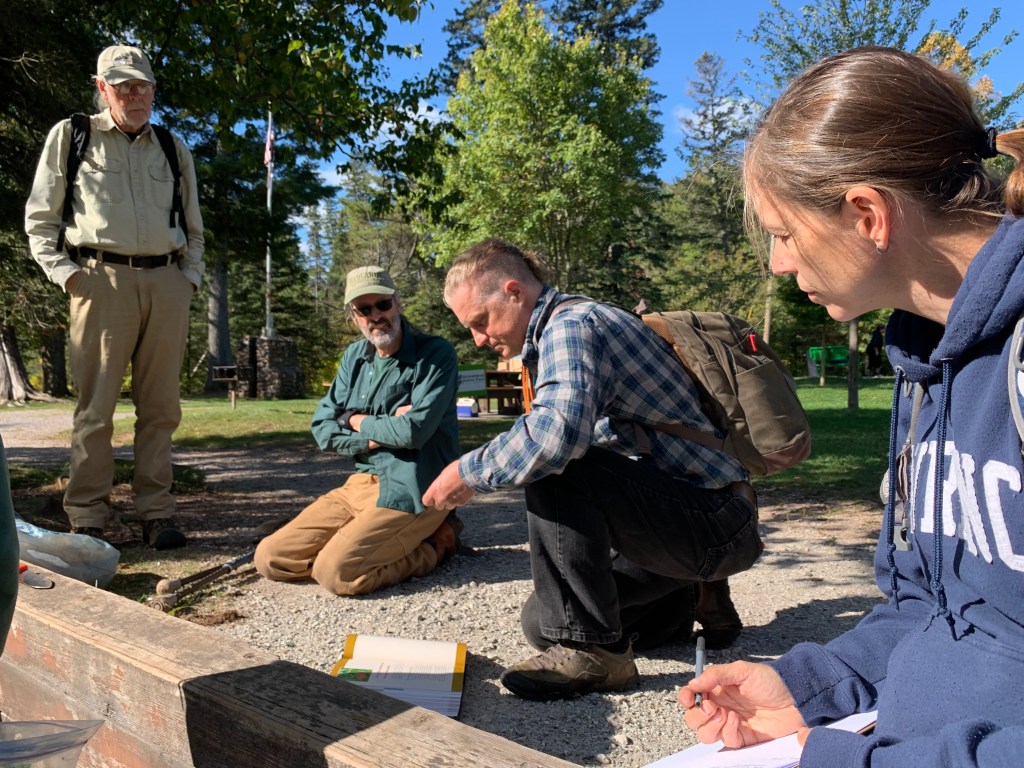
Busabika ziibi, Lester River’s name in ojibwe, means rocky canyon river or “river that cuts through a worn hollow place in the rock” and is aptly named as Lester cuts steeply through a rhyolite canyon. Just below the picnic area is the confluence of Lester and Amity before they rush to join Lake Superior at the mouth of Lester River. The riparian shores in particular provided a good sampling of sun-loving species, such as mountain ash (Sorbus americanus), multiple willows (Salix sp), hairy goldenrod (Solidago hispida), and lindley’s aster (Symphyotrichum ciliatum). Following the Lester ski trails offered more shade tolerant species like mountain maple (Acer spicatum) and large leaved aster (Eurybia macrophylla).
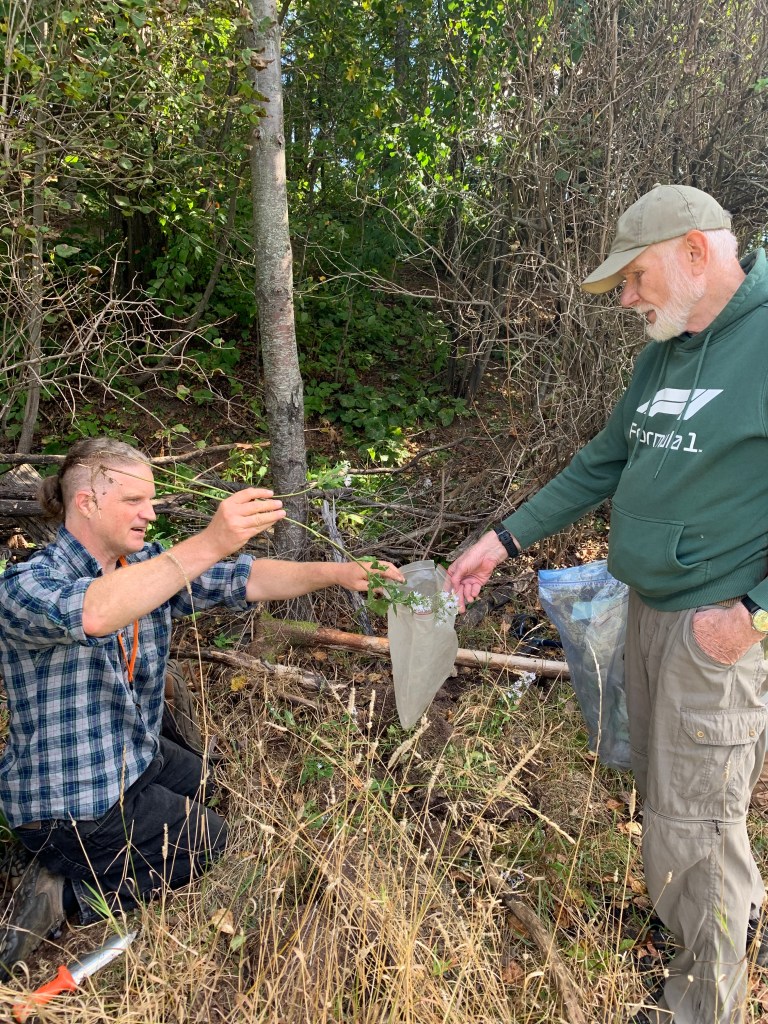
One final search for the special concern species, soapberry (Shepherdia canadensis), found success along a steep river slope along with green alder (Alnus viridus), another dry, sun-loving species that is often found as a plant associate of soapberry. The group wrapped up the day pressing the plants, 35 in total, to dry in the upcoming months. ANPE members can look forward to learning how to mount these same specimens during the Plant Mounting Workshop in later winter 2025. These plants will become part of a research collection with our partners at the University of Minnesota – Duluth’s Olga Lakela Herbarium.
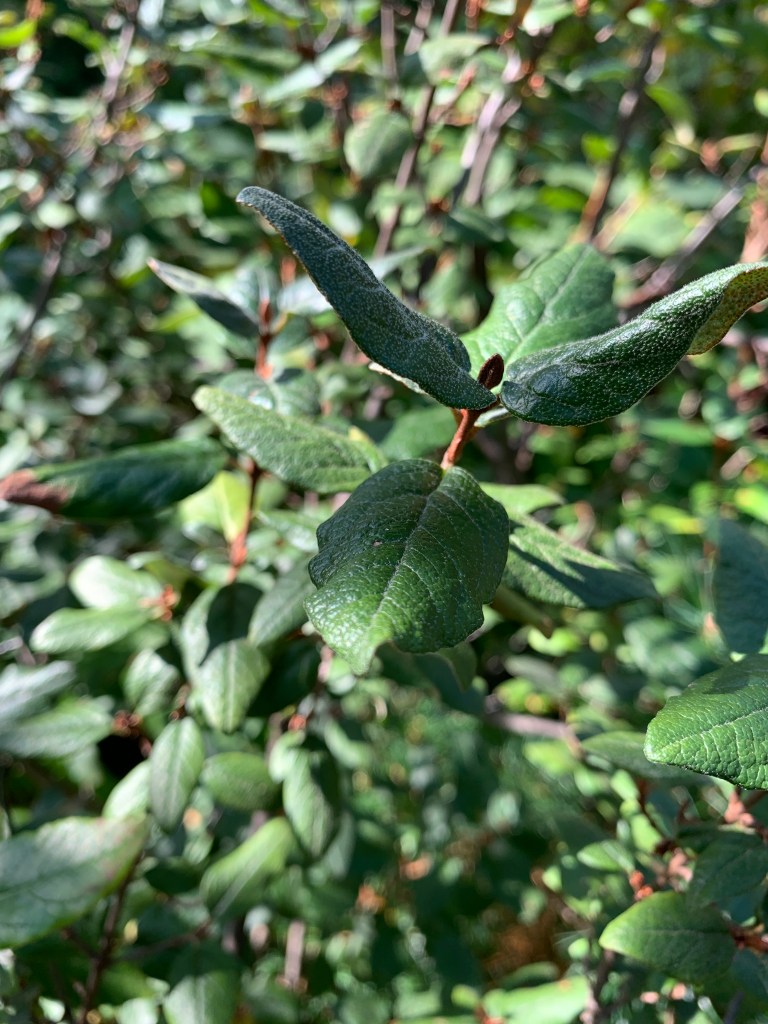
Soapberry, also called buffalo berry, (Shepherdia canadensis) is a state listed species in Minnesota thriving in sunny, dry areas like forest edges and bedrock outcrops.
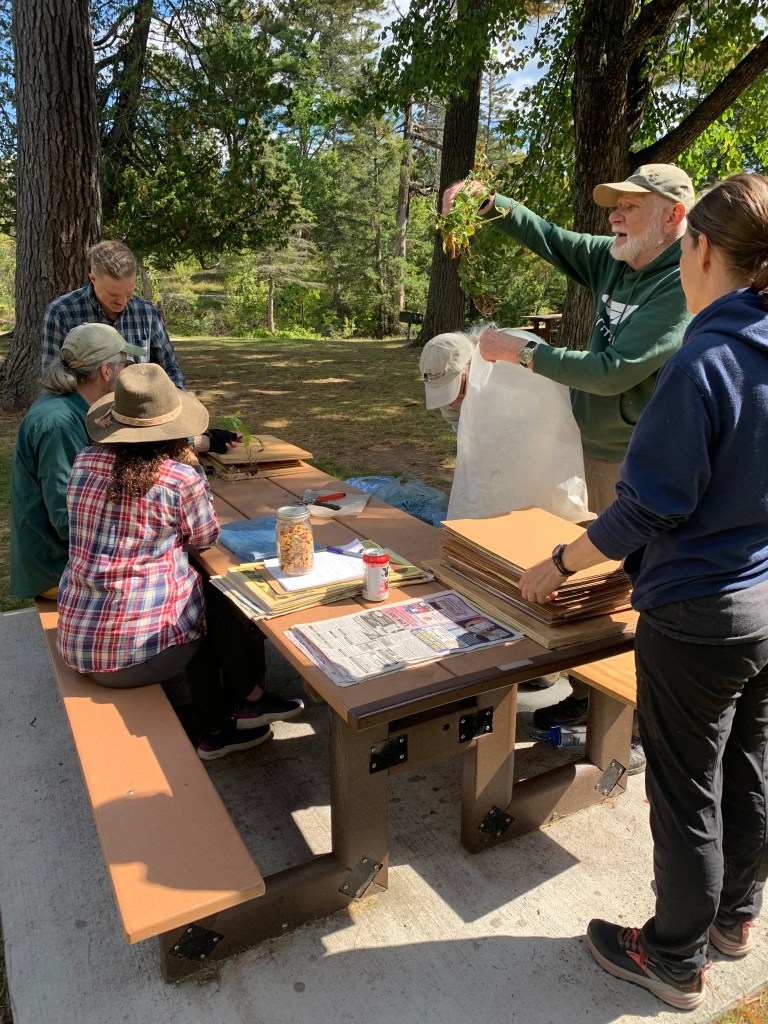
ANPE would like to thank the City of Duluth for their partnership in granting permission to collect from designated locations within the city.
ANPE would also like to thank UMD for their continued partnership with this event.
To learn more about the guidelines around plant collection, check our Resources Page as we upload (soon to come!) a Plant Collection Document that will share collection and pressing tips.
 Arrowhead Native Plant Explorers