Written by: Ethan Perry
Photos by: Kelly Beaster, Sarah Beaster
What can grow where nothing else can? On smooth rock or the trunk of an arctic tree? Lichens! In fact, as lichens crumble over time, they create a bit of soil where mosses can get a foothold, and eventually larger plants too. They can take inert nitrogen out of the air and convert it into a valuable nutrient for plants. Almost any place where plants have trouble getting established, you will find lichens as part of the community. They are eaten by insects, rodents, and caribou. And their sensitivity to pollutants makes them good indicators of air quality.
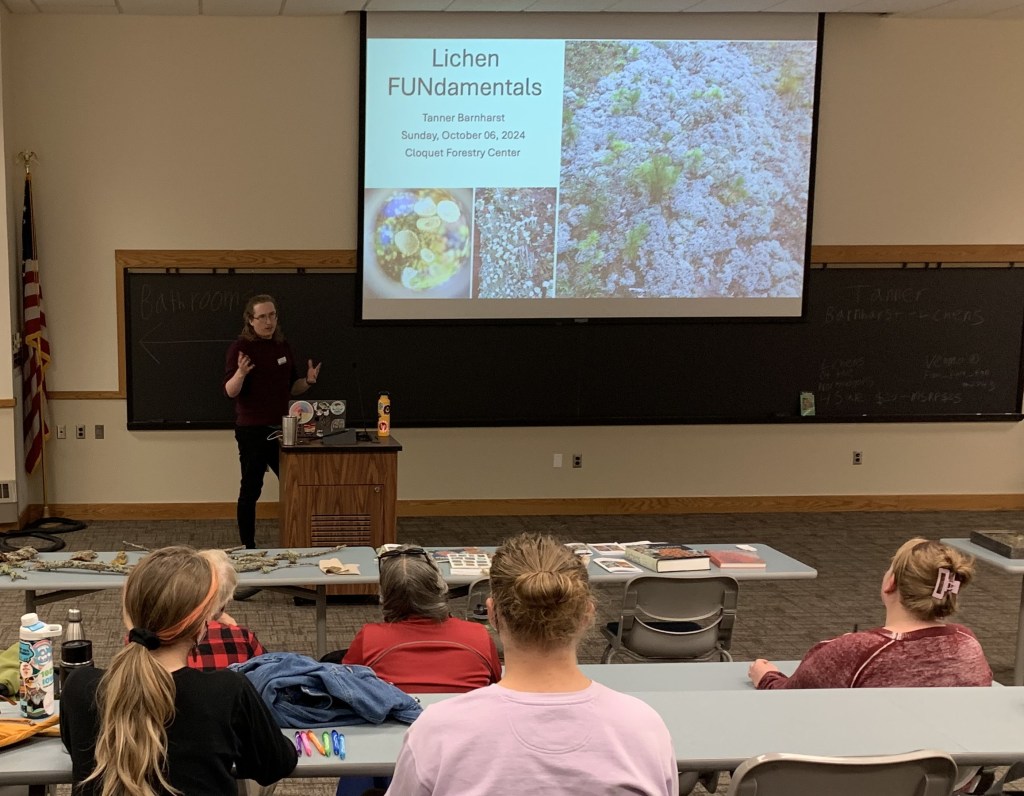
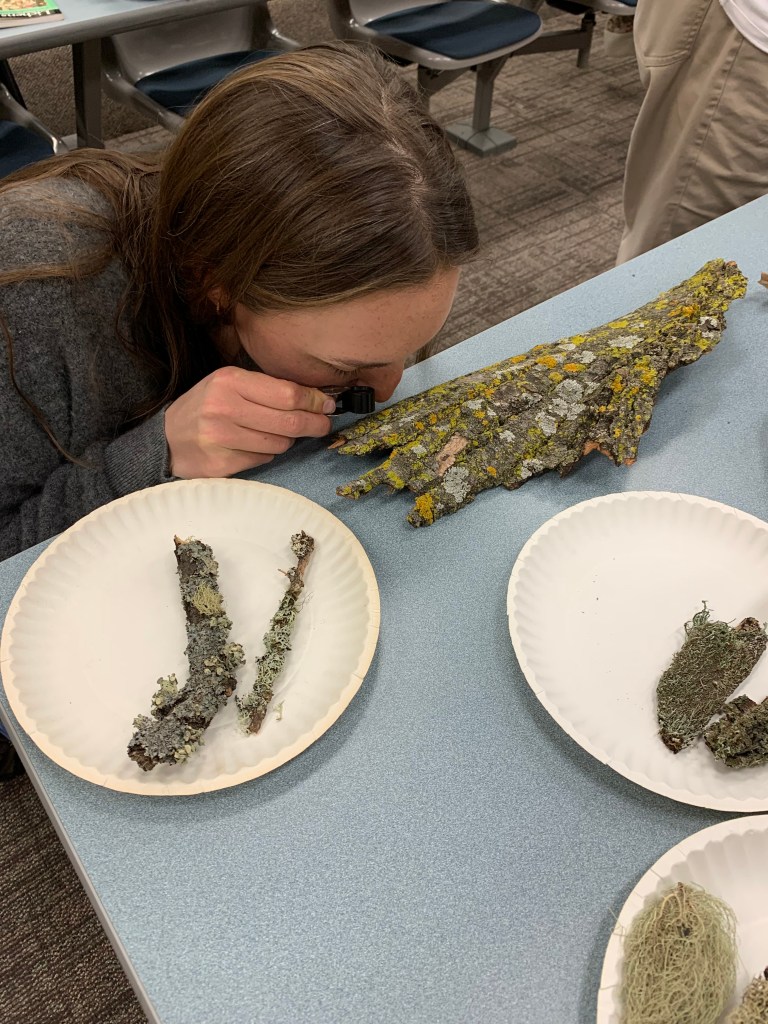
ANPE got a fabulous introduction to the world of lichens—admittedly a bit outside the wheelhouse of an organization devoted to plants–on Sunday October 6 by educator Tanner Barnharst, held at the Cloquet Forestry Center in a joint program with Minnesota Master Naturalists. We began with a brief history of the Center, how the state removed it from the Fond du Lac reservation and transferred it to the University of Minnesota, and how the University has pledged to return it to Fond du Lac. It was a perfect facility for the event, with enough space for an array of lichen samples for us to inspect partway through Tanner’s presentation, and with a variety of types of lichens on the immediate grounds that we explored afterwards.
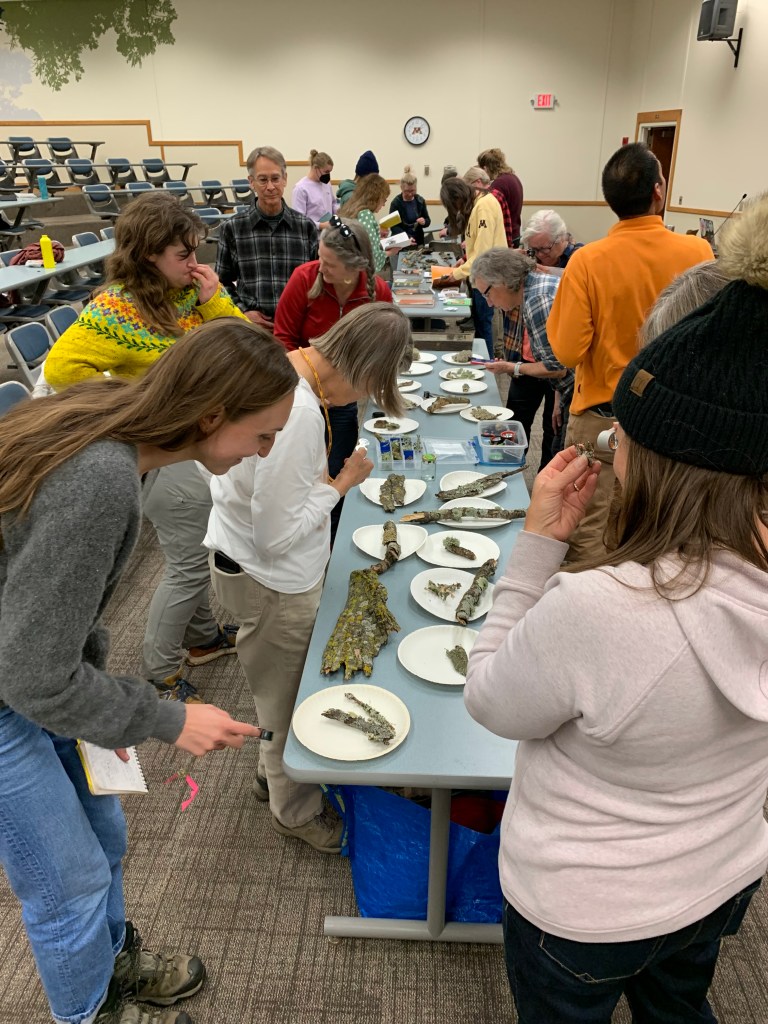
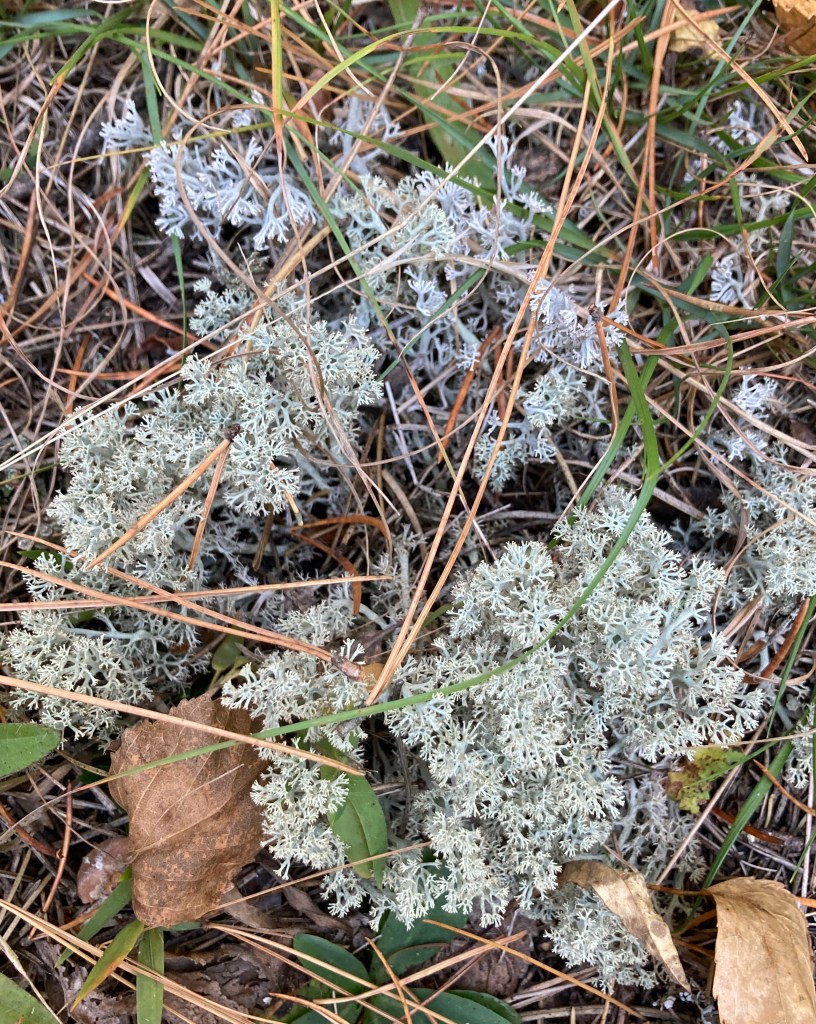
Lichens fall into three categories, all of which we saw at Cloquet: crustose, foliose, and fruticose. Crustose are those flat, two-dimensional lichens that seem spray-painted or plastered onto their substrate. Foliose, or leafy, lichens can also be fairly flat, but you can always get a fingernail underneath the edge—and the upperside and underside look different. Fruticose, on the other hand, are bushy, three-dimensional lichens that are often branched.
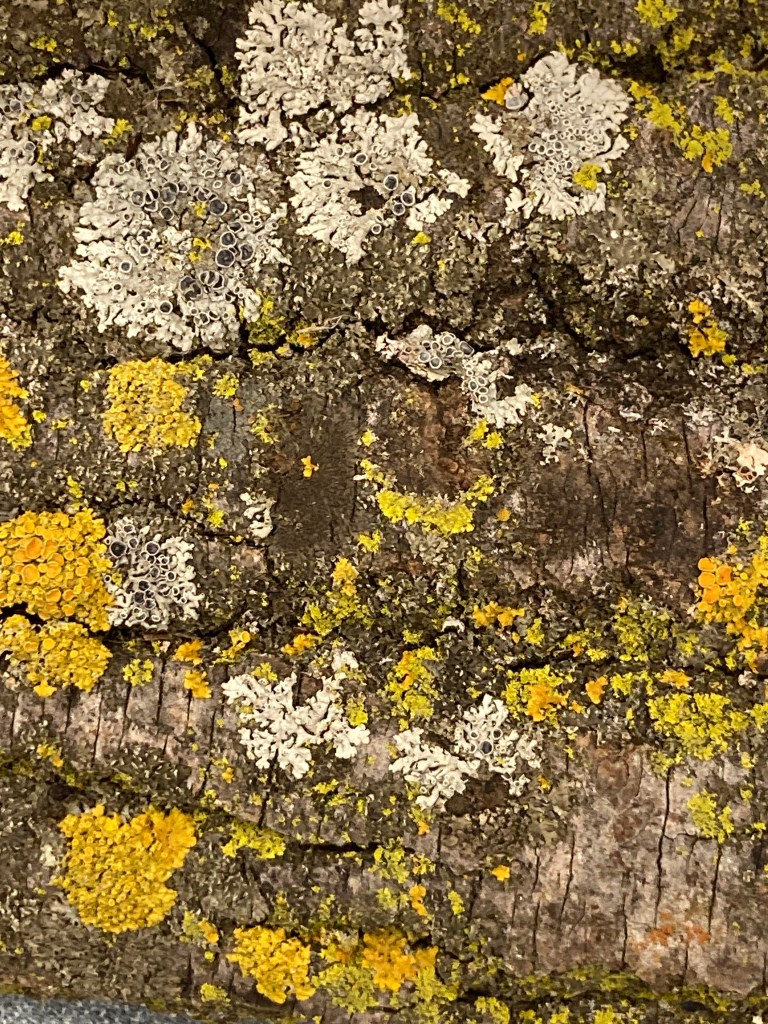
You may have heard that lichens are made up of a fungus and an alga that live together symbolically. Tanner explained that the fungus provides the structure, and the algae provide nutrients through photosynthesis. Each can grow separately, but they look entirely different. And, despite the mutualism, lichens are named by the fungus alone. In fact, the type of algae can actually change as a lichen ages.
If you want to begin identifying lichens to genus or species, Tanner explained that you’ll have to look closely at their structure, which has its own terminology like botany does. You’ll look at whether the reproductive parts are shaped like cups or discs (called apothecia), are grainy or gritty-looking patches (soredia), or tiny fingers (isidia). Look also at whether the edges curl up or down or create hoods, and whether the undersides have vein-like patterns or root-like strands.
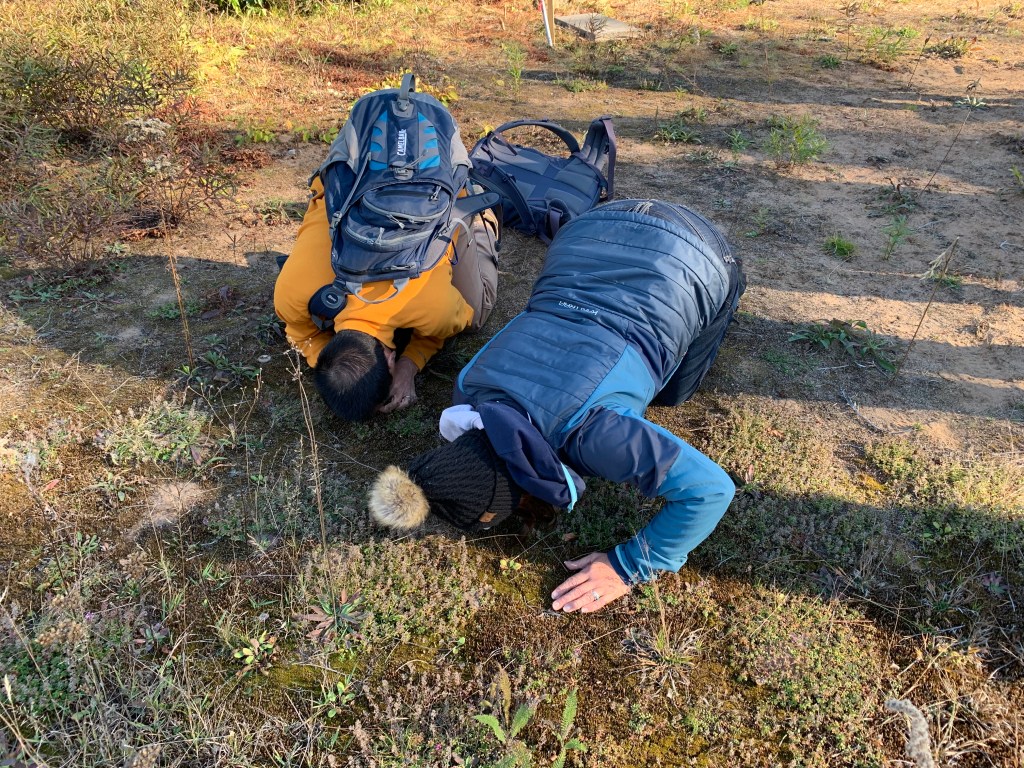
Tanner encouraged us to post lichen observations on iNaturalist with the tag “Minnesota Lichen Map.” If we include photos of the whole lichen and close-ups of the reproductive structures and the undersides, experts can usually provide an identification for it. Not only will these observations build our knowledge of what grows where, but they can be used for research into topics such as air pollution. So, whenever you’re out looking at plants, take a minute for the lichens too!
 Arrowhead Native Plant Explorers