Written by: Kelly Beaster
Ever wonder how spring ephemerals can create enough energy in just a couple of weeks to last an entire year? And where do they store all that energy for such a tiny plant underground? And how do their delicate flowers stay warm in our chilly May nights when frosts are still commonplace? Well, wonder no more! Plant ecologist and botanist, Maggie Ross, answered all those questions and more when she gave the Arrowhead Native Plant Explorers an introduction to spring ephemerals.
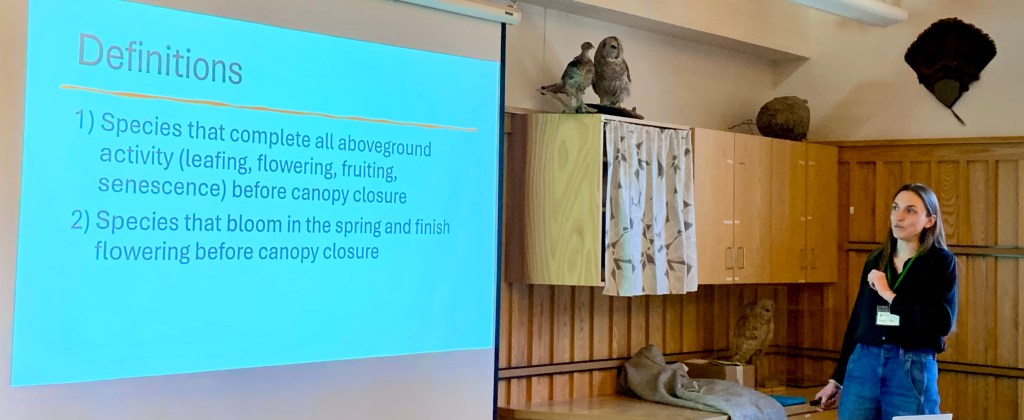
Maggie shed light on two different definitions commonly used to describe spring ephemerals:
- Species that complete above ground activity (leafing, flowering, fruiting, senescing) before canopy closes. (ex. Spring beauty, dutchman’s breeches, trout lily, cut leaved toothwort, moschatel)
- Species that bloom in the spring and finish flowering before canopy closure (ex. Large flowered bellwort, ginger, large flowered trillium, hepatica, leatherwood, dwarf ginseng)
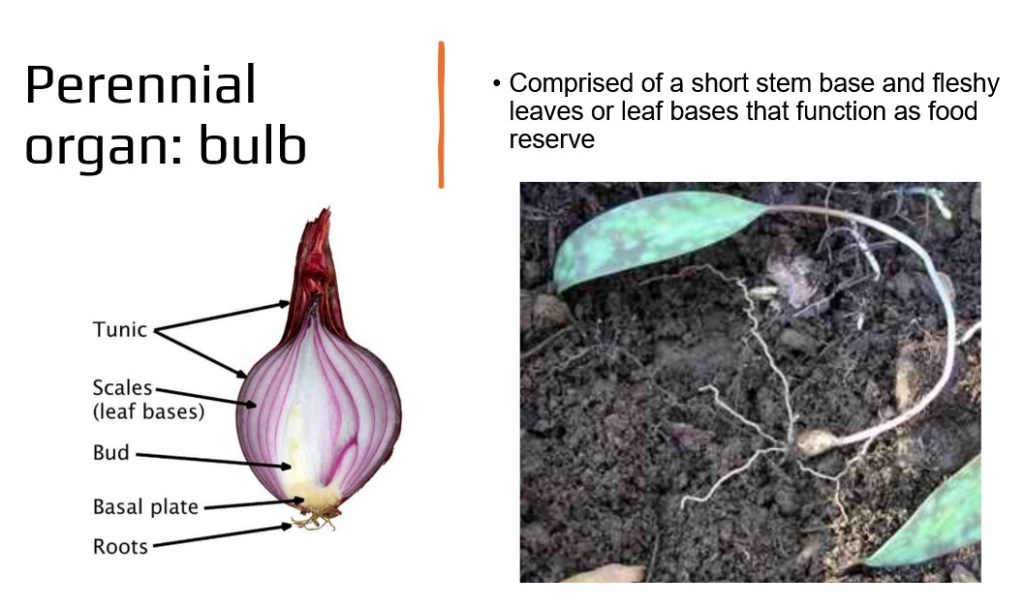
Maggie shared the many physiological adaptations that spring ephemerals have that prepare them for such a unique existence. The first are perennial organs such as corms, bulbs, rhizomes, and modular root structures that store carbohydrates throughout the year. Since the season between rock hard frozen ground and fully shaded canopy is only a matter of weeks, ephemerals have increased rates of photosynthesis and increased protein content compared with other plants to allow them to grow and store carbon quickly. These higher activity rates increase the demand for and consumption of water, so the moisture content of the previous year impacts the health of the plant the following year. Shallow roots allow ephemerals to utilize the spring thaw earlier than deeper rooted species. Dense hairs along leaves and stems, flowers that open and close in response to the sun, and folded leaves that shelter sensitive flower buds are all further adaptations that allow spring ephemerals to grow in cold conditions.
Ephemerals require nitrogen, but they are not capable of absorbing nitrogen very quickly. Instead, they can reabsorb nitrogen from the soil or even from other plants, as observed in carbon transfer between sugar maple seedlings and trout lily. In early spring, carbon is sent from trout lilies to maple seedlings, and after trout lilies senesce, carbon is sent back from maple seedlings to trout lilies through mycorrhizal fungus that attach the roots of each species!

Many spring ephemeral seeds are ant dispersed, so a nutrient rich, fleshy casing or appendage attracts the ants that bring the seed to their nest, and the ants consume the appendage while casting the seed into their refuse. Another spreading mechanism is a capsule of tiny lightweight seeds that utilize a ballistic explosive mechanism to disperse. This is observed in dutchman’s breeches, bloodroot, violets, and spring beauty.

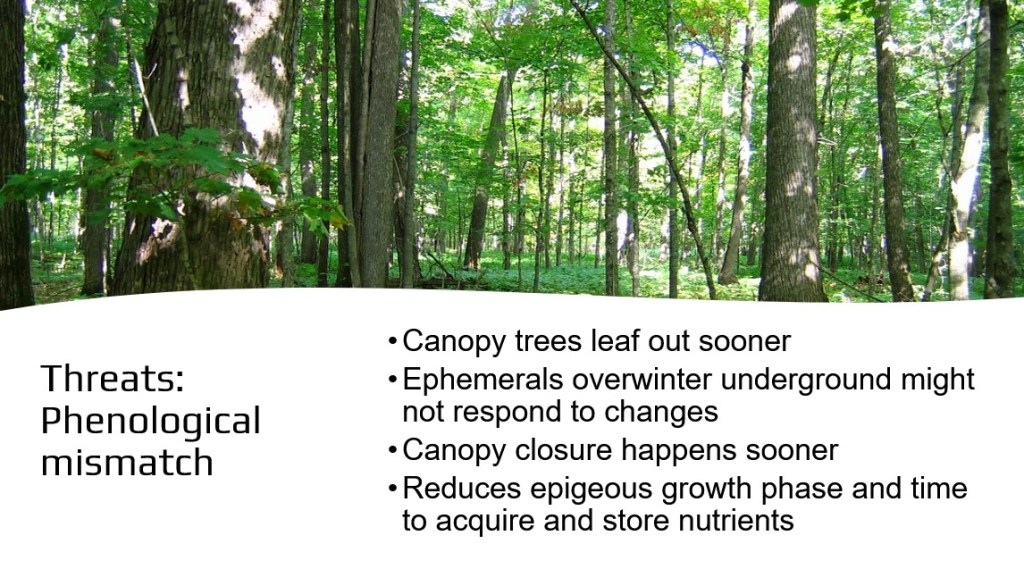
For such tiny plants, ephemerals actually have high impacts on our environment. They are an early source of pollen and nectar for native insects. Their high water demand reduces runoff and nutrient loss and can lead to decreased erosion. Ephemerals also face many threats, including invasive species, earthworms, habitat loss, and a warming climate that they cannot respond to as quickly as other species, creating phenological mismatches.
Where can you find these harbingers of spring? Search in forests of sugar maple, basswood, and red oak that are relatively undisturbed. Some great examples in and near Duluth include Magney-Snively Natural Area and Jay Cooke State Park!

Below are more resources to further your knowledge on these unique species:
- How phenology influences physiology in deciduous forest spring ephemerals
- 14C transfer between the spring ephemeral Erythronium americanum and sugar maple saplings via arbuscular mycorrhizal fungi in natural stands
- When spring ephemerals fail to meet pollinators: mechanism of phenological mismatch and its impact on plant reproduction
- https://foragerchef.com/toothwort/
- https://anps.org/2021/01/24/know-your-natives-spring-beauty/
- https://fmr.org/updates/conservation/earthworms-invade-our-forest-floor
- https://thenaturalhistorian.com/2013/09/07/night-of-the-invasive-earthworms-a-horror-story-for-northern-forests/\
- https://www.texasbeyondhistory.net/coast/nature/images/spring-beauty.html
- https://www.nybg.org/blogs/plant-talk/2013/04/science/dutchmans-breeches-pantaloons-fit-for-a-queen/
 Arrowhead Native Plant Explorers