Written by: Kelly Beaster

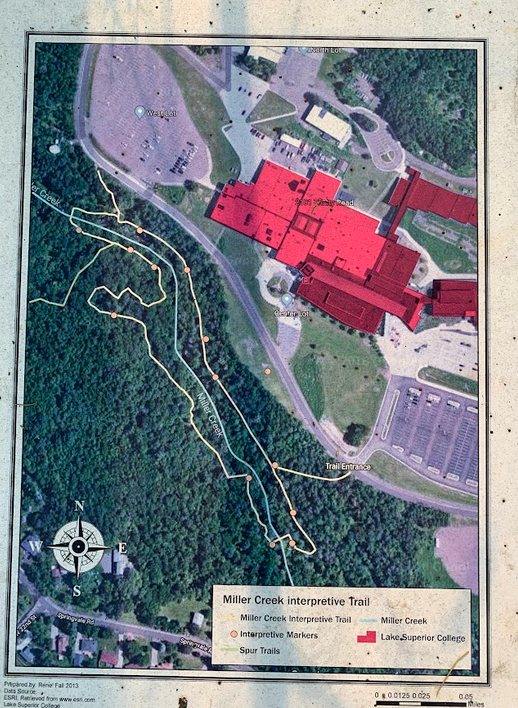
Nestled into the Duluth hillside with Lake Superior College to the east and the Lincoln Park community and St. Louis River Estuary downstream, Miller Creek meanders and cascads over bedrock and gravel. This section of Miller Creek has been stewarded by Glenn Merrick, recently retired biology professor for LSC, since 1999. With funding from a Conservation Partner Grant, Glenn began planting seedlings from the south St. Louis Soil and Water Conservation District tree and shrub sales and protecting these seedlings from deer with small exclosures made out of whole rolls of 100’ long welded wire fencing. This method allowed for restoration of entire sections of forest, including the native forest floor along with the trees.
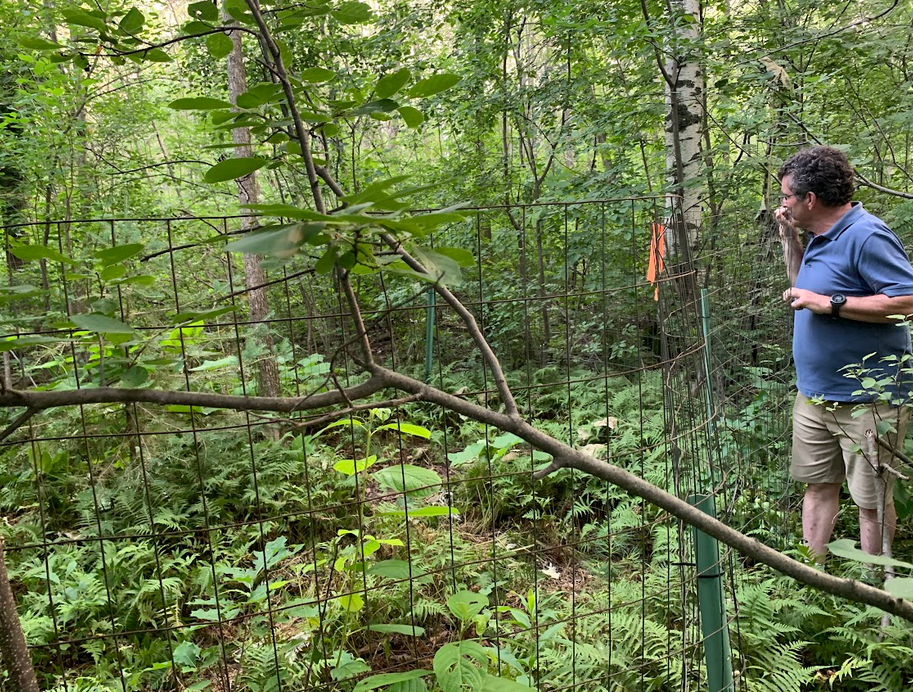
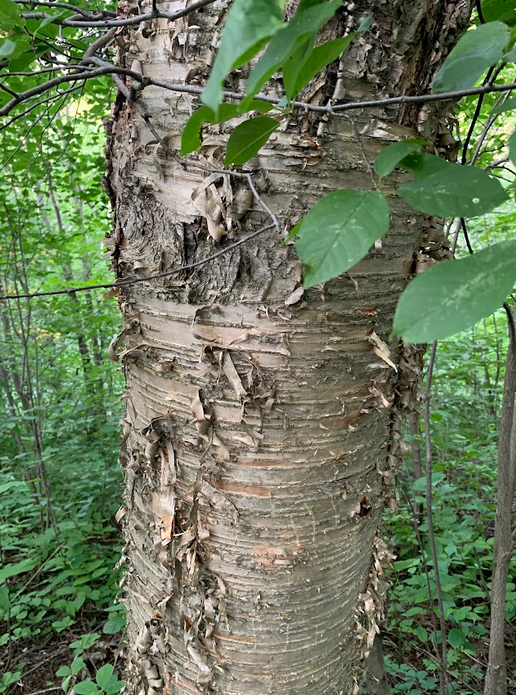
ANPE members filed down the narrow footpath in the fading evening light to see these exclosures at work and even view areas where exclosures had been removed as the trees and native vegetation outgrew them. Glenn selected tree and shrub species that were appropriate for the mesic hardwoods forest ecosystem or MHn35b, including northern white cedar, white pine, northern red oak, sugar maple, basswood, and when he could get them, yellow birch. These species used to be widespread along the deeper glacial till soils beside the river gorge but due to logging and deer, those species were removed and replaced with aspen, which aren’t targeted by deer. Some large yellow birch, sugar maple, white pine, and oak can be seen and provided clues as well to what the forest had once looked like as well as some herbaceous species like wild ramps and nodding trillium, spotted on the hike.

Miller Creek is one of 16 registered trout streams in Duluth, and they all rely on the well-drained glacial till that was deposited on the bedrock. Mature forests allow the rain and snowmelt to filter into the soil rather than running straight into the streams. When it does arrive, it returns as cold groundwater, perfect for trout.
ANPE members got to see successful stewardship, and Glenn demonstrated how do-able it can be for anyone with some land to make small changes that can lead to big improvements in our local environment.
For more information about Miller Creek, visit the Lake Superior Streams Website.
Learn more about the Miller Creek Resotration through this Interpretive Brochure.
 Arrowhead Native Plant Explorers