Written by: Ethan Perry
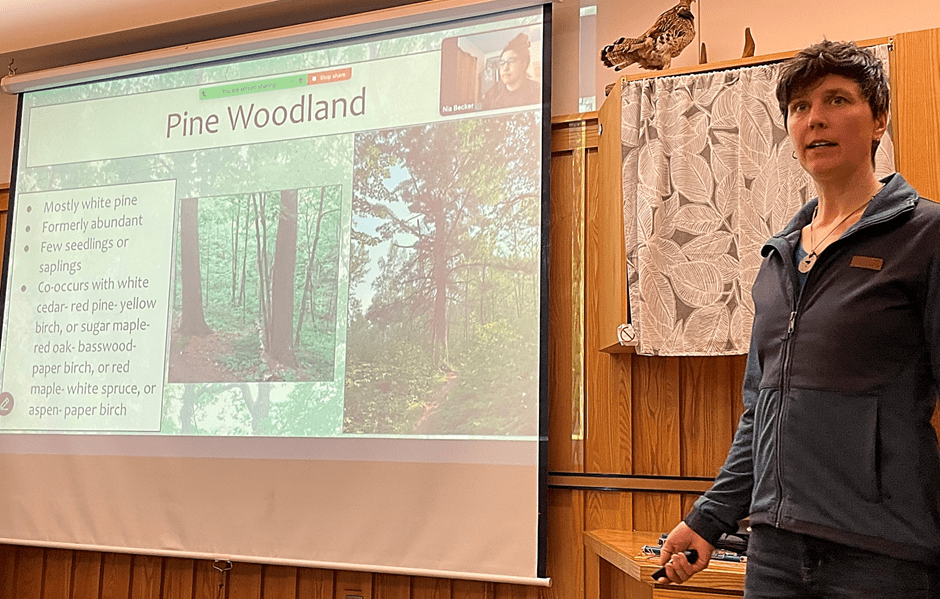
Many of us have explored Duluth’s extensive forests, but we haven’t counted the trees, or measured them. Numbers like these show us more clearly the direction a forest is changing and help make more precise management decisions. And that’s exactly what our most recent presenters aim to do. Abby Andrus and Nia Becker, foresters with Dovetail Partners, have been conducting a forest inventory as part of a larger project overseen by the City of Duluth and the Minnesota Land Trust. Abby Andrus spoke to us in person, and in a first for ANPE presentations, Nia Becker joined virtually.
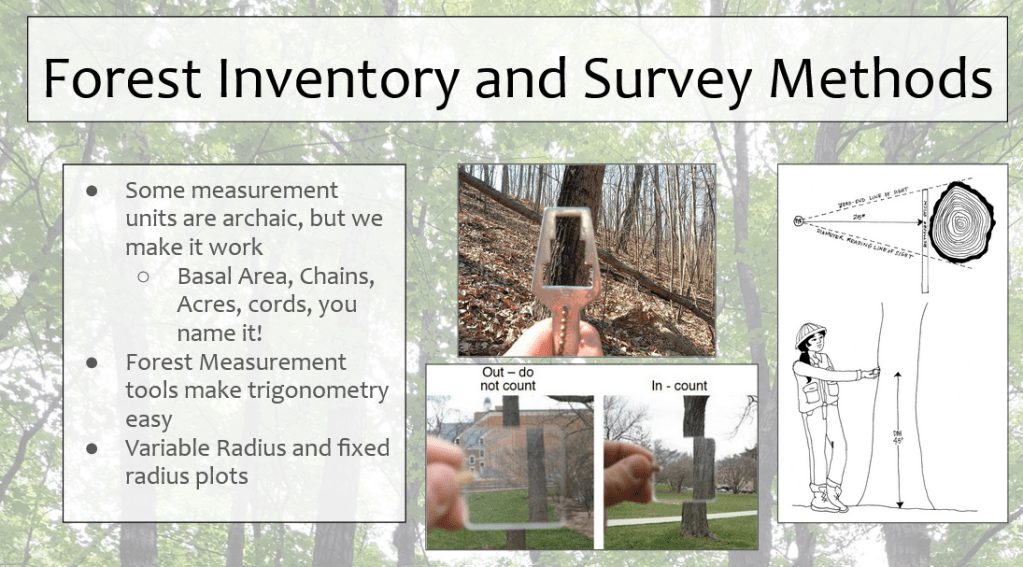
Their inventory took them to three large forested areas: Mission Creek at the western end of the city, Lester-Amity-Hawk Ridge at the eastern end, and Piedmont-Brewer’s Park near the center. Together they covered over 6,000 acres and placed enough plots for each to represent about 10 acres. At each plot they measured trees down to 1 inch diameter, as well as measuring logs, deer browse, ground vegetation, and invasive species.
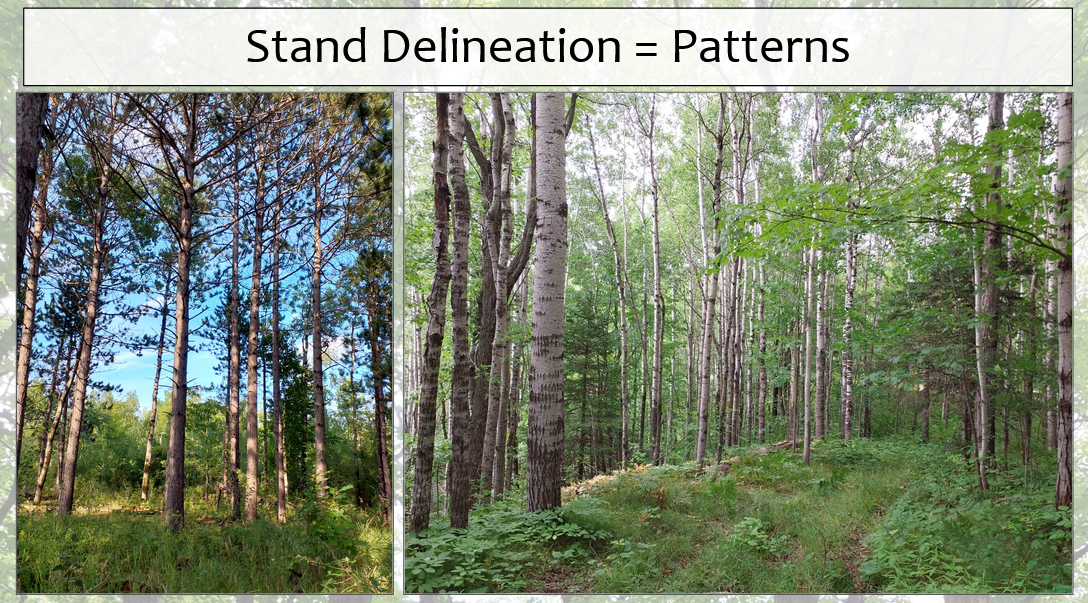
One product of their assessment will be a map of the forests divided into units based on tree species and condition. The main cover types are aspen-birch, remnant pine stands, black ash swamps and stream corridors, and mixed hardwoods, as well as inclusions of lesser types like rock outcrops, wetlands, and pine plantations. Based on conditions, Abby Andrus and Nia Becker will provide management recommendations for each map unit.
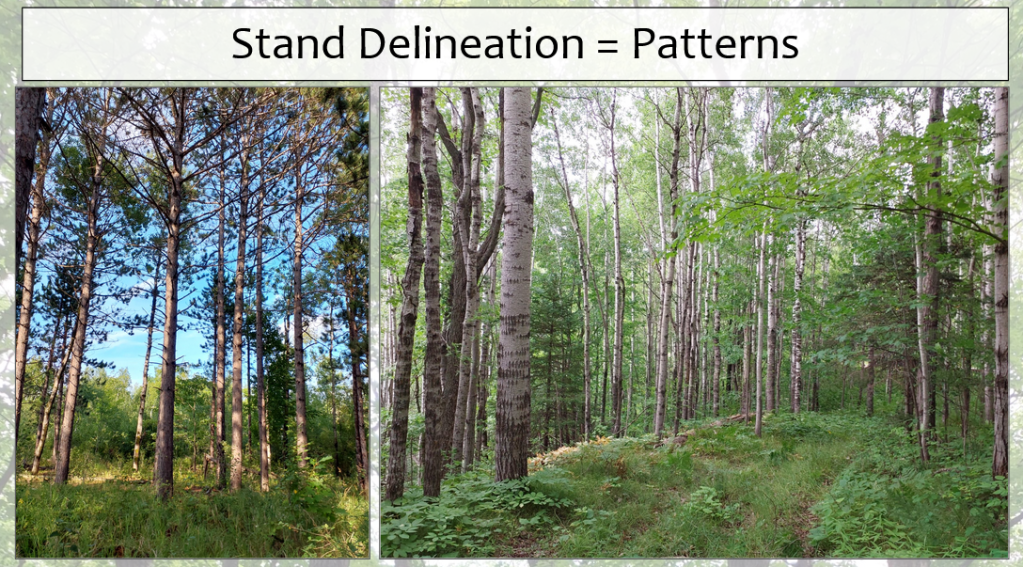
Aspen-birch is the dominant type because it has been favored by past disturbances. It provides good wildlife value for browsers and animals that use tree cavities, but sometimes an overly thick mid-story of balsam fir or buckthorn develops, increasing fire hazard and shading out other native plants. Reduction of the mid-story, sometimes followed by prescribed fire, can be appropriate. In many places aspen-birch can be left to succeed into other types over time, such as mixed hardwoods. These hardwoods, often dominated by maple, basswood, and oak, mixed with aspen and conifers, can sometimes become too dense. Openings made in the canopy can allow trees like oak and yellow birch to persist.
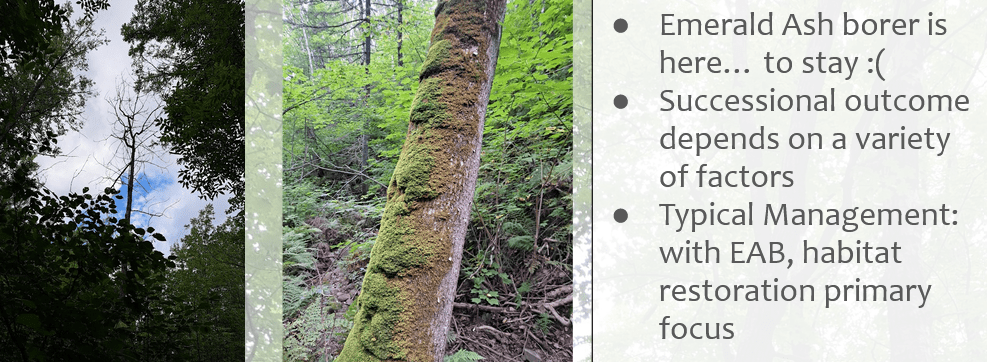
Black ash forests are being decimated by emerald ash borer, especially in the Lester-Amity area. In places were the ash is mixed with aspen, balsam poplar, red maple, or conifers, these other trees can take its place. In some wetter spots planting flood-tolerant tree species may be necessary, or they can be left to transition into shrub swamps.
Overall, Abby Andrus and Nia Becker recommend the city manages forest succession for a diverse mosaic of types, mimicking the disturbances by fire and wind these forests are adapted to. Deer browsing and invasive species will need to be controlled. The information they provide in a management plan will give Duluth a roadmap to steer the future of our forests.
 Arrowhead Native Plant Explorers