Lake Superior is naturally a frequent focus for Arrowhead Native Plant Explorers. Some may remember the presentation by Sarah Johnson about monitoring populations of rare coastal plant species on Isle Royal and in the Apostle Islands. Or maybe you joined us last September for a walk on Minnesota Point. But at the Two Harbors lighthouse on Saturday June 1, on the shore of the same great lake, the contrast could not have been any greater.

Carol Reschke, retired from UMD’s Natural Resources Research Institute and proprietor of an ecological consulting company, gave us a tour of the bedrock shore in front of the lighthouse. While the sands of Minnesota Point shift around with the winds, the solid basalt bedrock of the North Shore appears immovable. And while beach grass dominates the open dunes of Minnesota Point, the dominant life form on the bedrock is lichen.
Reschke pulled out a datasheet from a small vegetation plot she did over 20 years ago at that spot, which contained 24 species of lichens. By comparison, there were 13 species of herbaceous plants. In the plot lichens covered about 80% of the rock surface. They grow extremely slowly, so a large lichen may be a couple hundred years old. For more on lichen join us at an event dedicated to them planned for October.
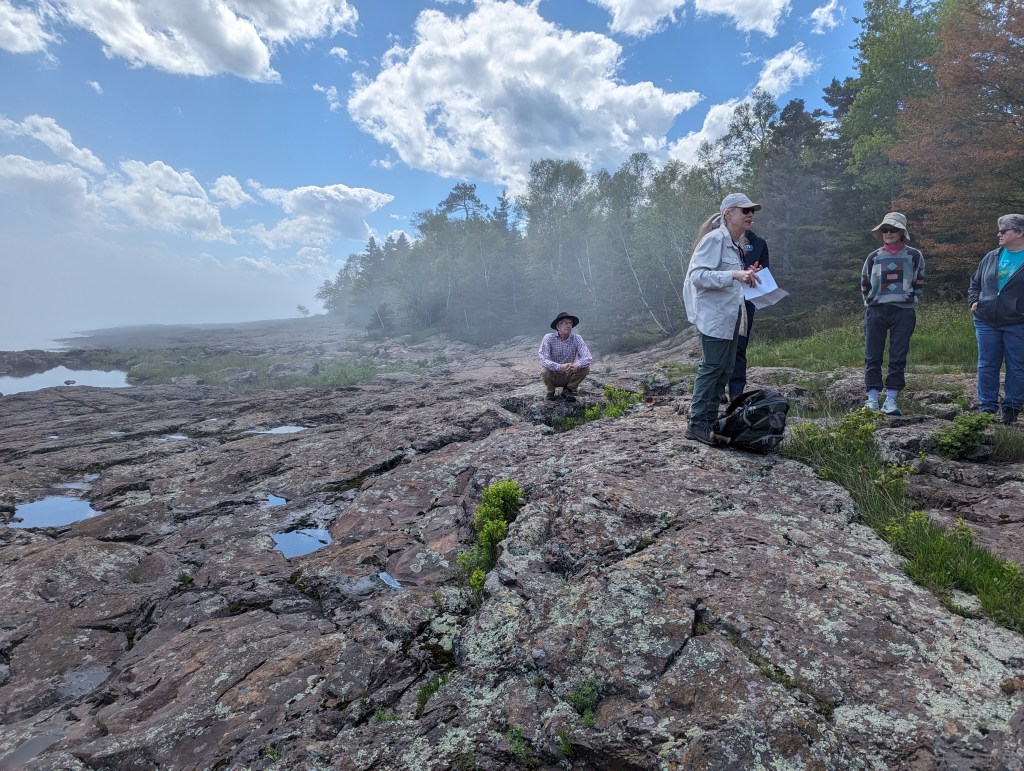
On Saturday the sound of the foghorn led us through the soupy air onto the rocky shoreline. But as we talked, the fog burned off, and the sun began to glitter on countless tiny pools of rainwater. Moss grows around the edges of the pools and in crevices in the rock. And in the moss grows a community of herbaceous plants and even some stunted shrubs, most of which are unusual in the region.
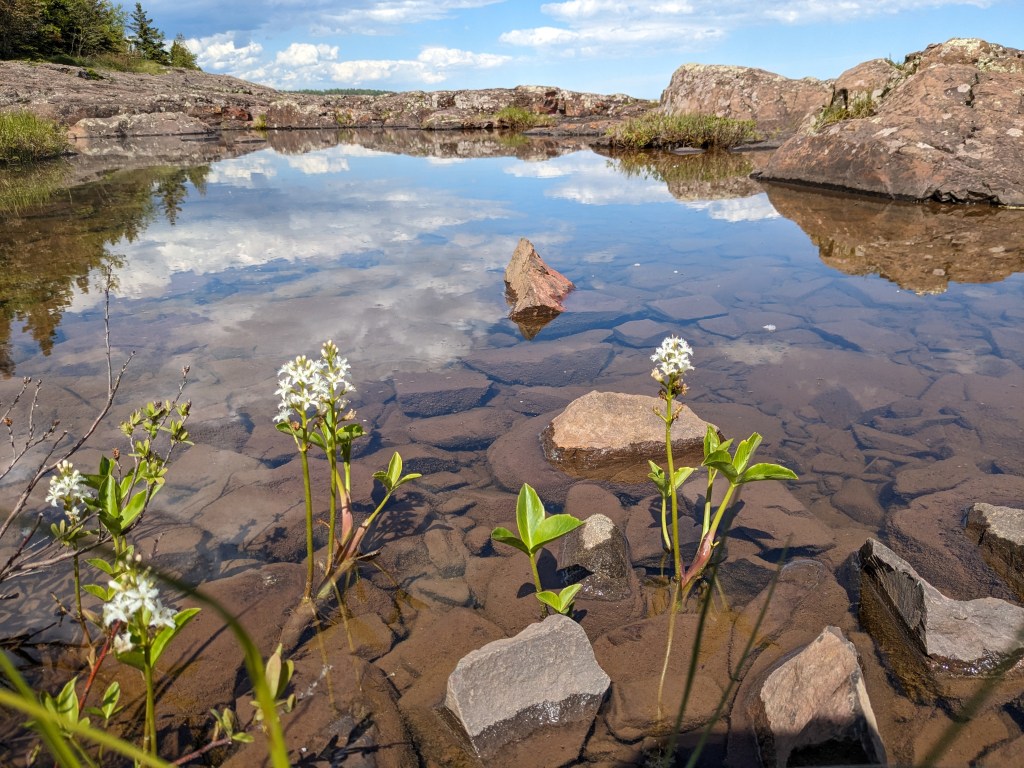
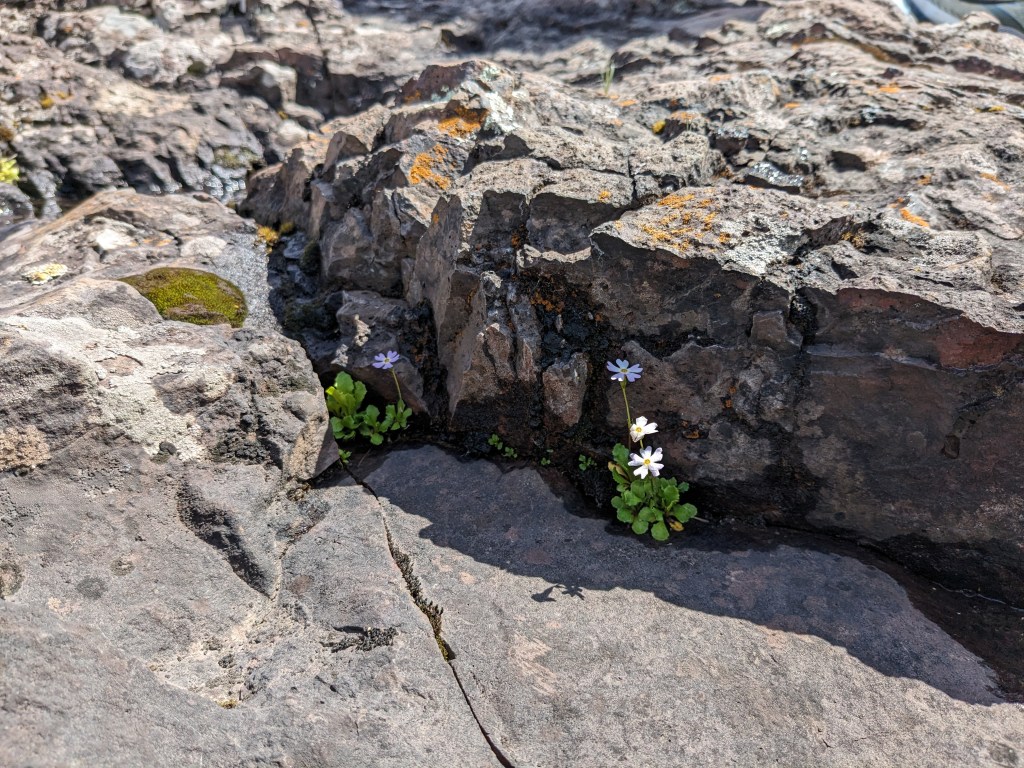
They survive only in the crevices where they escape the grinding scour of ice sheets propelled by winter waves onto shore. Some of the plant species grow only on the Lake Superior shoreline, separated from a primary range in the Arctic or western mountaintops. They are relics left from the retreat of the last glacier. Frigid Lake Superior, mimicking harsh glacial conditions, creates a suitable microclimate for them to hang on in the Midwest.
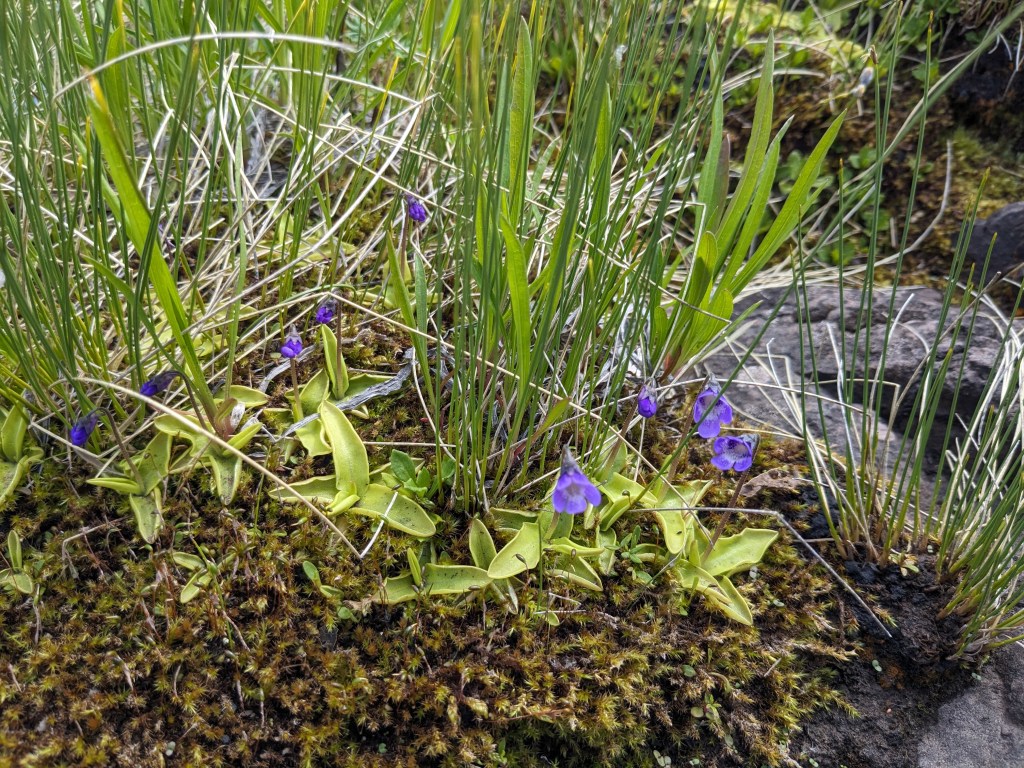
One of the plants we saw was the rare Butterwort (Pinguicula vulgaris) with tiny rosettes of fleshy, yellow-green leaves in-rolled at the edges. The leaves are covered with sticky hairs that trap small insects and hold them while enzymes digest them and release nitrogen—a useful trait in such a nutrient-poor environment. Their purple blossoms, the earliest ones just opening, were a highlight of the day.
 Arrowhead Native Plant Explorers
Your summary of an event, and your “previous post” are appreciated, for events that we miss!
Greg Stoewer/Mary Carpenter family
LikeLike