Written by: Kelly Beaster
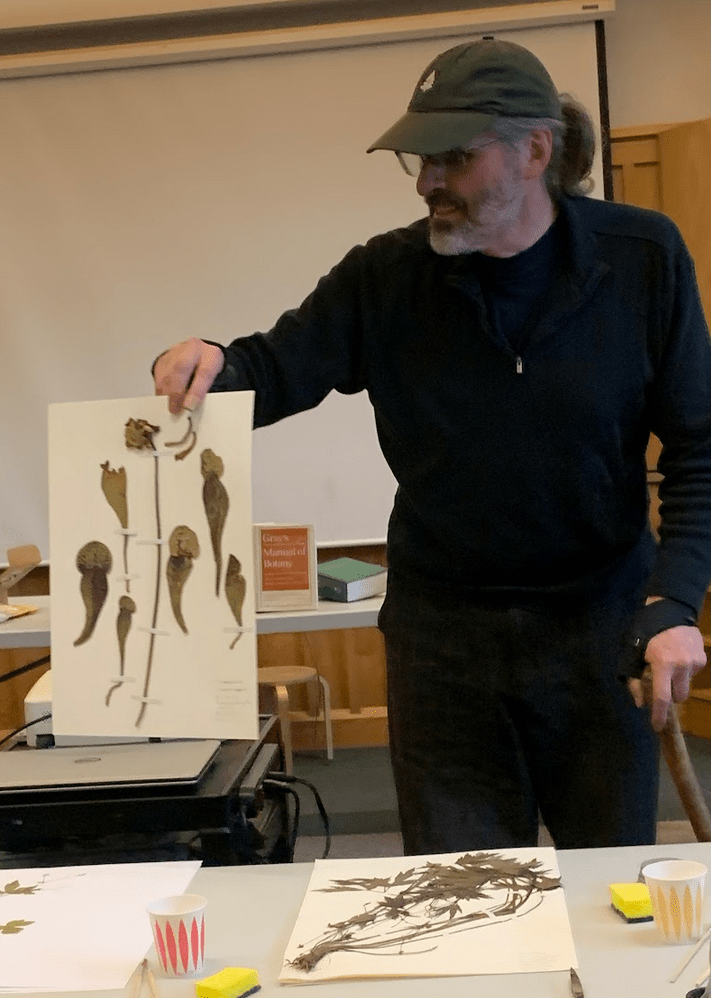
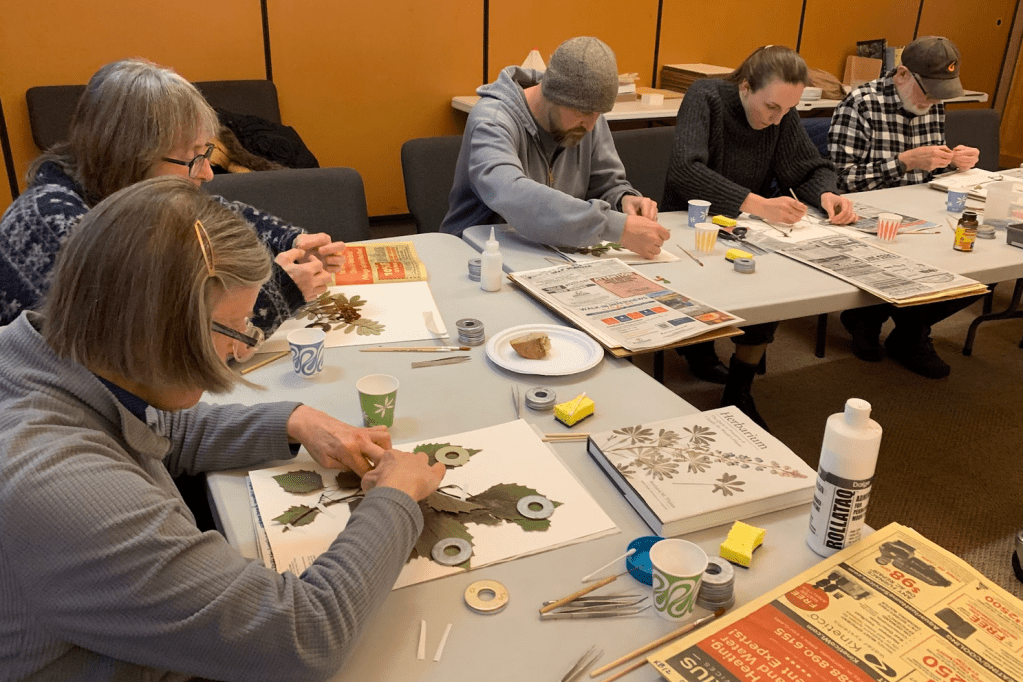
Did you know that plant specimens can tell us a lot about our environment and the changes that are occurring in it? Plants have always responded to environmental changes, and it’s that adaptability that has provided us with such diverse plants around the world. Retired botanist, Paul Hlina, shared three recent studies about plant specimens that exhibit how plants have adapted to some of the new climate trends before he got ANPE members started on the actual gluing of plants to paper at our plant mounting workshop at Hartley.
In response to more available carbon in the atmosphere and warmer temperatures over the last 200 years, plants are growing larger and becoming less nutritious, as observed in both a Konza Prairie study and a comparison of Lewis and Clark’s collected plant specimens. Earlier springs due to a warming climate has impacted the timing of flowering, as noted in a paper in Ecology Letters. Herbarium specimens are for more than teaching plant ID!
After a rich career of vegetation surveys and plant collecting in northern Wisconsin, Paul Hlina has been volunteering his time in retirement to increase the knowledge of local plant flora. Paul led ANPE members through the history, significance, and particulars of how to glue the collected plants to archival paper. His expertise on how to place the plants on the paper with one underside of a leaf facing up to see both the top and bottom features or ensuring the specimen provided access to all of the identifiable features was key to teaching all participants how to prepare research level herbarium specimens.
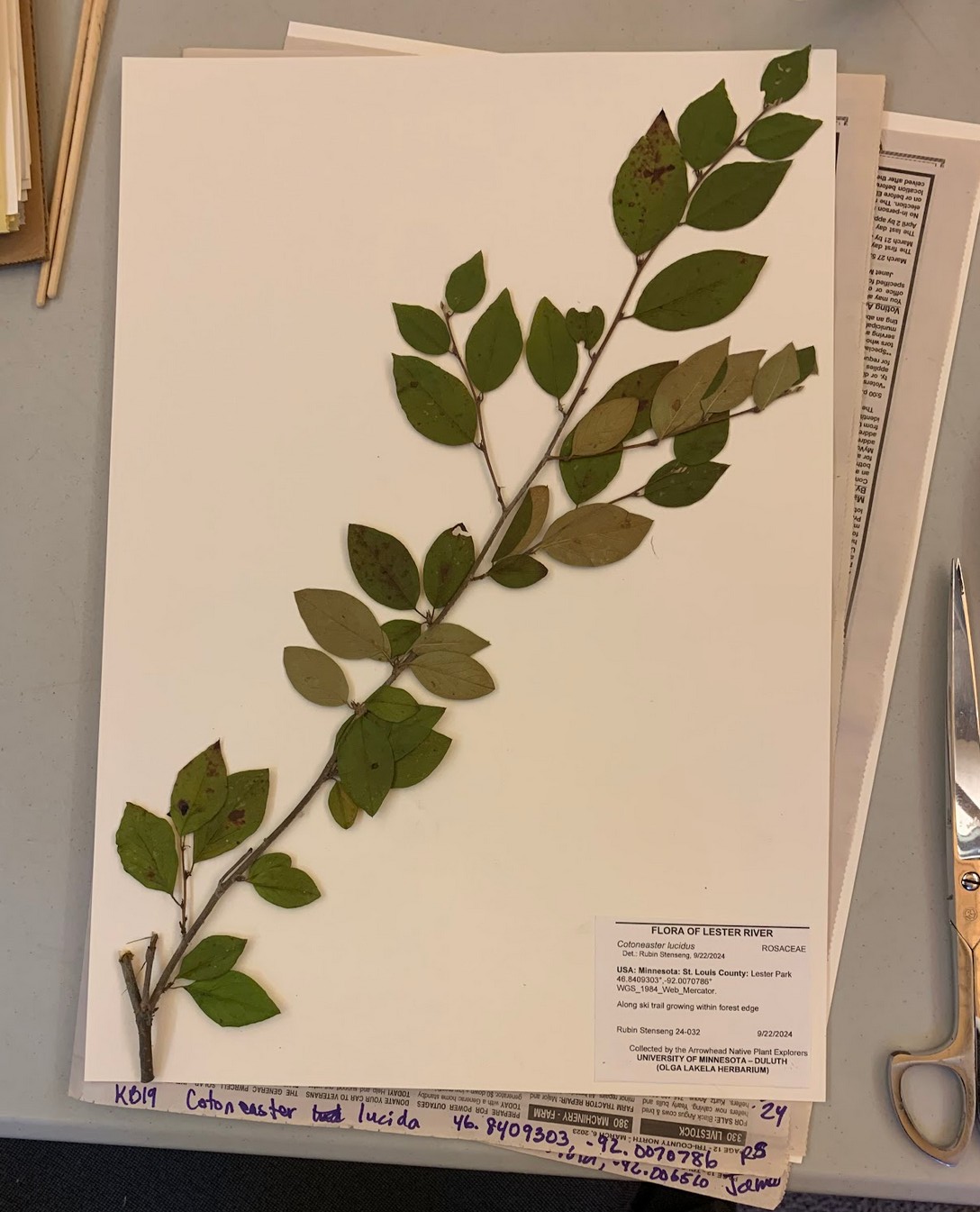
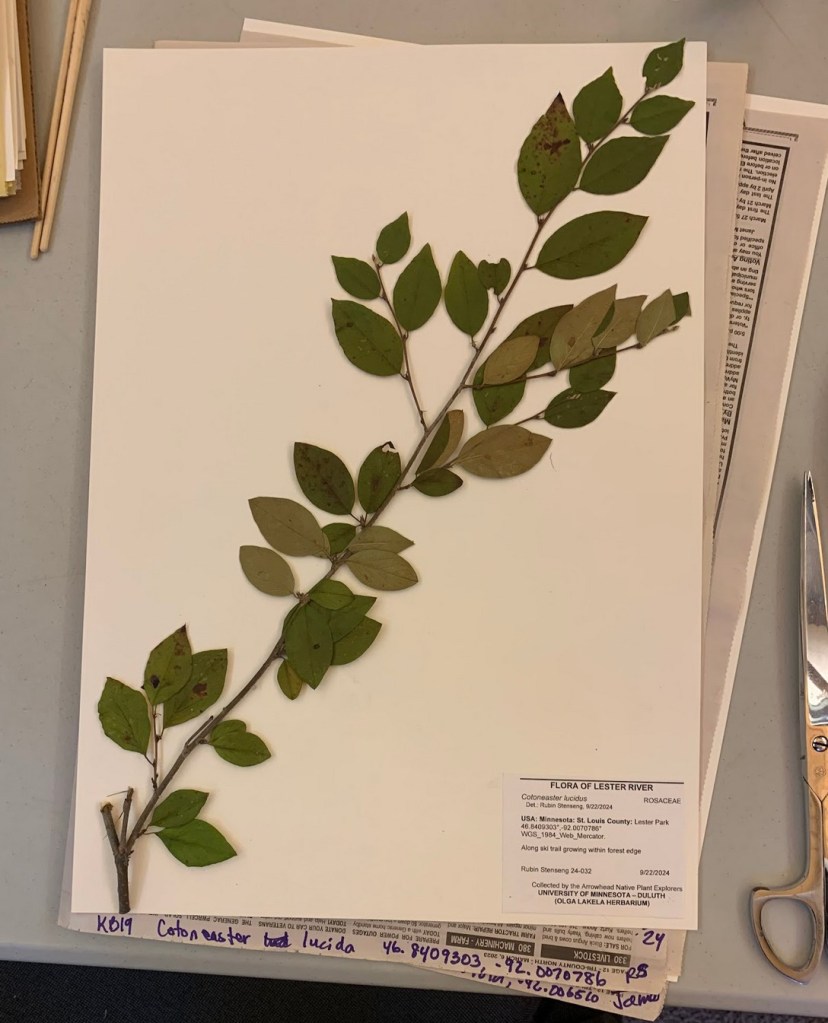
The Arrowhead Native Plant Explorers have been collecting plants for the past 4 years, beginning in property of the Friends of Sax-Zim Bog and most recently collecting from Lester River Park in Duluth. As part of the ANPE service project, specimens are collected, pressed, and mounted following the University of Minnesota – Duluth’s guidelines, and those plants are accessioned into the Olga Lakela Herbarium. Many of the plant specimens in the Olga Lakela Herbarium were collected by Olga herself and should be retired as historical documents. This means the remaining specimens must fulfill the role of teaching collection to maintain Olga’s specimens. In addition to updating the herbarium with more recent specimens, these plants will also be able to provide a snapshot of the plants’ responses to our current environmental conditions for anyone who chooses to study them in the future.
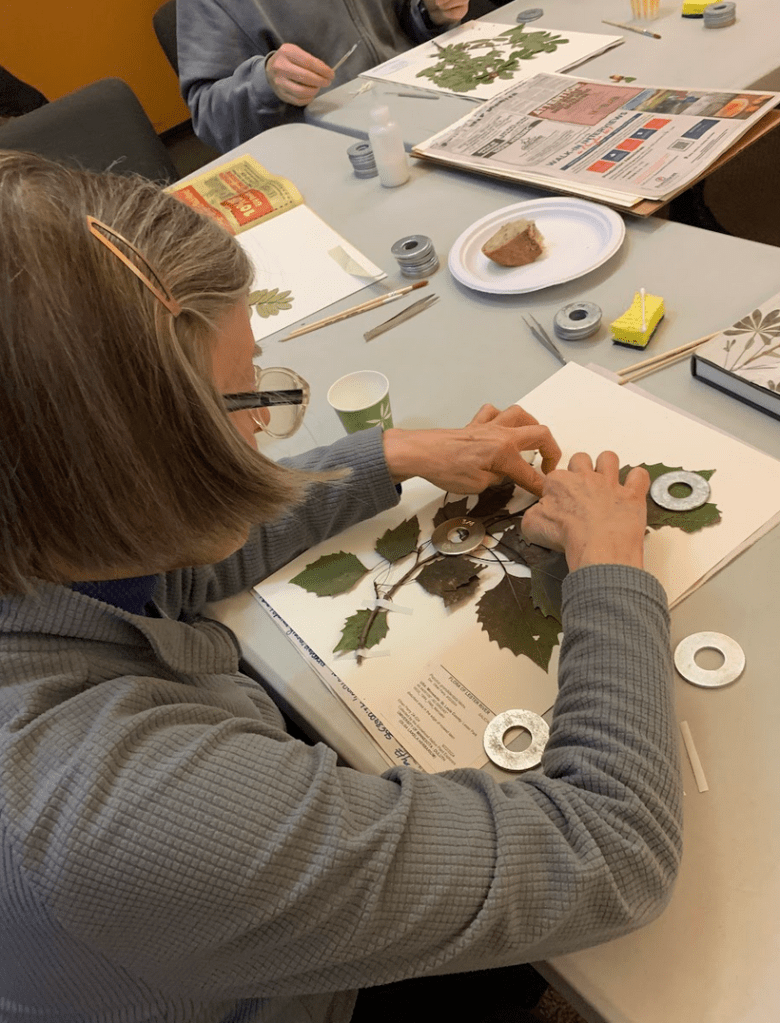
For those who are interested in furthering their knowledge of plant collection and identification or would like to contribute to a greater research project, Paul has plans to collect in a formal study in Hawk Ridge in 2025. ANPE will be joining him June 7th to host our 5th annual plant foray, but Paul will continue to collect 2-3 more times during the summer. ANPE will be sure to let our members know about those opportunities to learn, spend time in nature, or just geek out with Paul!
For more information on the research mentioned above, check out these published papers:
Lewis and Clark Plant Specimens
Konza Prairie Grasshopper Decline due to Larger, Less Nutritious Plants
NPR Article on Konza Prairie Study
Ecology Letters – Changes in Flowering Timeline
ANPE wants to express a big thank you to our contributing partners on this service project:
 Arrowhead Native Plant Explorers