Written by: Kelly Beaster
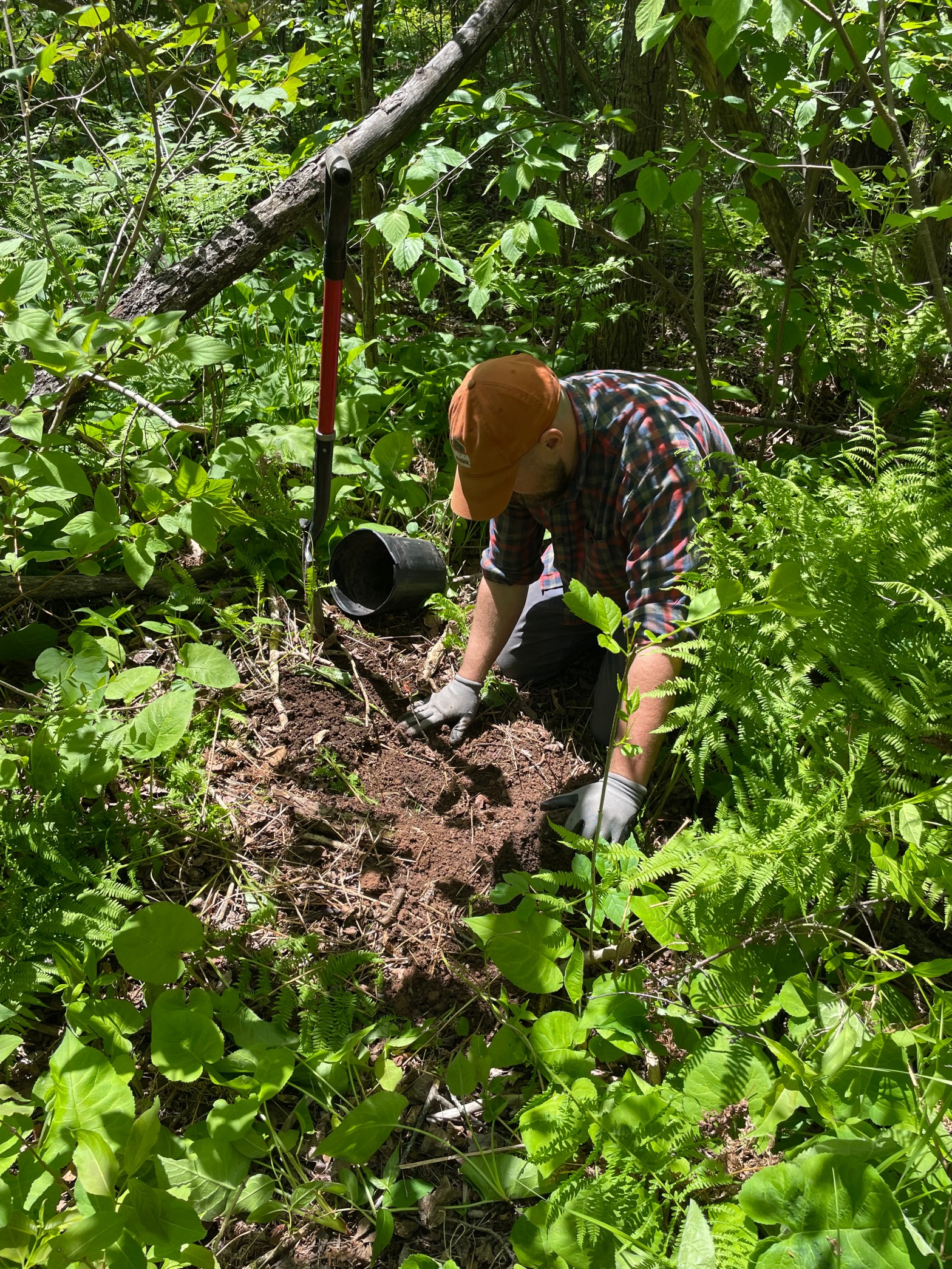
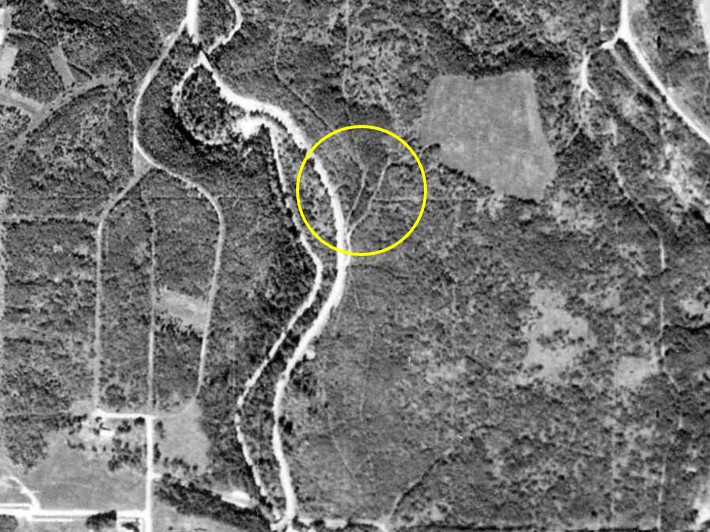
The Arrowhead Native Plant Explorers stepped into hands-on stewardship this June, planting 20 young trees in Lester Park within the forest along the cross-country ski and mountain biking trails. What is now a familiar recreation landscape has a long and complex ecological history. Lester Park is a mosaic of northern mesic forest types, including aspen–birch stands, black ash–basswood forests, and lowland swamp communities.
Over the past several centuries, the area has been shaped by selective logging, repeated disturbance, and most dramatically, the 1918 wildfire that burned the northern half of the park. Today, the canopy is largely dominated by quaking aspen, with paper birch, white spruce, and balsam fir scattered throughout. In wetter pockets, black ash still persists, while occasional mature white pine remain in drier, more resilient sites.
One of the quieter forces shaping the forest’s future is heavy white-tailed deer browse, which limits the regeneration of several historically common tree species. Species such as white cedar, basswood, red oak, sugar maple, and yellow birch are still present in nearby forests but struggle to establish within Lester Park without protection.
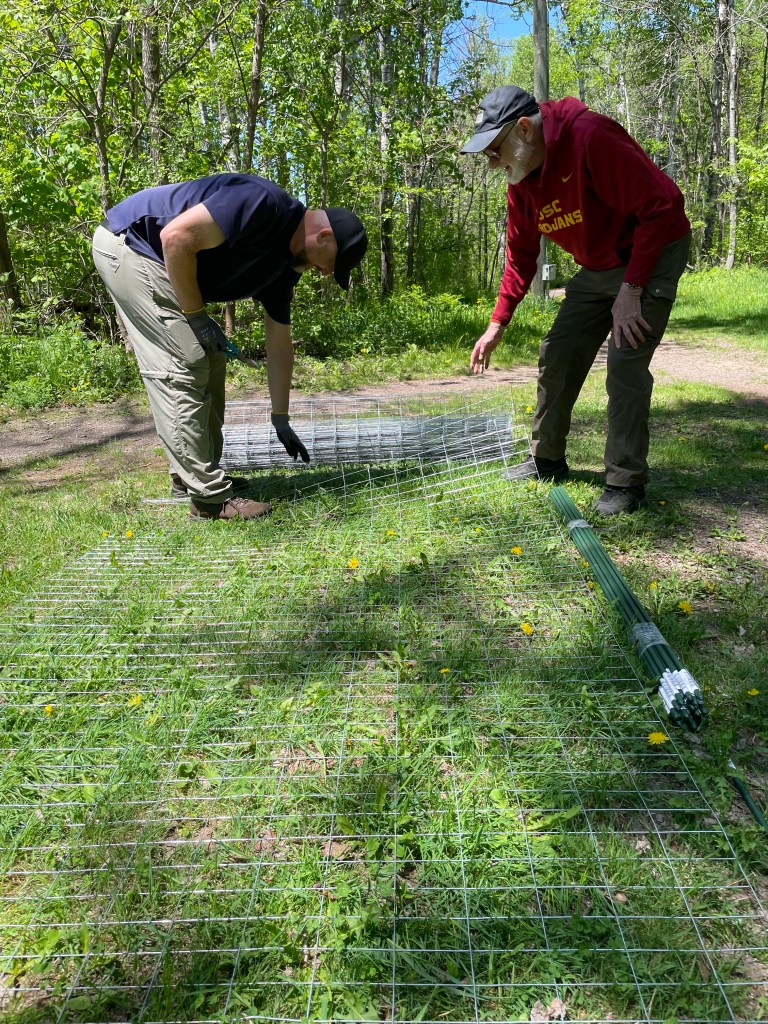
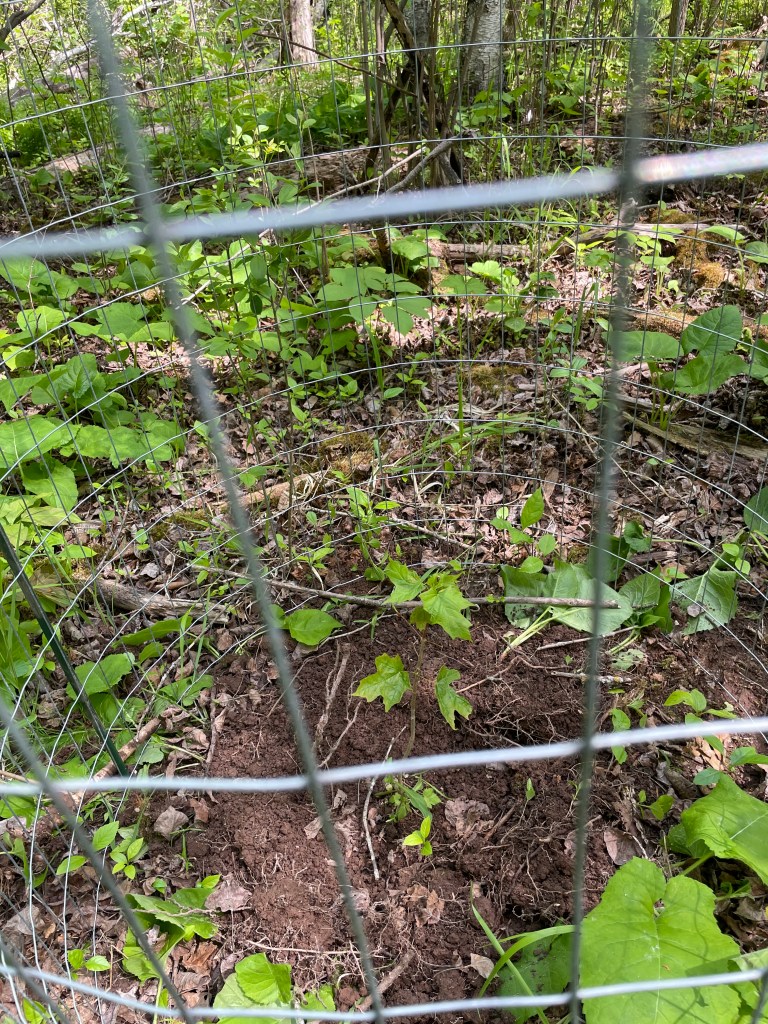
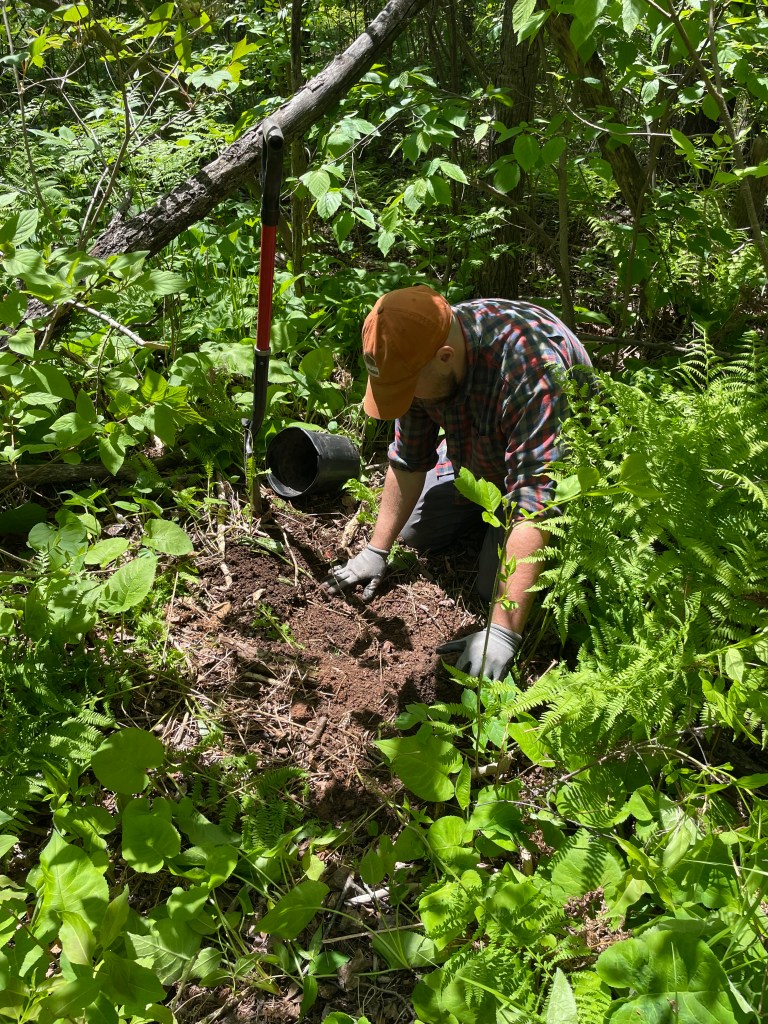
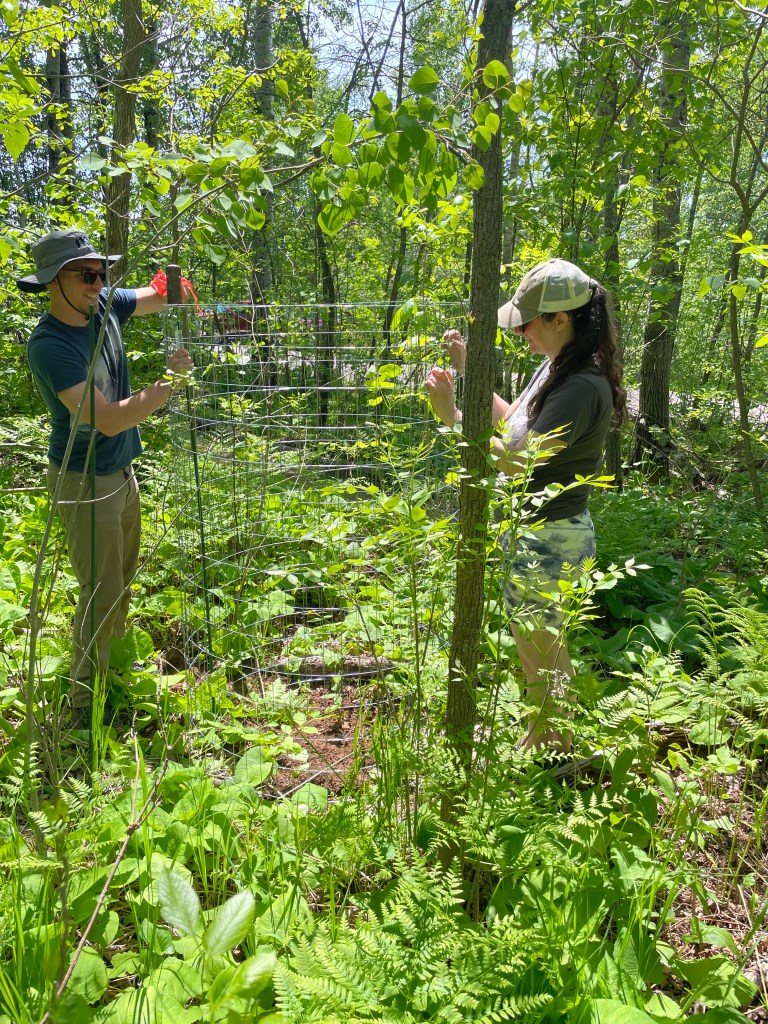
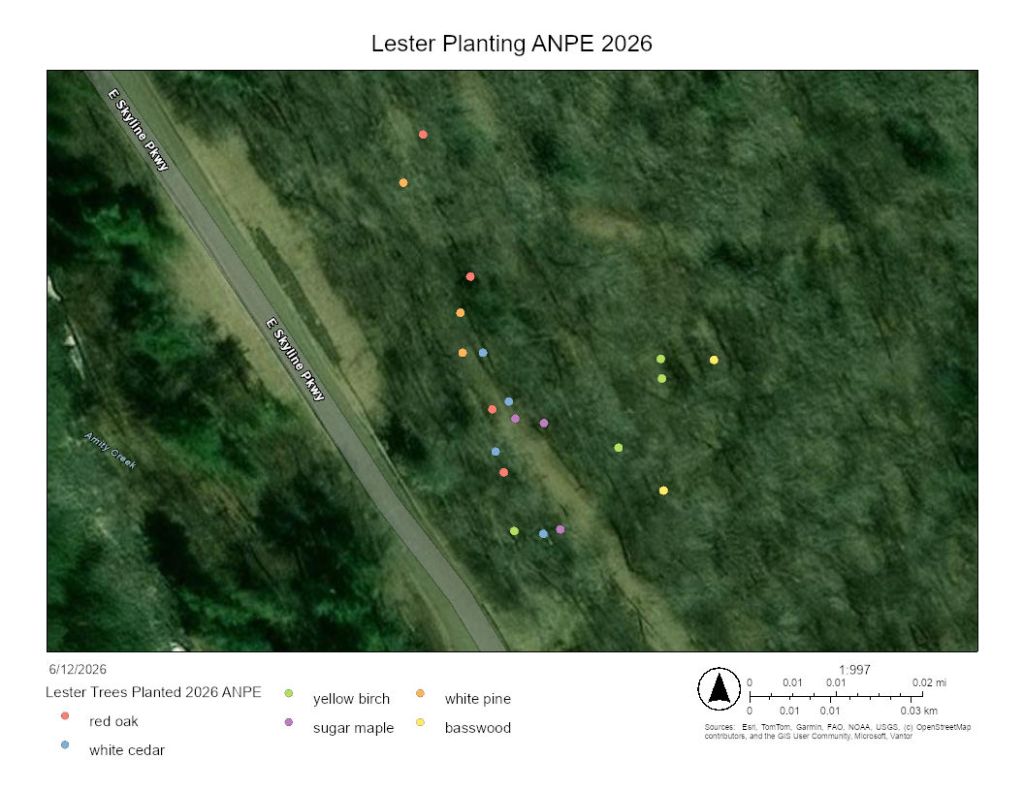
To help reintroduce these trees as future seed sources, ANPE planted and caged 20 seedlings: 3 sugar maple, 2 basswood, 4 yellow birch, 4 red oak, 4 white cedar, and 3 white pine. Each cage represents a small but deliberate intervention—an attempt to give these species a foothold in a landscape where natural regeneration has been constrained.
In time, these plantings may help restore a more diverse forest mosaic, one that reflects not just what Lester Park is today, but what it has the potential to become.
A brief species list of those present prior to planting is included below:
Fraxinus pensylvanica
Populus tremuloides
Acer spicatum
Cornus rugosa
Corylus cornuta
Diervilla lonicera
Rhamnus cathartica
Ribes hirtellum
Ribes triste
Rubus parviflora
Actaea rubra
Anemone quinquefolia
Aralia nudicaulis
Athyrium felix-femina
Equisetum arvense
Equisetum sylvaticum
Eurybia macrophylla
Fragaria virginiana
Maianthemum canadense
Pteridium aquilinum
Pyrola elliptica
Ranunculus acris
Rubus pubescens
Solidago gigantea
Taraxacum officinale
Trillium cernuum
Valeriana officinalis
Calamagrostis canadensis
Carex deweyana
Carex gracillima
Carex pedunculata