Written by Susan Nygaard
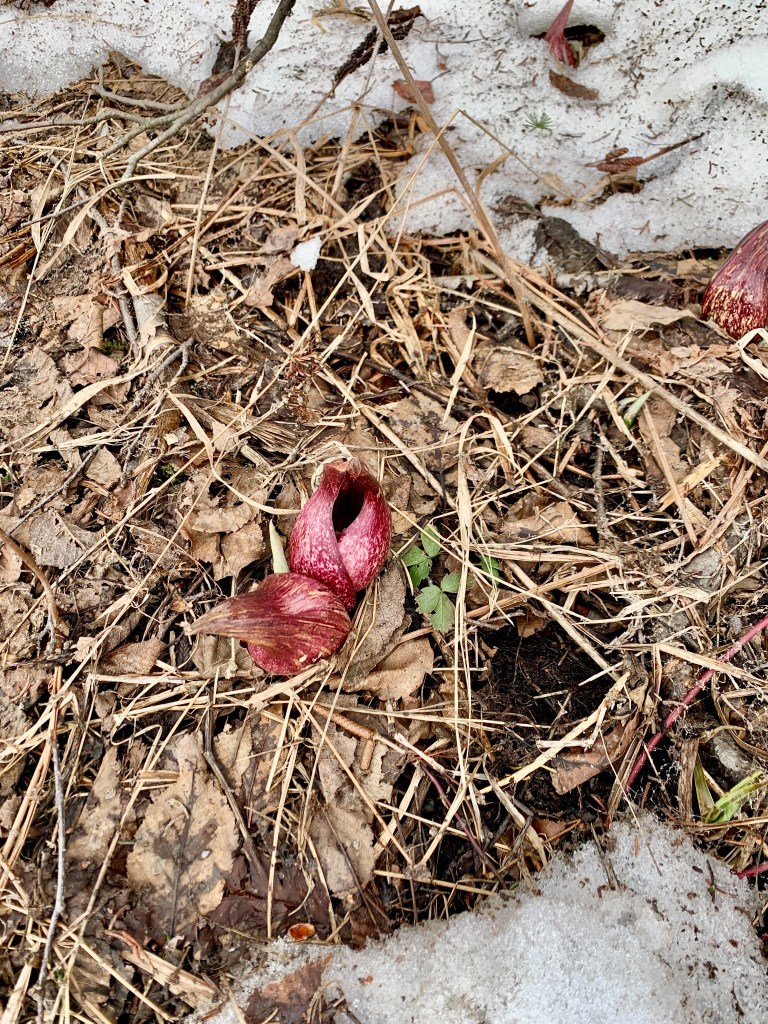
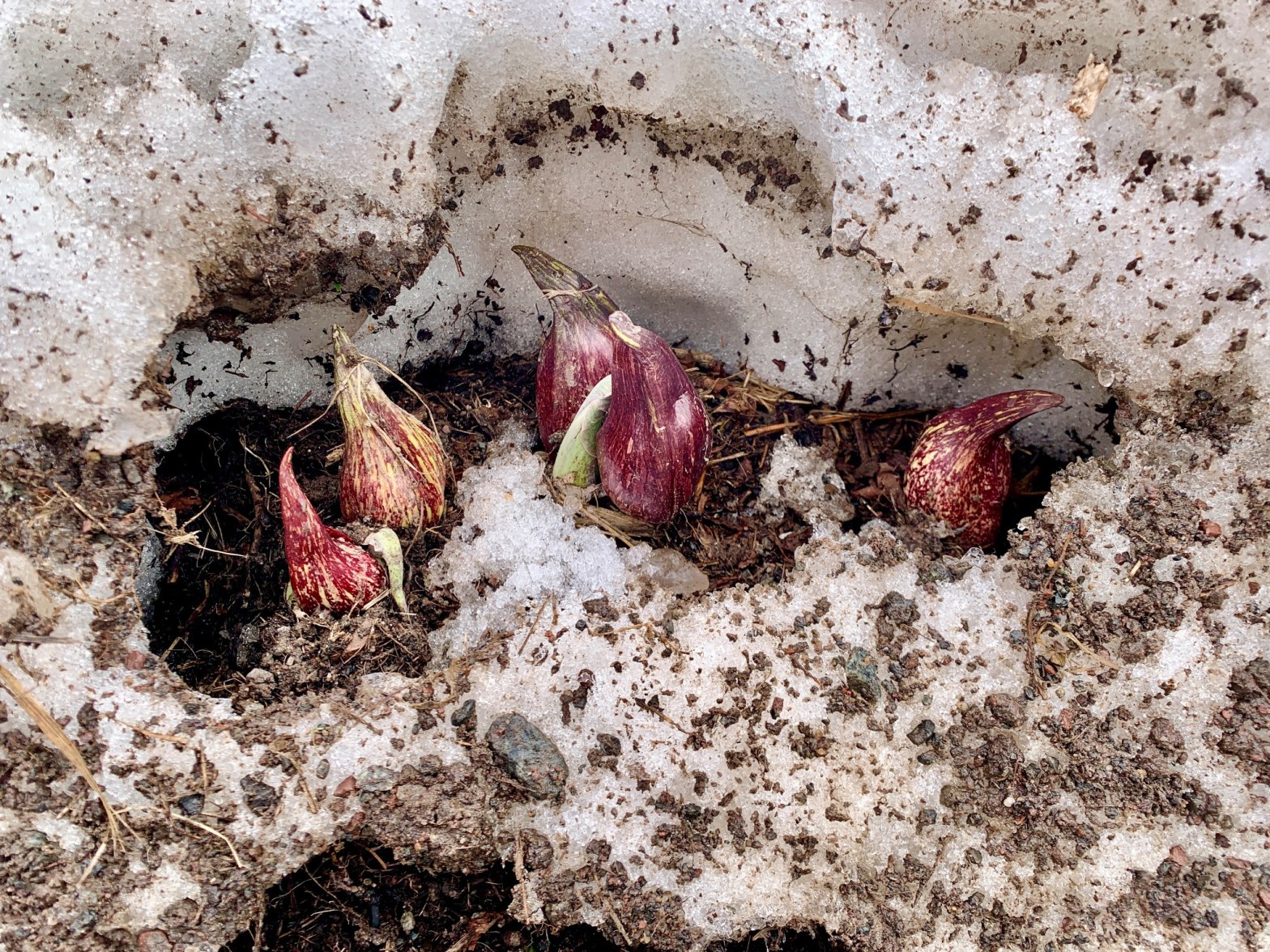
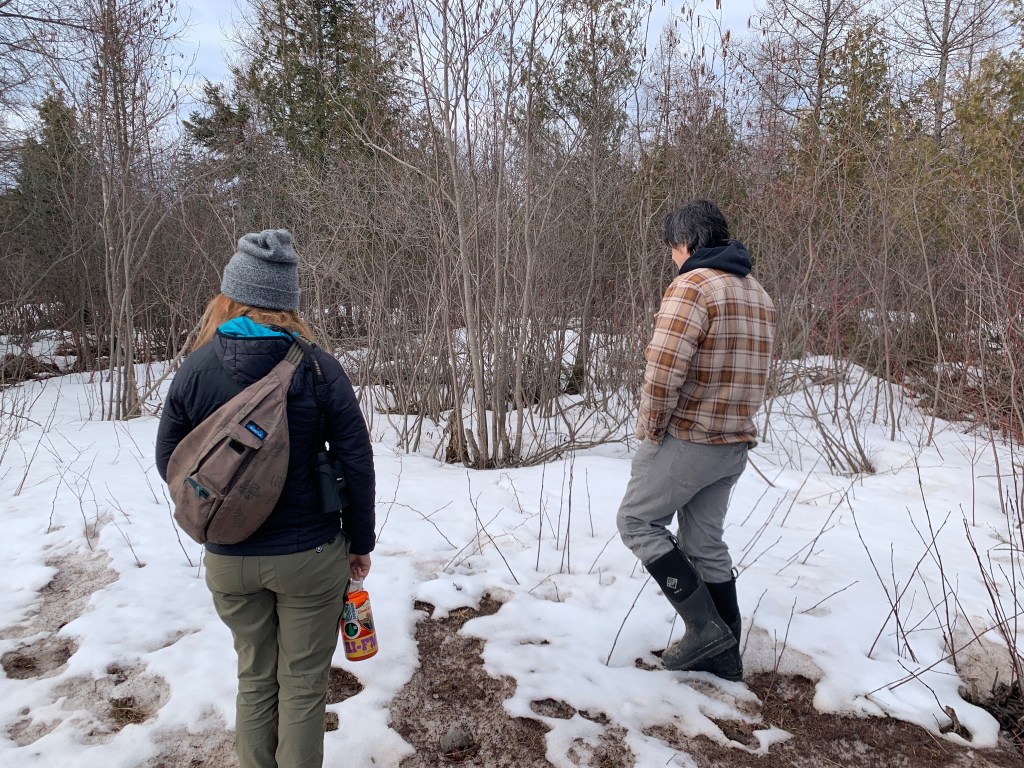
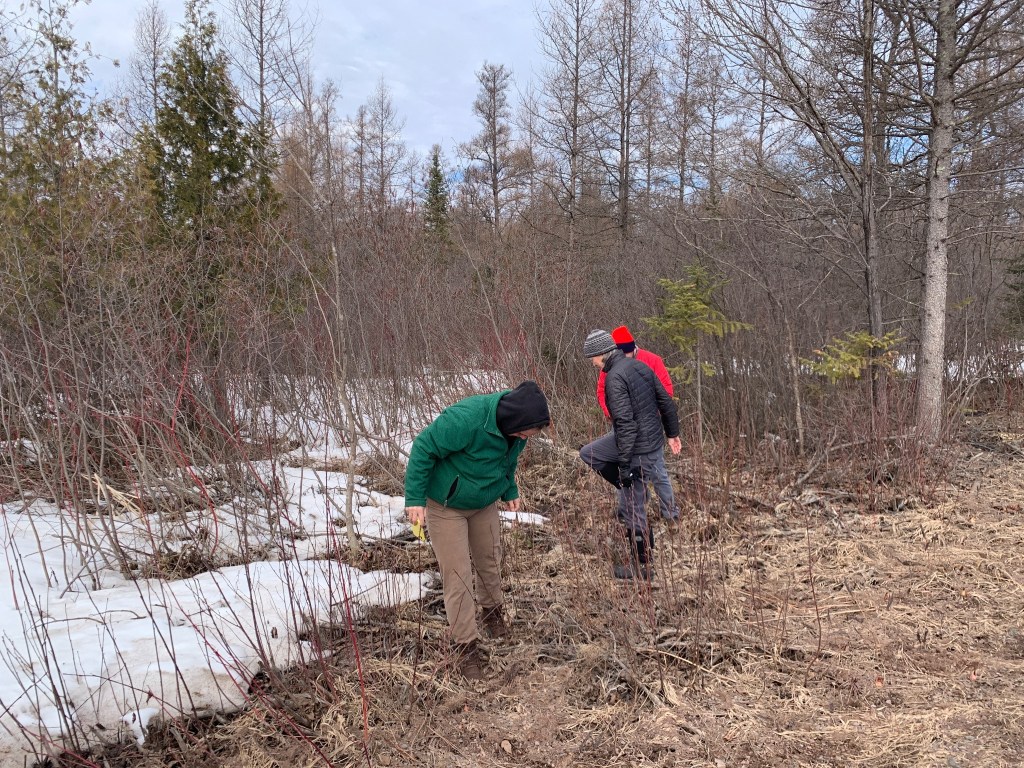
A total of 6 plant enthusiasts all piled into a van, driven by a generous participant, on the morning of April 11 and traveled to Maple, Wisconsin, to see lots of skunk cabbage sprouting from the still snowy and very wet sides of a gravel road. We were able to see lots of vapor chimneys where these thermogenic (heat-producing) plants had melted away the crunchy and dirty late-season snow and ice.
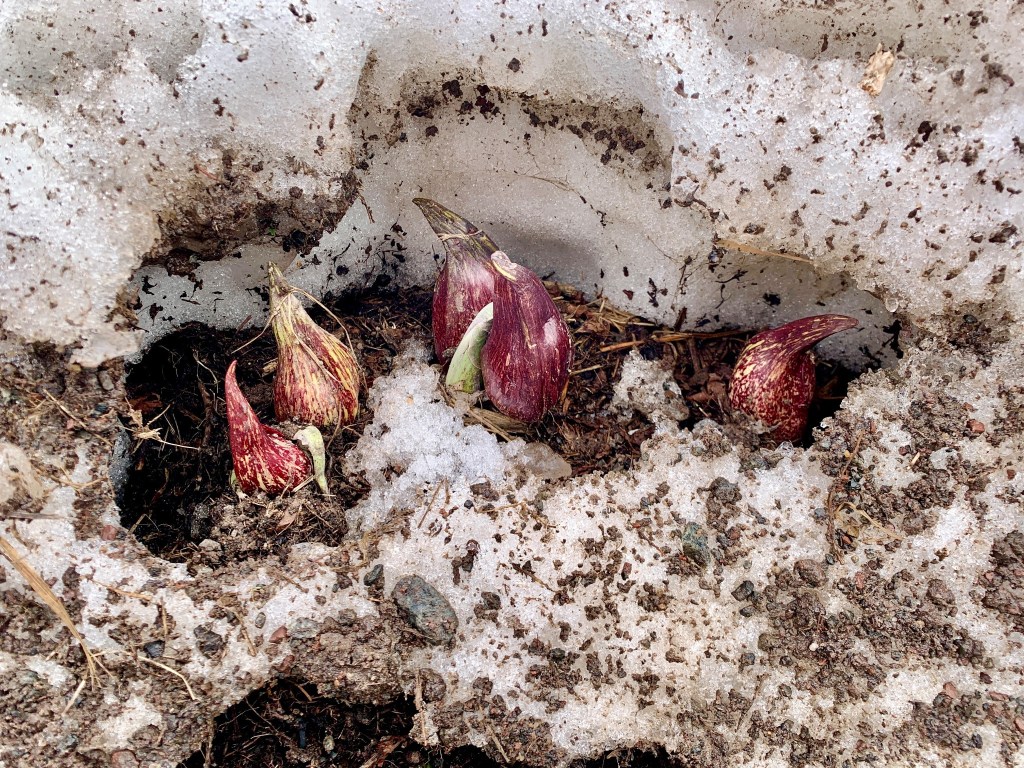
While it was still a bit early in the plant’s development for us to detect much of their telltale odor, we were able to measure the heat they produced, thanks to a couple of meat thermometers. Apparently, one thermometer got up to 65F! The heat produced by the plant helps diffuse its fragrance and attract pollinators (early flies, gnats, beetles, spiders). Thermogenesis begins in the spadix, the flower-cluster inside the curved red and green mottled spathe which acts almost like a greenhouse. The skunk cabbage burns nutrients stored in its roots at such an intense rate that botanists who study them compare the plant to a hummingbird. Others compare it to a bear emerging from hibernation. Bears actually like munching on the plant as it helps clean out their digestive system after their long nap.
For humans, the plant is rather toxic, full of calcium oxalate, and even just touching the leaves can sometimes burn the skin. It can be consumed, but it must be boiled in several changes of water first, and is not very tasty. It does have some medicinal properties as an antispasmodic and expectorant, but this is not a plant for amateurs to deal with!
The Eastern skunk cabbage (symplocarpus foetidus) is in the Arum family, just like Jack-in-the-Pulpit and the wild Calla. (The Western skunk cabbage is a different genus.) Its leaves are quite large: up to two feet wide, one foot long, on a footlong stem. It’s a long-lived plant with tough, extensive roots that contract deeper into the soil after each blooming season–thus, it is said to grow downwards.