Written by: Ethan Perry
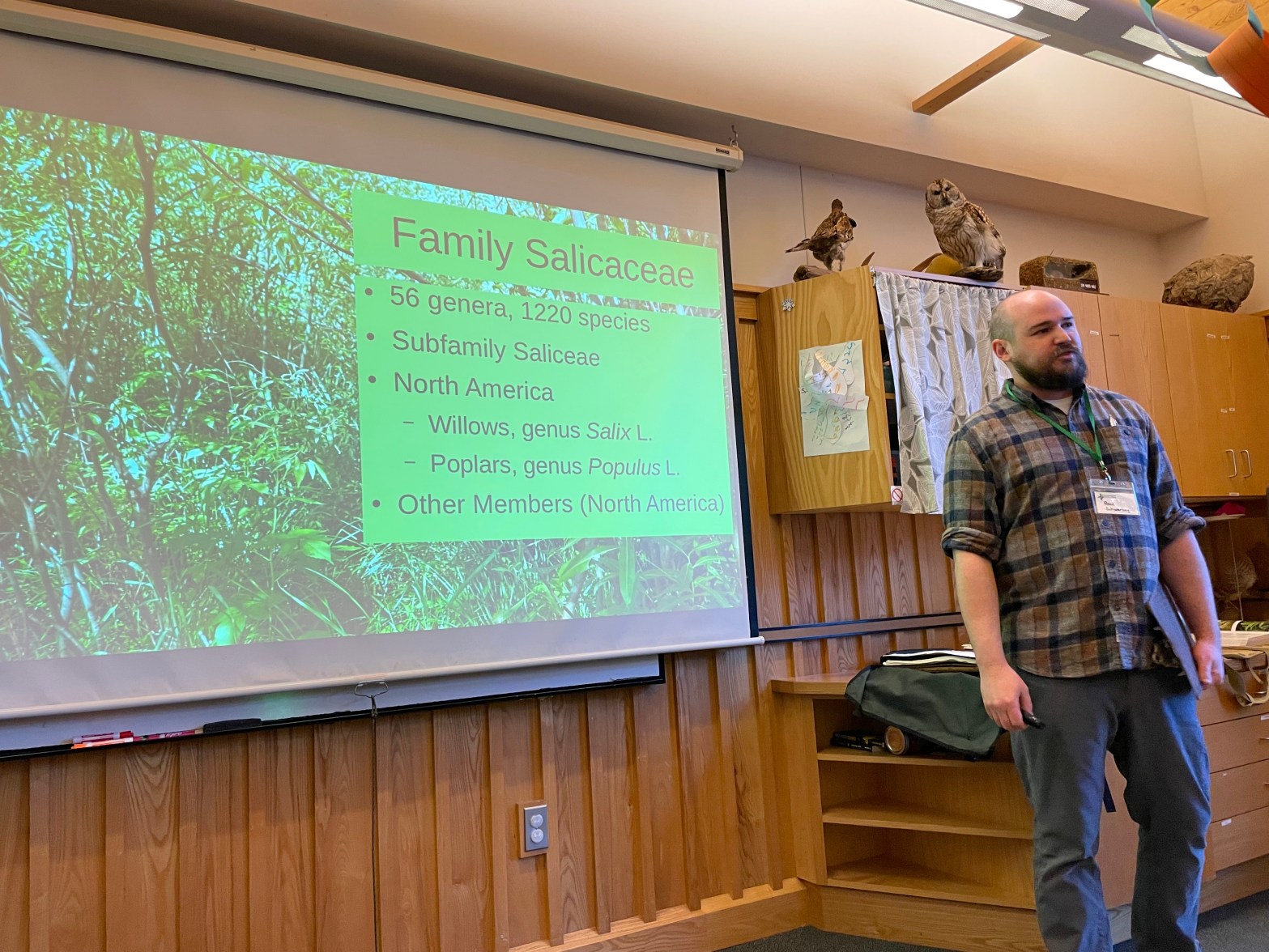
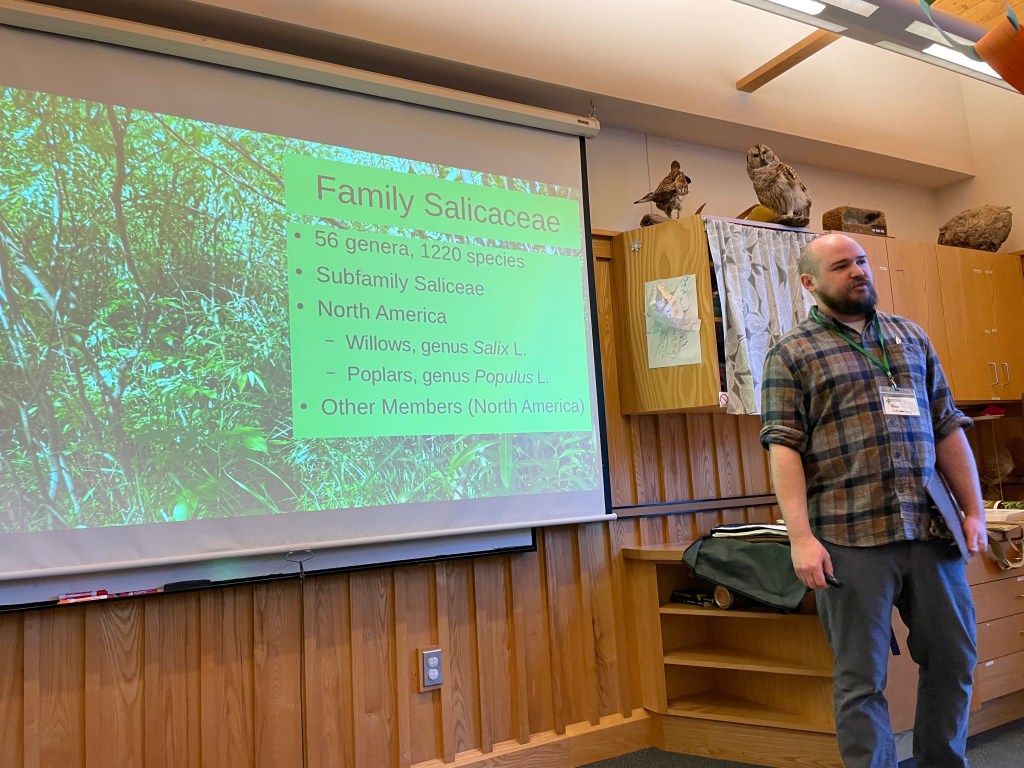
With pussy willow buds bursting in the third week of April, it was perfect timing for Reed Schwarting to engage us in a little willow talk. Reed is a botanist at Lake Superior Research Institute and on ANPE’s board. Willows, genus Salix, are in the Salicaceae family, which also includes the genus Populus, such as aspen.
Their flowers have no petals, but are born in elongate bunches called catkins that look like fuzzy caterpillars. While aspen catkins droop, on willows they grow erect. Both are dioecious, meaning male and female flowers are on separate plants. They spread their pollen on the wind, but also have tiny nectar glands at the base to attract pollinators. Willows provide the earliest large-scale source of pollen for many insects. The flowers become capsules that release cottony seeds that blow on the wind and float on the water, hoping to come to rest on bare soil.
There are about 450 species of willows globally, with the greatest diversity in China, where the genus likely first evolved. About 125 species grow in North America, including introductions. In Minnesota we have 18 native willows and at least 3 introductions now growing wild. Most are shrubs, but 5 can become large trees. Additional species, like weeping willow, have not spread from plantings. Unlike most groups of plants in North America, Reed explained that willow diversity is greatest in northern regions, with fewer species to the south. They have unlobed leaves, alternating along their stems. Many have serrated leaf margins with tiny glands at the tips of the teeth.
Besides being woven into baskets and furniture, willows also have a long history of medicinal uses. Its bark contains salicin, an anti-inflammatory precursor compound to aspirin that was used worldwide. Willows are fast growing and have the unusual ability to sprout roots from cut stems stuck in the ground, which makes them ideal for erosion control planting. People have also used willows to help decontaminate soil. Their spreading roots stimulate the microbial digestion of organic pollutants like petroleum, and others can be taken into the plant and converted into less toxic forms. Willows can also extract heavy metals from the soil and store them in their stems, which can then be taken to a safe disposal site.
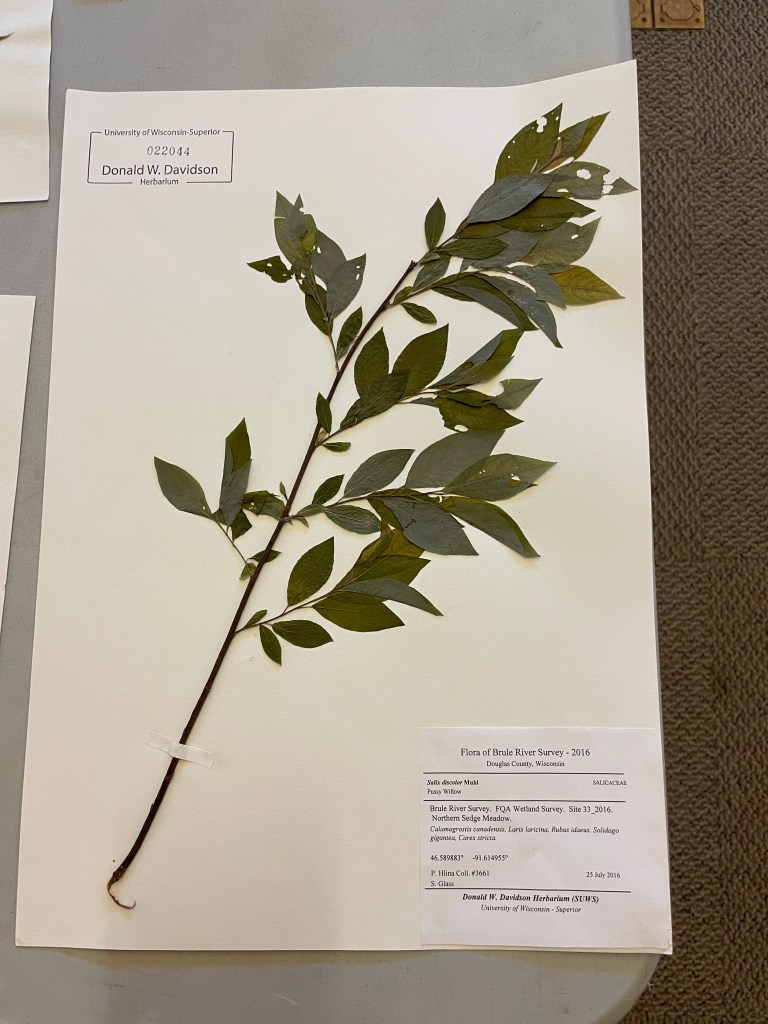
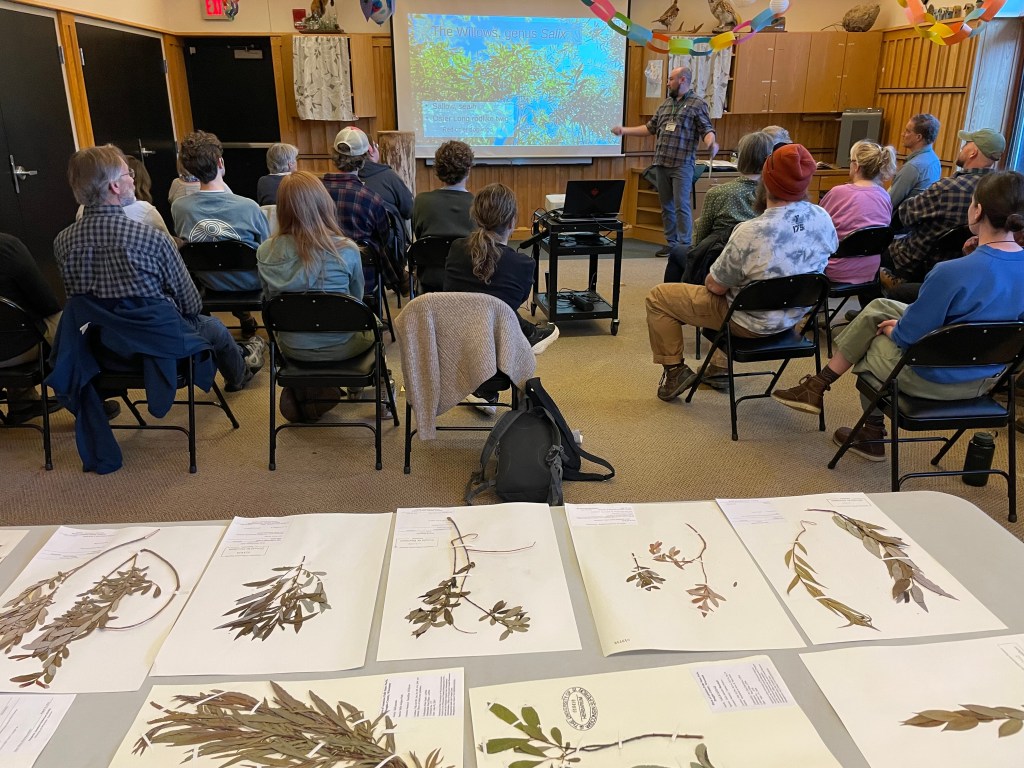
Reed gave us brief introductions to all the willow species of Minnesota, and as a special treat he also brought herbarium specimens of many of them from UW Superior. The event ended with conversation around the tables of pressed branches where we could compare them against each other.