Written by: Kelly Beaster
On an unseasonably warm October morning, members of ANPE joined members of the Society for Ecological Restoration (SER), based at the University of Minnesota Duluth, at Lester Park for a collaborative forest restoration project. With plenty of strong hands to help, members of both groups hauled fencing, T-posts, post pounders, planting bars, and seedlings grown for graduate student Mikayla Haynes’s research project through the park and into the adjacent forest. Canopy gaps had been identified in advance as suitable locations for deer exclosures, which protect both newly planted seedlings and existing native vegetation from deer herbivory. By reducing browsing pressure, these exclosures will give native white pine, yellow birch, and understory plants a better opportunity to establish and grow together, as they have in these forest communities for thousands of years. With deer populations remaining high, reducing herbivory is an important step toward supporting forest regeneration and improving the chances of seedling survival.
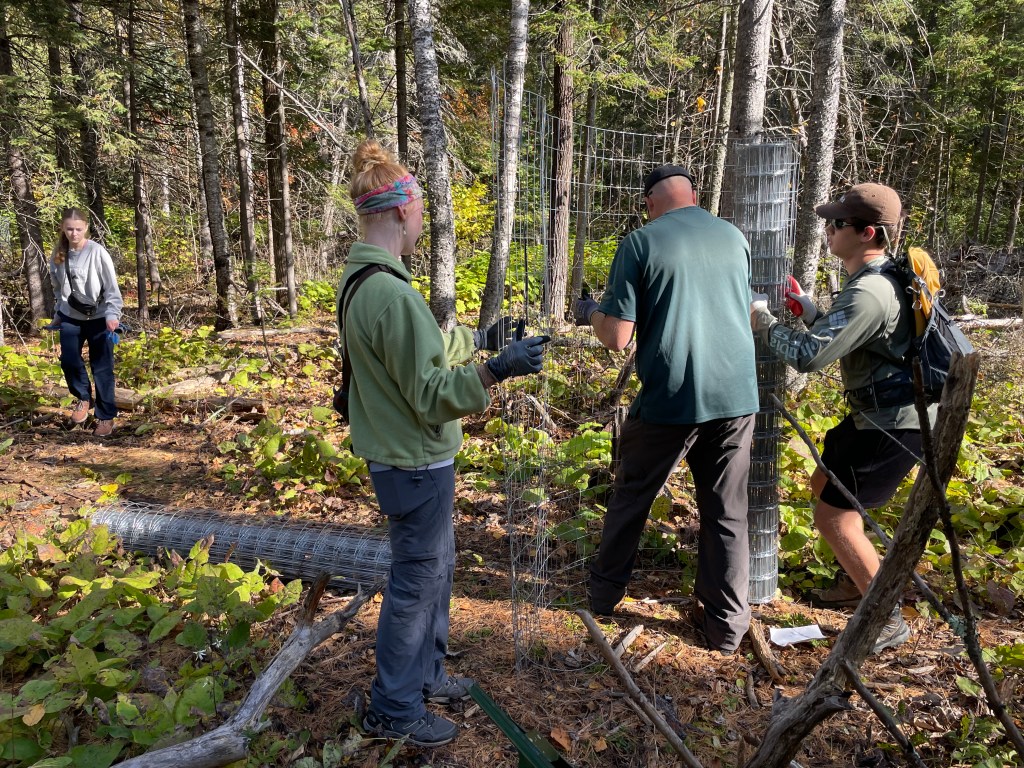
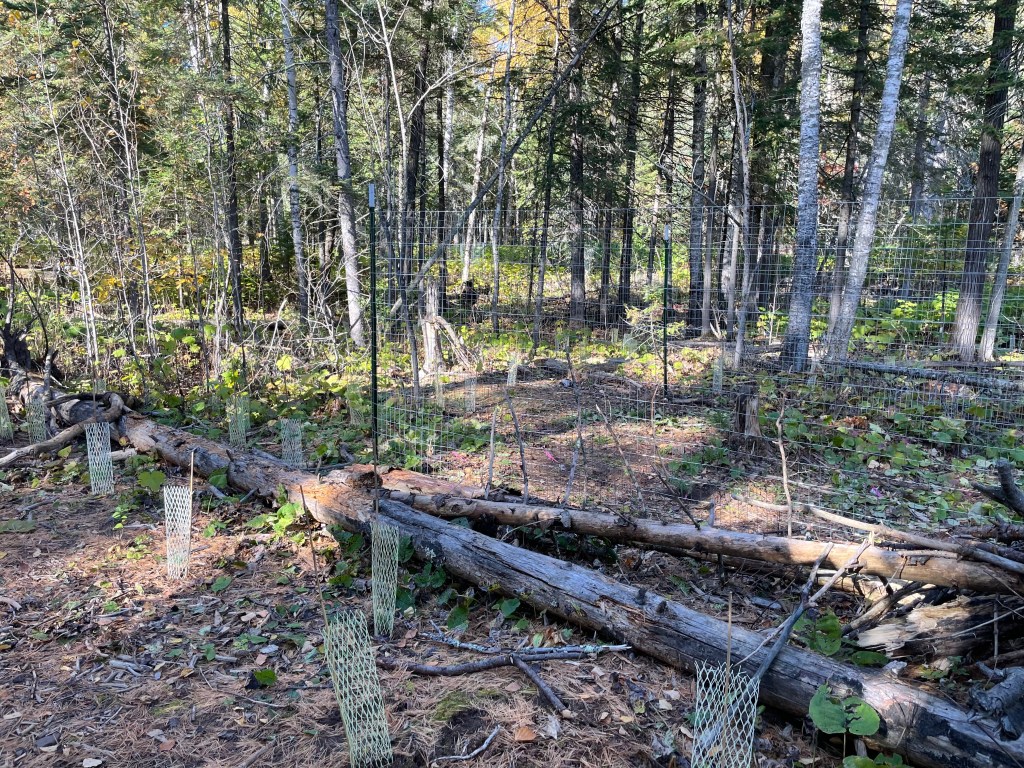
Rotted balsam fir logs crisscrossed the forest floor, remnants of trees that had succumbed to spruce budworm long ago and contributed to the formation of the canopy gaps. These openings provide opportunities for new growth, but successful regeneration requires more than simply having space and sunlight available. The perimeter of each exclosure was cleared to make room for the fencing, and trees were planted both inside the protected areas and outside of them, where seedlings were fitted with individual tree tubes. Together, these approaches will provide opportunities to observe how seedlings fare under different levels of protection.
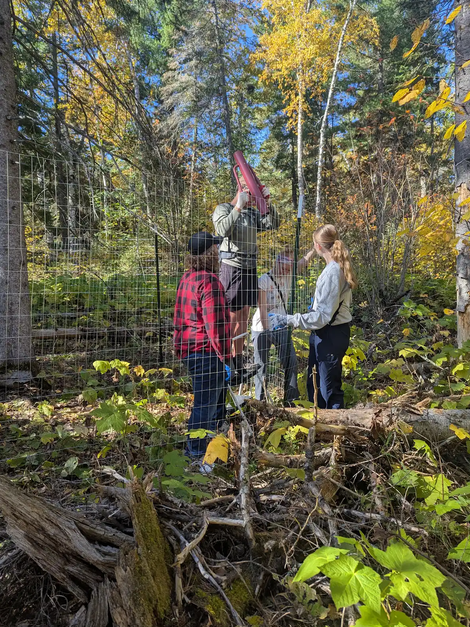
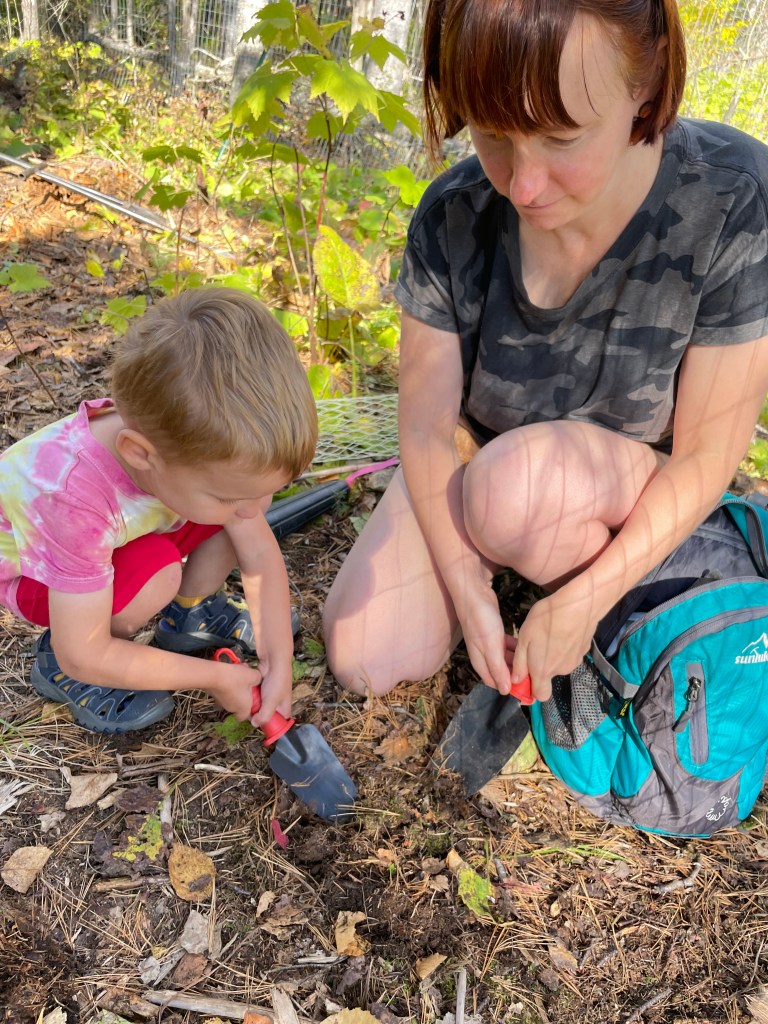
Understory plantings to increase species diversity and support seedling recruitment were among the key recommendations in the forest study completed this year by Dovetail Partners. Last winter, ANPE hosted a presentation by Abby Andrus and Nia Moses Becker on preliminary study results, providing an opportunity to learn more about the forest and discuss potential restoration approaches. Both the spring and fall’s planting efforts put some of those recommendations into practice while creating an opportunity for continued collaboration and learning. In total, volunteers planted 379 tree seedlings, with SER members committing to return to the site in the upcoming years to monitor seedling survival and changes in the herbaceous understory. ANPE hopes to welcome SER members back in a year or two to share their monitoring results and discuss what they reveal about forest regeneration and understory recovery.
A big thank-you to all the ANPE and SER members who volunteered their time and energy to make this planting effort possible. We also extend our appreciation to City of Duluth Parks staff for permitting the work and helping identify appropriate locations for the restoration project.
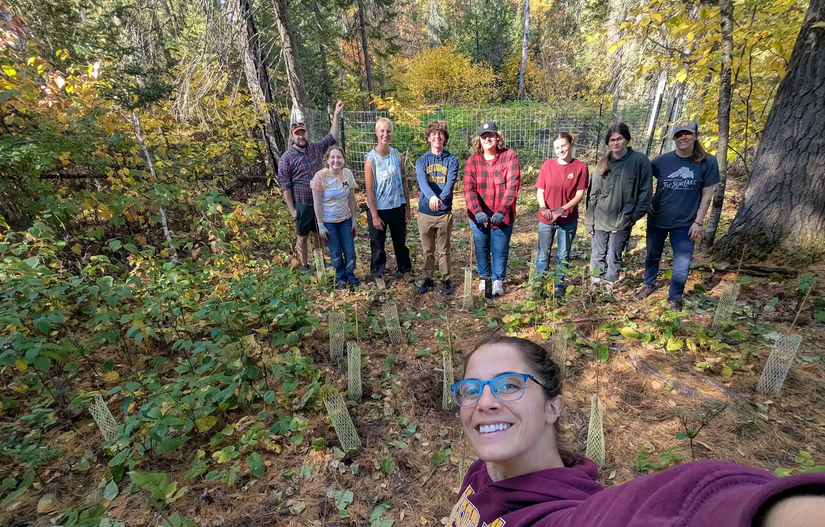
Beyond the immediate benefits to the forest, this joint effort highlights the importance of supporting the next generation of researchers, land stewards, and plant enthusiasts. By bringing people together for hands-on restoration, collaborative research, and long-term monitoring, we can build connections across organizations and generations while helping cultivate the knowledge and skills needed to care for our native plant communities into the future.
Find out more about UMD’s Society for Ecological Restoration

