Written by: Kelly Beaster
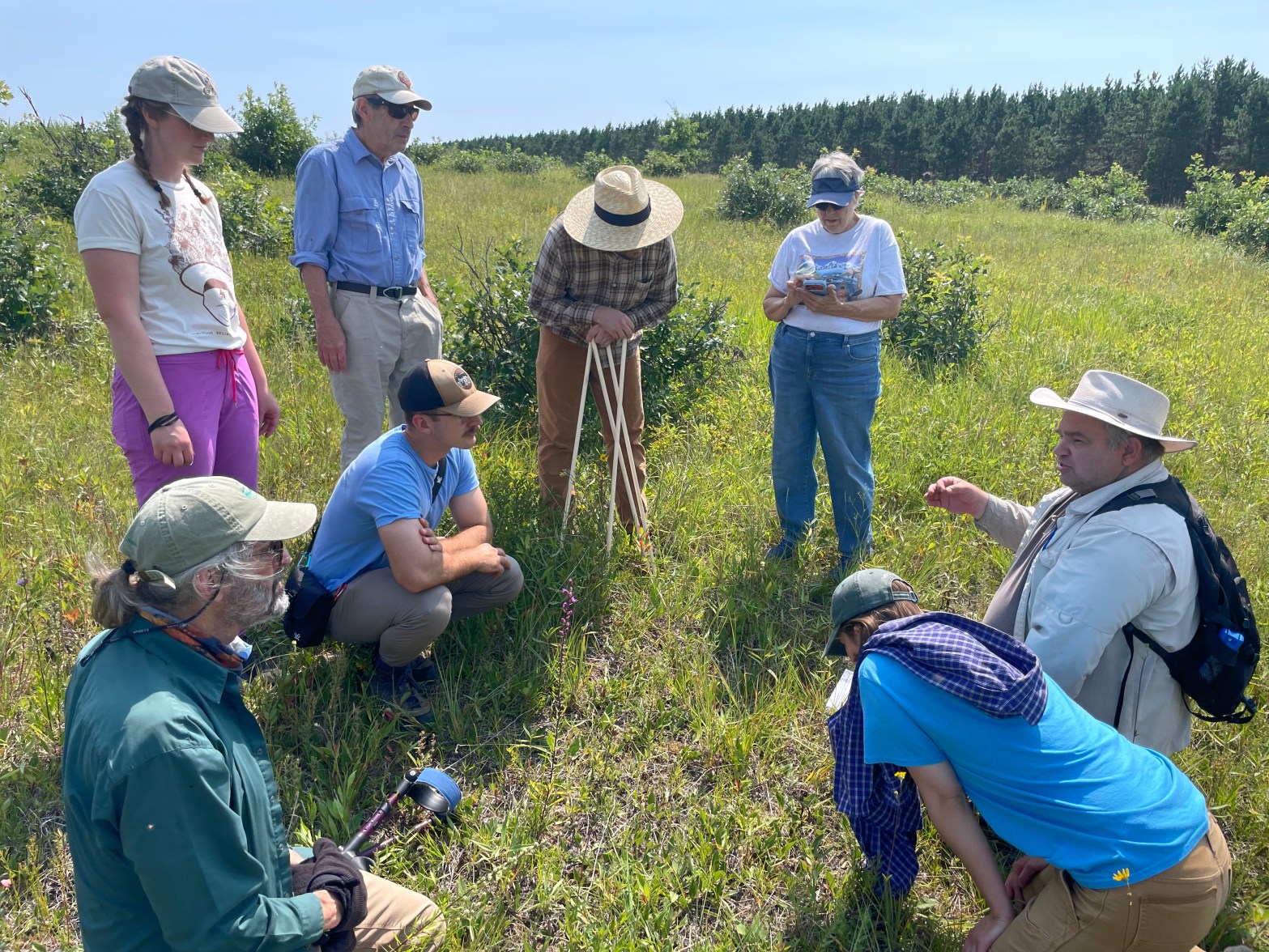
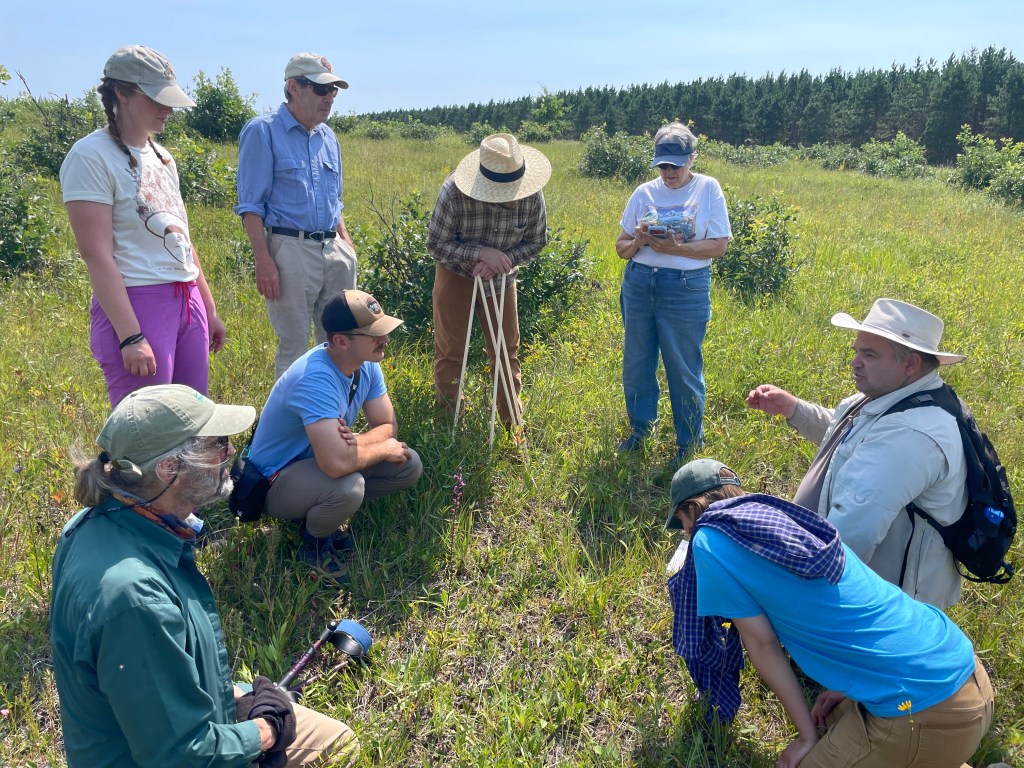
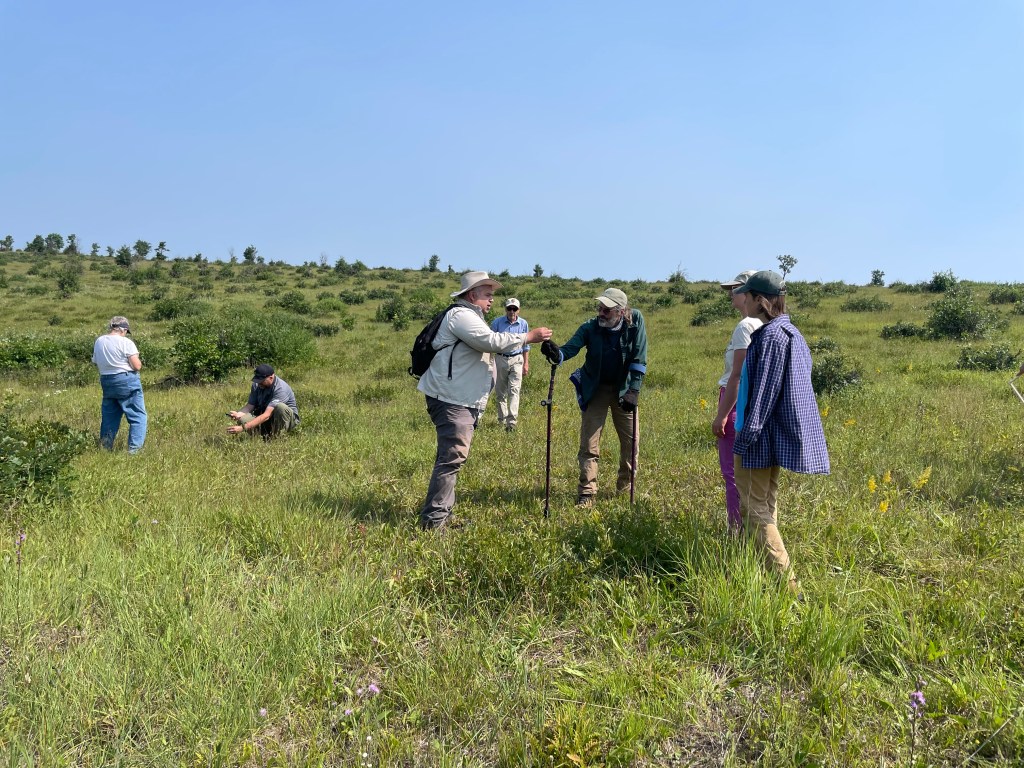
On August 1, ANPE members traveled the straight, dusty roads of Wisconsin’s sand country, passing planted pine plantations and sweeping open fields with smatterings of shrubs, to our unique destination—the Namekagon Barrens. Once there, ANPE was joined by two knowledgeable botanists who helped us explore the ecological and human history of this remarkable landscape: Derek Anderson, botanist with the Wisconsin DNR, and Paul Hlina, retired botanist from the Lake Superior Research Institute. We were also joined by Kathy Bartilson, a board member of Friends of Namekagon Barrens.
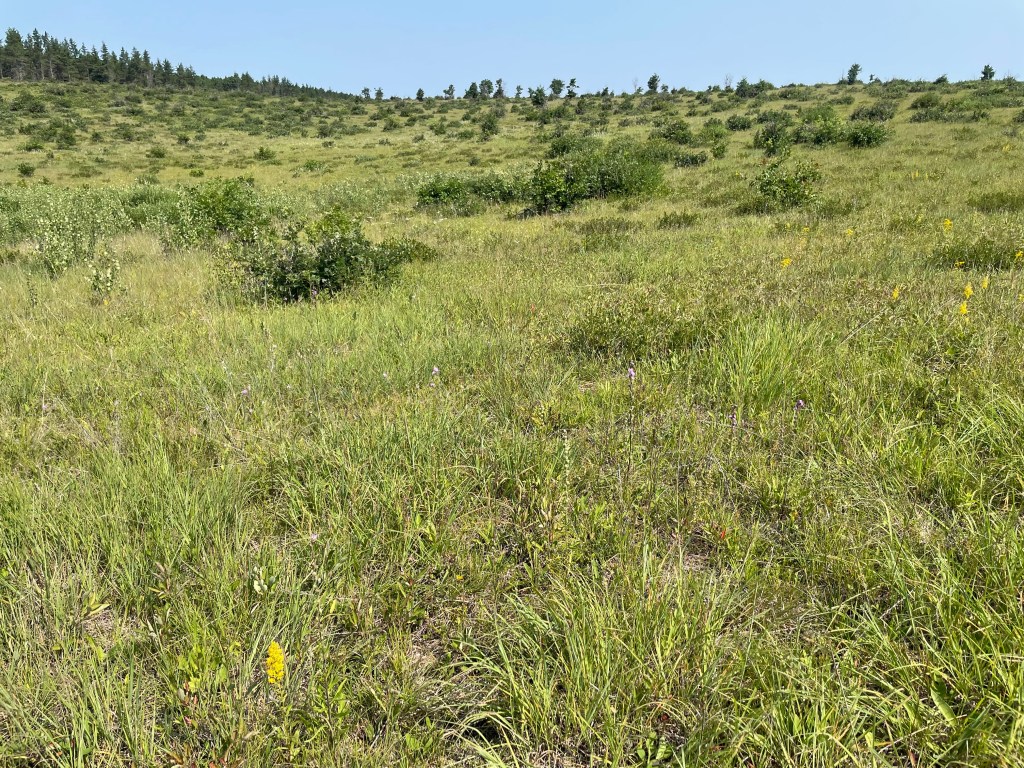
The Namekagon Barrens are part of a vast sandy landscape shaped by the retreating glaciers. As the glaciers melted, enormous quantities of sand were deposited across the region, creating deep, excessively drained soils. In places, more than 100 feet of sand underlies the barrens. This sandy substrate allows water to move rapidly through the soil, contributing to high-quality groundwater while creating the dry conditions that support the unique open and shrubby communities known as barrens.
These landscapes have also been shaped by fire—both natural and cultural. Indigenous people used fire to maintain open landscapes and create habitat for plants, wildlife, and other resources they depended upon. Today, the Namekagon Barrens encompass more than 6,000 acres divided into approximately 30 burn units. Land managers use prescribed fire to maintain and restore this open habitat, with the goal of burning units on roughly a six-year rotation. The objective isn’t to create one uniform landscape, but rather to maintain a shifting mosaic of open sand, grassland, shrubland, and scattered trees that provides a variety of habitats. These conditions support wildlife such as sharp-tailed grouse and upland sandpipers, as well as a remarkable diversity of plants adapted to this challenging environment.
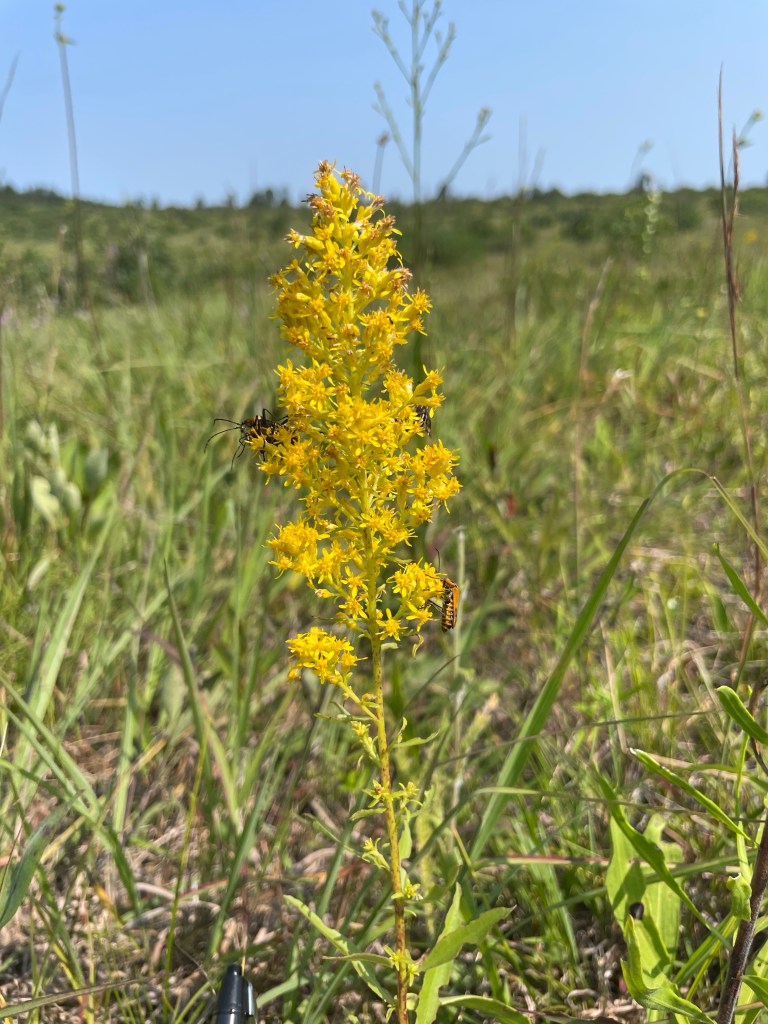
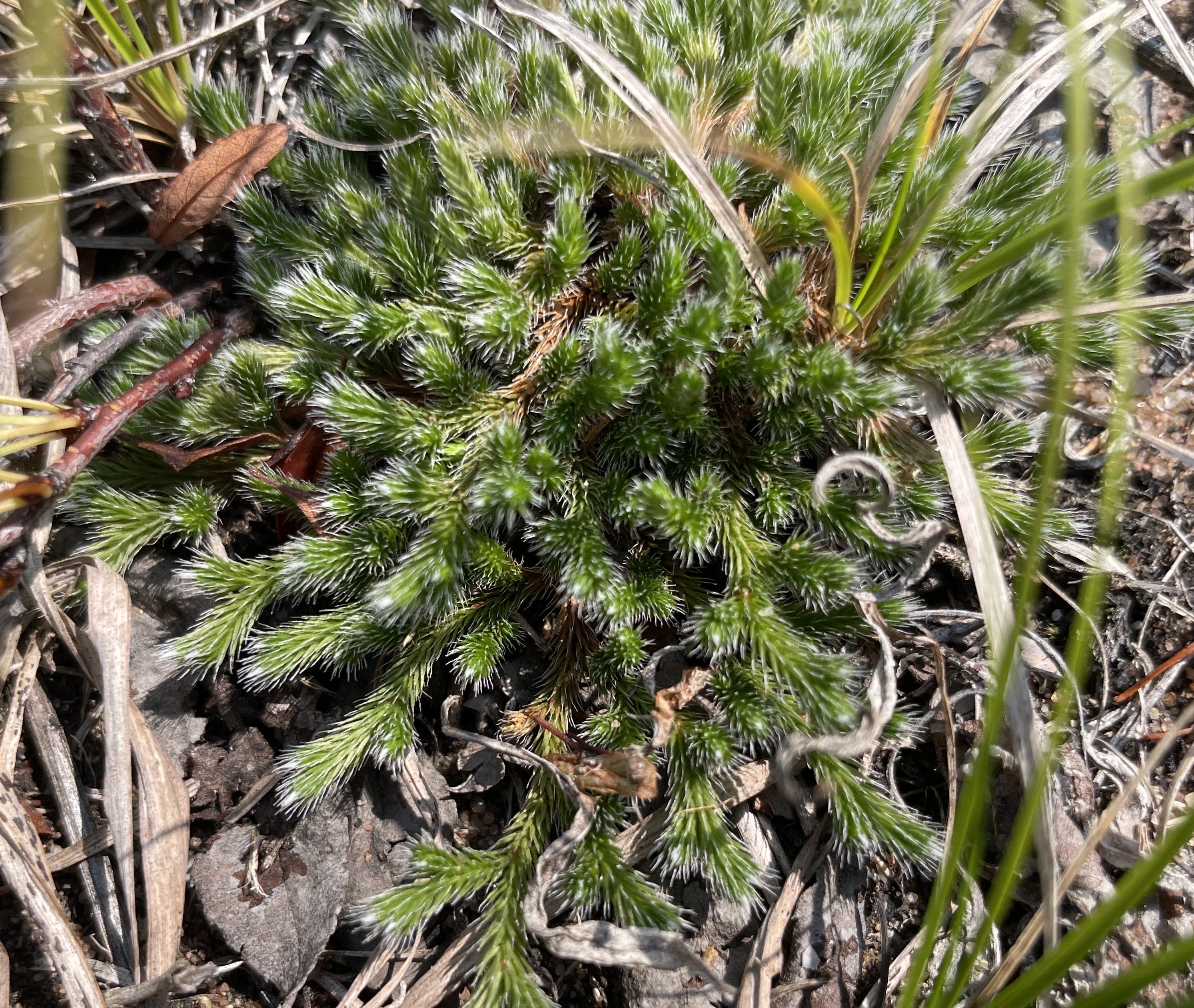
Many of the barrens’ botanical treasures are easy to miss. Their small size and scattered distribution mean that the best way to appreciate them is to walk among the plants—sometimes getting down on our hands and knees to take a closer look. Along the way, we encountered plants with remarkable adaptations to drought, fire, and the nutrient-poor sandy soils. Some can resprout following fire, while others, such as jack pine (Pinus banksiana), have specialized adaptations that allow them to take advantage of the conditions created by fire. The Namekagon Barrens reminded us that landscapes that may initially appear sparse can hold remarkable ecological diversity when we take the time to look closely.
For those who missed the hike, there are additional opportunities to explore northern barrens landscapes on your own, including Bass Lake Barrens, Mott’s Ravine Barrens, and Moquah Barrens.
List of Species Observed on Hike:
big bluestem (Andropogon gerardii)
western sunflower (Helianthus occidentalis)
rough blazing star (Liatris aspera)
upland white goldenrod (Solidago ptarmicoides)
evening primrose (Oenothera biennis)
round-fruited pinweed (Lechera intermedia)
sand cherry (Prunus pumila)
daisy fleabane (Erigeron strigossum)
new jersey tea (Ceonanthes herbaceous)
stiff sunflower (Helianthus pauciflorus)
gray goldenrod (Solidago nemoralis)
horse weed (Conyza canadensis)
early goldenrod (Solidago juncea)
black eyed susan (Rudbeckia hirta)
pensylvania sedge (Carex pensylvanica)
little blue stem (Schizachyrium scoparium)
rough bent grass (Agrostis scabra)
harebell (Campanula rotundifolia)
sky blue aster (Symphyotrichum oolentangiense)
smooth aster (Symphyotrichum laeve)
bur oak (Quercus macrocarpon)
carolina puccoon (Lithospermum caroliniense)
kalm’s brome (Bromus kalmii)
bergamot (Monarda fistulosa)
bastard toadflax (Comandra umbellata)
prairie phlox (Phlox pilosa)
stiff goldenrod (Solidago rigida)
bearberry (Arctostaphylos uva-ursi)
junegrass (Koeleria macrantha)
frostweed (Crocanthemum bicknellii)
blue eyed grass (Sysirynchium montanum)
thimbleweed (Anemone cylindrica)
parlin’s pussy toes (Antennaria parlinii)
lyre-leaved rock cress (Arabidalpsis lyrata)
rock spikemoss (Selaginella rupestris)
northern pin oak (Quercus ellipsoidalis)
prairie violet (Viola pedatifida)
racemed milkwort (Polygala polygama)
prairie willow (Salix humilis)
american hazelnut (Corylus americana0
alumroot (Heuchera richardsonii)
poverty oat grass (Danthonia spicata)

